
Rethinking Belfast: How breathing new life into iconic buildings is the secret to restoring city centre living in Belfast
Mark Collins, managing director at Belfast-based architectural practice Collins Rolston, discusses how breathing new life into iconic buildings while embracing the demands of the future could be the secret to restoring city centre living in Belfast.
For years, local government has been trying to get people to move back into Belfast city centre to encourage not just economic growth but to ensure people feel connected to the centre and can participate in its economic and social life. A holistic approach to enhancing the built environment is paramount to achieve that.
The obvious starting point is having a proper residential offer. Apartments in Belfast can often be small, temporary places that are unable to accommodate a family’s growth over time. There also seems to be a matter of quantity over quality, as we see a high density of these tight and limited properties. If we take European cities such as Barcelona as an example, they offer generous three and four-bedroom apartments that families can actually call home for the long-term.
The good news is that we don’t necessarily have to create apartment blocks from scratch. Many of our heritage buildings have been successfully repurposed and retrofitted for commercial endeavours such as hotels and office accommodation. However, and once more taking inspiration from other great cities such as London and Liverpool, there is an opportunity to use these unique and valuable assets for housing.And not only intricately designed buildings from the Victorian and Georgian eras, but also the ‘concrete beasts’ from the ‘70s that seem to be forgotten and are just an unwanted part of the scenery in Belfast.
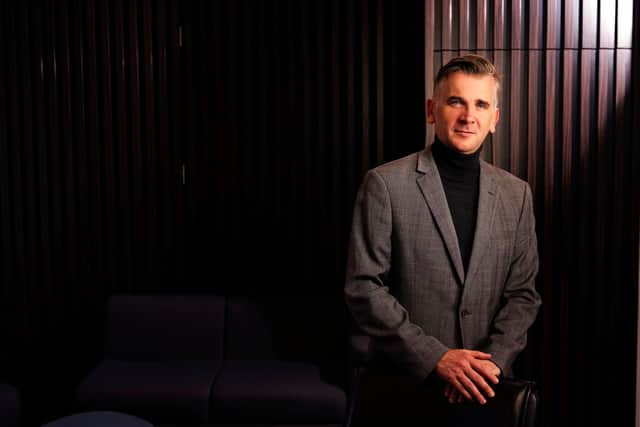

From an architectural point of view, repurposing and retrofitting these buildings provides an exciting creative challenge as we must consider them in their entirety, and not only an empty shell. How can we make them habitable? How can we meet sustainability standards and future-proof them so they will also stand the test of time, while protecting the fabric of the building and its character? These are big questions, but projects like these will always bring the best out of any good professional design team.
Repurposing heritage buildings for housing also ticks the boxes for sustainability and cost efficiency: it breathes new life to embodied carbon, consequently reducing carbon footprint, and lowering costs in demolition and disposal. But it would also result in built-environment quality that would help attract people to the city centre again: bringing with it a refreshed sense of local, contemporary identity.
In my view we must reclaim what used to make Belfast special. By the end of the 19th century, the city was at the forefront of the world stage, and the architecture from that time was reflective of that. Unfortunately, today, many of the main buildings in the city could be anywhere in Europe. Of course, architecture goes through trends, but by tapping into Belfast’s history, we can align architectural design to function and bring the city a better sense of cohesion.
Naturally, the city also must be reassessed from the point of view of infrastructure. Belfast has a generous offer of office and student accommodation, as well as a range of places to enjoy the nightlife, but lacks leisure options for people who live in the city centre.
Unlike Dublin, for example, with famous urban parks such as St Stephen’s Green and Merrion Square, expansive green spaces within Belfast city centre are extremely limited. For example, it has been remarked upon by many of our clients passing through the city that doesn’t have any trees. To make the best of Belfast’s landscape, green corridors along the streets in the city centre could be the answer to provide a place for residents to breathe, unwind or simply walk their dogs.
A city centre cannot thrive without an efficient transportation system. It will be exciting to see the new Belfast Grand Central Station up and running in 2025, but a tram or cable car system is still food for thought when it comes to making city centre living more convenient.
Bringing our best assets back to life and creating both a structure and an environment in which people can thrive and enjoy urban living would definitely attract people who wish to make Belfast city centre their home.
If you build (or retrofit), they will come.