
Owen Polley: More wildly optimistic claims about the Irish Sea border
At every stage of Brexit, there were commentators who claimed that the Irish Sea border did not exist or was about to be removed.
Often, these people were unionists. And they lectured other, supposedly less enlightened unionists about their stupidity in not welcoming the latest developments with enthusiasm.

It looks like the same dreary process could soon be repeated.
That’s because the government is negotiating with the European Union over a ‘reset’ of their relationship.
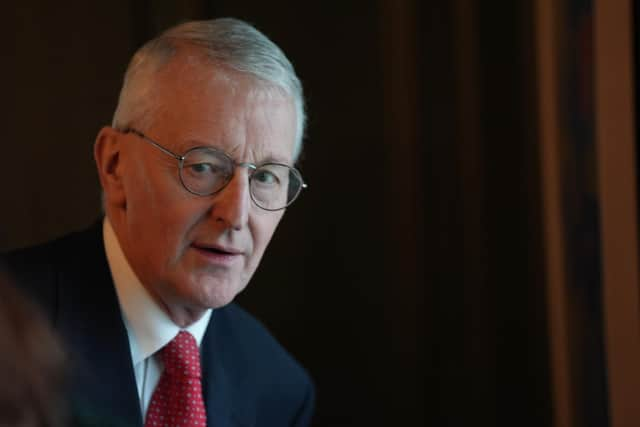
Last week, Hilary Benn was in discussions with Brussels’ trade commissioner Maros Sefcovic. The secretary of state said they talked about, “The Windsor Framework and the benefits that a UK-EU agreement on food, animal and plant standards could bring to Northern Ireland”.
These developments may be worth watching, in the hope that they could lessen some of our trading problems. But we should be wary of claims that the sea border, or even the worst parts of it, are likely to disappear.
We have been down this route many times before.
For instance, you still hear people claiming that unionists were idiots not to support Theresa May’s ‘backstop’ arrangement, which she failed to pilot through parliament in the early months of 2019.
Sometimes, this argument rests on being wise in retrospect. More often, it relies on simple ignorance of what the backstop actually contained.
May certainly wanted the whole UK to have a close relationship with the EU and she was prepared to use Northern Ireland to justify that policy. But this was not, as is often alleged, the essence of the backstop.
In fact, that so-called ‘insurance policy’ was supposed to kick in only when the UK diverged from Brussels’ single market and customs union.
In those circumstances, the backstop erected a sea border just as hard as the frontier agreed by Boris Johnson. In addition, Northern Ireland would have been officially outside the UK’s customs area.
It is important to remember that May was prime minister of an incredibly weak government. At the time, the Conservatives needed support from the DUP just to stay in power. It seemed overwhelmingly likely that she would soon be swept aside and her policies reversed.
If unionists had supported the backstop, it would have been like agreeing to a delayed smack in the mouth, because, in theory, someone might immediately punch you in the face.
In other words, the idea that they were short-sighted not to back the backstop was one of the silliest pieces of received wisdom that emerged during the whole Brexit negotiations.
Of course, May’s successor, Boris Johnson, would go on to deny that his NI Protocol created a sea border at all. His supporters claimed it would apply only to a few sensitive goods, like weapons or dangerous animals, that posed a threat to Brussels’ market.
The peak of this kind of denialism came when Rishi Sunak signed the Windsor Framework. The former PM said his ‘green lane’ for goods would remove ‘any sense’ of a border in the Irish Sea.
In fact, a House of Lords committee pointed out that the framework was in many cases worse than what went before.
The subsequent ‘Safeguarding the Union’ deal arguably achieved even less. Despite that, it was used to make the most overblown claims yet about the sea border’s disappearance, not least by the DUP, and many commentators were again persuaded that it represented real progress.
Now, the proposed Labour deal on food and animals is the latest agreement to generate wildly optimistic analysis.
Some of this relies on the notion that the EU will allow any new arrangements to replace large parts of the Windsor Framework, including checks and paperwork for food.
In each of the examples above, similar assumptions about Brussels’ eventual good faith and reasonableness came to nothing. As if to underline this point, the EU has already implied that there will be no food deal at all, unless the UK agrees to its latest demands on fishing.
The sea border also affects huge swathes of trade and everyday life in Northern Ireland that have nothing to do with agriculture. In fact, food is unusual, because in many cases we have dual regulation, with both UK and EU standards recognised here.
An SPS agreement, even if it removed animal checks and paperwork for food and animals, would make no difference to restrictions on manufactured goods or pharmaceuticals, for example.
Likewise, the EU’s new product safety rules, which caused many firms from Great Britain to stop selling products here, would still stand. The parcels border, implemented only last week, would remain in place, including the need for customs declarations.
Most significantly, EU law would continue to apply to countless aspects of life in Northern Ireland.
The courts have already struck down Westminster’s policies on immigration and legacy for this province, because they were incompatible with Brussels’ human rights edicts. And there are now significant questions about whether the supreme court’s ruling on gender equality laws will apply here.
None of this is to say that unionists should reject or ridicule anything that potentially makes the sea border softer. There is an argument that painting too bleak a picture could do further damage to the Union.
But it is naive and unhelpful to portray every new development as a solution to our problems, or a victory over the sea border. And it is always the same culprits who seem to fall into that trap.