
Barry Douglas steps in at late notice with Ulster Orchestra to deliver powerful and electrifying performance of Rachmaninoff’s Third Piano Concerto
The near-capacity audience at the Ulster Hall on Friday night was given an unexpected treat when Barry Douglas surprisingly took to the stage as the soloist in Rachmaninoff’s Third Piano Concerto, in place of the scheduled soloist Alim Beisembayev who was unfortunately indisposed through illness.
The appearance of Douglas at any Ulster Orchestra concert gives it a special dimension because of his consummate ability and stage presence, allied to the fact that he has the affection of countless local concert-goers who have always supported their “local boy” with his long and successful career as one of the most respected soloists in the classical global circuit.
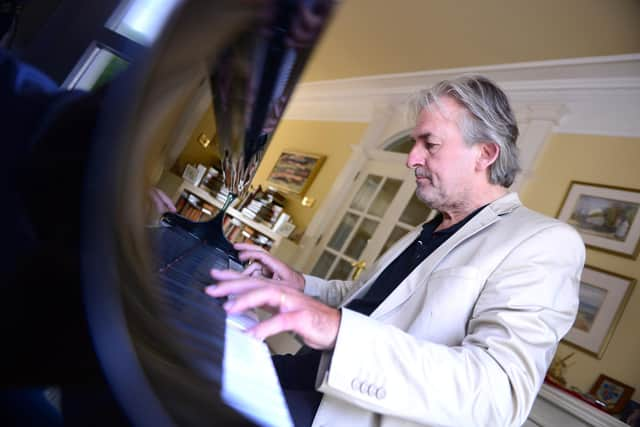

The long and complex Rachmaninoff Third is one of the greatest of all piano concertos in the repertoire, and also one of most difficult to interpret, both technically and emotionally. It is also regarded by some as the best of the composer’s piano concertos, despite the fact that his Second is heard relatively much more often.
The last time I heard his Third performed ‘live” was some years ago in the Sydney Opera House, with the Sydney Symphony and an Asian soloiost, and this is a piece which never loses it strong appeal and fascination as the years go by, wherever it is played.
Rachmaninov was not a composer to waste a good melody, and he applied this throughout the concerto right from the very start. Barry Douglas was impressive throughout, not least in his powerful and electrifying cadenza towards the end of the first movement.
The distinguished young conductor Tom Fetherstonuagh kept the orchestra in the right balance with the soloist for most, though not all, of the concerto – very few visiting conductors get it right all of the time. This apart, it was a breathtaking 40 minutes or so, and the sheer wonder is that Barry produced such a stunning performance after standing-in with only two days’ notice. He and the conductor and players deservedly received a standing ovation.
The second half was devoted to another masterpiece, namely Bela Bartok’s Concerto for Orchestra, written in the USA in 1943 when he was in poor health, short of money and far from his home in Hungary. The Ulster Orchestra was also in fine form in this demanding piece, and it brought to a close an evening of memorable music-making.