
Blue plaque to be commemorated in honour of County Down-born musician, collector and transcriber of Irish traditional music
A County Down musician, collector and transcriber of Irish traditional music is to be commemorated with an Ulster History Circle Blue Plaque on Tuesday (August 4).
James O'Neill’s legacy will be honoured with the plaque in Belfast as part of the Fleadh celebrations in the city.
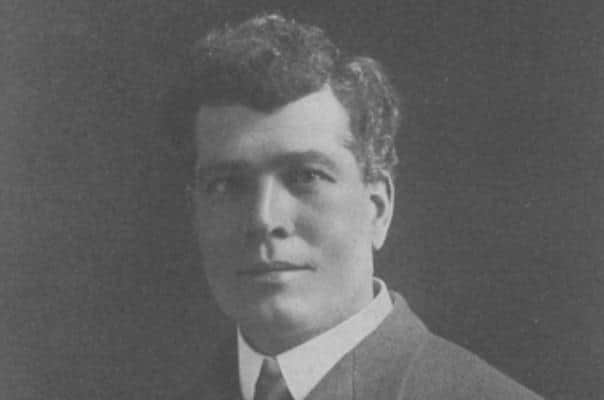

Born in Seapatrick, Banbridge, O'Neill moved with his family to north Belfast as a child before emigrating to America aged 18. Settling in Chicago, he joined the city's police force, where he met fellow Irish immigrant and renowned music collector Francis O'Neill, to whom he was not related.
The pair became instrumental in preserving Irish traditional music, with James serving as the skilled transcriber behind landmark collections including O'Neill's Music of Ireland (1903) and Dance Music of Ireland (1907), regarded as the unofficial "bible" of Irish traditional music.
James became known for his extraordinary ability to write down tunes after hearing them just once, preserving melodies brought to America by Irish emigrants. One famous story tells of him transcribing a tune whistled by a Chicago barber while the man soothed his crying baby. The melody, initially dubbed The Whistling Barber, was later identified as The Mills Are Grinding and remains part of the traditional repertoire today.
James O’Neill died in Saint Anthony de Padua Hospital Chicago on November 28, 1949. He is buried in Mount Olivet Cemetery.
His biographer, Caoimhin Mac Aoidh, said: "His (James O'Neill's) extraordinary musicality meant he could transcribe a previously unheard tune simply upon hearing it played. Their joint work was published by Francis O'Neill noting James as musical editor. The remarkable musical skills of James O'Neill contributed to the capturing of a huge and critical store of tunes which enrich the lives of traditional musicians around the world and will continue to do so for generations to come."
Much of O'Neill's life's work was destroyed when flooding damaged his Chicago home, with more than 2,000 transcriptions lost. The only surviving manuscript is now regarded as one of the most significant documents in Irish traditional music.
The Lord Mayor of Belfast, Councillor Rois-Maire Donnelly, said: "We are proud that Belfast is hosting this great event, at which James O'Neill's name is being resurrected, remembered and commemorated by the Ulster History Circle."
Rev. Gary Hastings, Church of Ireland Rector and Ardollamh, Chief Bard of the Fleadh Ceoil, said: "It's a very important thing to mark the part James O'Neill played in preserving the musical and historical tradition belonging to us all."
Ulster History Circle vice chair Eibhlin Mac Aoidh added: "James O'Neill learnt and played traditional tunes in Belfast. He carried them across the sea to Chicago and as 'The Scribe' he was key in transcribing and preserving the tunes of the Irish diaspora and preserving them for generations.
"The Ulster History Circle is delighted to commemorate James O'Neill's contribution to the music being played in Belfast this week at the Fleadh. The Circle thanks Belfast City Council for funding the plaque and Michelle Downey and the Downey Group for their kind assistance."
The plaque will be unveiled at Kelly's Cellars, Bank Street, Belfast, at 9.45am on Tuesday, August 4.