
Royal Irish Regiment pays tribute after passing of 97-year-old Albert Morrow, last Rifleman of Battle of Happy Valley in Korean War
The Royal Irish Regiment has paid tribute after the passing of 97-year-old Albert Morrow, who was believed to be the last surviving Rifleman of the Battle of Happy Valley in the Korean War.
The 1950-53 war saw North Korea, supported by China and the Soviet Union, invade South Korea, which was in turn supported by the United Nations Command (UNC), led by the United States.
It was seen as one of the first major proxy wars of the Cold War and led to Korea being divided between north and south.
Within the war, the Battle of Chaegunghyon or the Battle of Happy Valley (1951), saw the The Royal Ulster Rifles - which became part of the RIR through amalgamation - stand out by beating back the Chinese forces. However elsewhere the UN front buckled and fell back, abandoning Seoul. Nevertheless, the RUR would be the last UN unit to withdraw.
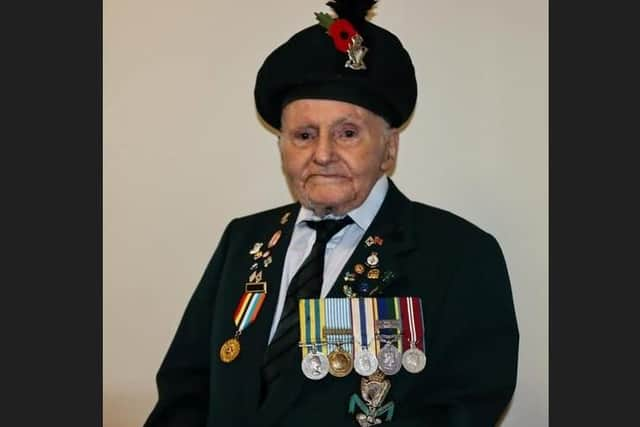

In January Mr Morrow told the BBC of his experience on the frontline at Pyongyang, the North's capital, where he was an ambulance driver.
He recalled the bitter cold, the poverty and living on 24-hour individual rations.
"Total devastation, you couldn't believe your eyes," he told the BBC.
He recounted facing extreme conditions, with ill-prepared equipment and that some of the attacks were "fierce" leaving him "naturally scared".
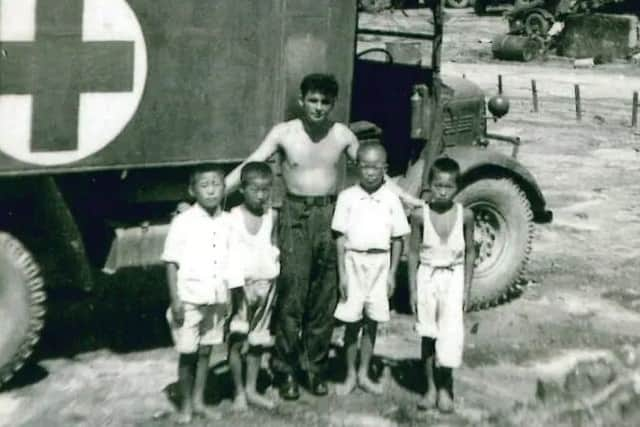
In the Battle of Happy Valley he was tasked to recover the bodies of two soldiers who had been killed by phosphorus bombs.
"We got the first guy out and put him on the stretcher and he burned through the stretcher so we had to tie him with toggle ropes," he said. "They were still burning, still smouldering."
When Morrow was leaving Happy Valley he said he had a fortunate escape as some vehicles behind his ambulance were captured by Chinese forces.
Happy Valley got its name, he recounted, from the supplies they received from Americans.
"All you could smell was the aroma of the steaks, the turkey, whatever. It was absolutely fabulous," he said.
In a social media post yesterday, the RIR said it was the sad duty of Regimental Headquarters to report his death, on Monday 25 August 2025.
"Albert was an ambulance driver in the 1st Battalion and after the war he dedicated himself to ensuring that those Rifleman who lost their lives in Korea would not be forgotten,” it said.
His services were recognised with a House of Commons motion in January, which recognised his "remarkable contribution and sacrifice" during the and "the extraordinary bravery" he displayed, enduring freezing conditions, fierce attacks, and personal risk while serving as an ambulance driver on the frontline.
The motion also commended his efforts in highlighting the vital role played by the Royal Ulster Rifles in the Korean War, "often referred to as the forgotten war", and his dedication to preserving their legacy through his return visits to South Korea, where he helped dedicate a memorial to his regiment.
The motion also paid tribute to the Korean people "for their ongoing recognition of British and Irish soldiers' contributions to their freedom, as evidenced by their warm hospitality and memorials".