
Anglo Irish Agreement 40 years on - Unionists warn of parallels with imposition of sea border and legacy plans
Unionist parties have reflected on the 40th anniversary of the signing of the Anglo Irish Agreement – warning that parallels exist today in relation to Dublin and London’s approach to the Irish Sea border and the legacy of the Troubles.
The British and Irish governments signed the accord on 15 November 1985 at Hillsborough Castle – in a deal then-prime minister Margaret Thatcher later said she regretted.
It gave Dublin a consultative role in the future of Northern Ireland – and promised security guarantees for the UK, which Mr Thatcher believed didn’t fully materialise.
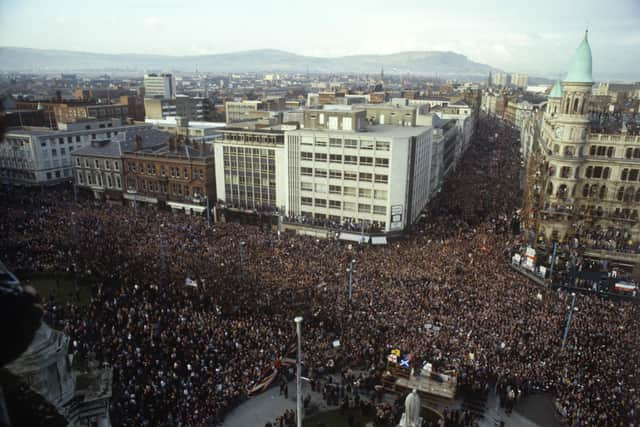
Unionists were furious about the deal, which they viewed as a betrayal. A rally in opposition at Belfast City Hall attracted 100,000 protestors, there was a campaign of civil disobedience and unionist MPs withdrew from Parliament.

DUP deputy leader Michelle McIlveen said it “remains a stark reminder of what happens when political change is imposed upon the people of NI without their consent. It was delivered over our heads, devoid of democratic legitimacy, and it sowed a deep mistrust that continues to have ramifications to this day”.
She said the “same disregard for democracy” was repeated with the imposition of the NI Protocol by the UK Government – branding that deal “a modern reiteration of the very pattern of exclusion and imposition that caused so much instability forty years ago”.
TUV leader Jim Allister said the 1985 deal was “a turning point” – with Dublin “given an institutionalised role in the internal affairs of Northern Ireland”.
“Forty years on, that trajectory has not only continued but accelerated”, he said – arguing that “some of those who were the loudest voices against the Anglo-Irish Agreement have become implementers of the Union-dismantling Protocol”.
Ulster Unionist peer Lord Empey said the deal “was negotiated behind our backs” – but the lesson was learned “that unionists must do their own negotiating and not rely on London to negotiate for us”.
“Sadly, 40 years later, London hasn’t learned that lesson as the current legacy proposals show”, the UUP man said.