
Braverman and Foster reveal proposals for leaving ECHR - with Protocol as template for overriding opposition in NI
A proposal for the United Kingdom to leave the European human rights framework has been unveiled, with its authors citing the Windsor Framework as an example of how the government could dismiss any opposition in Northern Ireland.
The European Convention on Human Rights (ECHR) has been deeply controversial in British politics – with government plans on issues like immigration, security and policing thwarted by rulings from Strasbourg.

That has led to growing calls from the right for the UK to withdraw from the convention, which predates and is separate from the EU – and wasn’t affected by Brexit.
As with withdrawal from the European Union, the status of Northern Ireland in the event of such a change has created much debate – with nationalists and others arguing that it is central to the 1998 peace deal.
Now, the Prosperity Institute paper ‘Why and How to Leave the European Convention on Human Rights’ has attempted to address the issue, in short by saying that the UK should seek agreement with the EU and Ireland on any withdrawal – but press ahead in the event a deal can’t be reached.
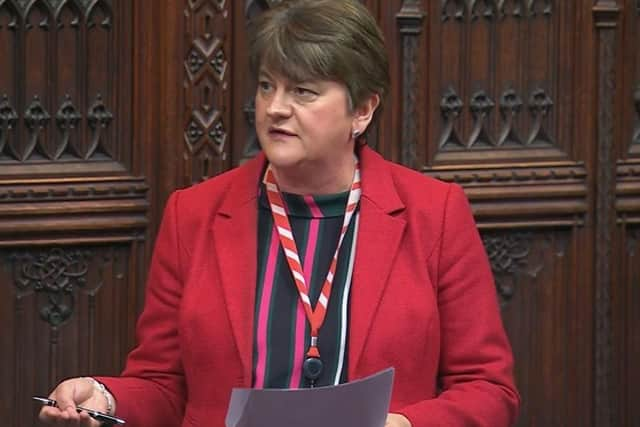
The document is fronted by former Conservative Home Secretary Suella Braverman, with a foreword from the former First Minister of Northern Ireland, Dame Arlene Foster.
It argues that leaving the ECHR “is the only way to protect our veterans, protect our borders including from spurious asylum claims, end the small-boats crisis, defend our country’s national security, and reclaim policing”.
It also says that the Belfast Agreement has been amended in the past – and can be to accommodate UK withdrawal from the convention. This would prove highly controversial with nationalist parties in Northern Ireland, and the Irish government.
But the Prosperity Institute proposals say such opposition wouldn’t need to stop the UK government pressing ahead – citing the dismissal of unionist concerns over the Irish Sea border.
“In the event that some parties in Northern Ireland refuse to support the changes, HM Government could still proceed with the next phase, as it did with the Windsor Framework”, the paper says.
It does not propose scrapping the Windsor deal immediately, but says changes cannot be agreed with the EU, HM government “reserves the right to denounce these international agreements entirely”.
The post-Brexit trade deal also enshrines certain EU rights in Northern Ireland, which don’t apply in the rest of the UK. That situation has caused much confusion about the province’s constitutional status when it comes to the rule of law.
For example, the High Court in Belfast ruled that aspects of the last government’s Rwanda immigration plans were not compatible with the framework, and struck them out. It has also had an impact on the Legacy Act – with key pieces of that law deemed by the courts incompatible with EU rights provisions in the province.
Most recently, the Equality Commission asked the High Court in Belfast to rule on key points about whether the Supreme Court ruling on the definition of a woman would apply here – arguing that Article 2 of the Windsor Framework may clash with the ruling of the UK’s highest court.
In her foreword to the document, Baroness Foster says it sets out “in forensic and principled detail, why the time has come for the United Kingdom to leave the European Convention on Human Rights”.
The former DUP first minister says: “It is not a decision to be taken lightly, but neither is it one that can be avoided any longer. The Convention, born out of honourable intent, has over decades become an instrument that too often impedes rather than upholds justice, particularly in regions like Northern Ireland, where legal asymmetry now threatens the very peace the ECHR was once invoked to protect”.
The current government – with a huge Commons majority – is committed to the “full and faithful” implementation of the Protocol, and strongly opposed to any bid to leave the ECHR.
The Conservative Party is still committed to its Irish Sea border deal with the EU, with leader Kemi Badenoch telling this newspaper in March that her party isn’t going to “unpick” deals it has already done.
However, Reform UK – riding high in national opinion polls – is currently committed to both leaving the ECHR and to scrapping the Windsor Framework.