
Definition of 'woman' case explained: What does the UK Supreme Court judgement on transgenderism mean?
Today’s judgement about the definition of the word ‘woman’ has been widely described as a landmark one – but what does it actually involve?
The judgement was handed down unanimously by five leading judges at the Supreme Court in London, including president of the court Lord Reed and deputy president Lord Hodge.
It concerns how the word 'woman' is to be understood within an existing piece of law called the Equality Act 2010.
The case had its genesis in Scotland in 2022, where a group called 'For Women Scotland' challenged the definition of woman that the Scottish government was using in a 2018 law which was intended to increase the number of women on public boards.
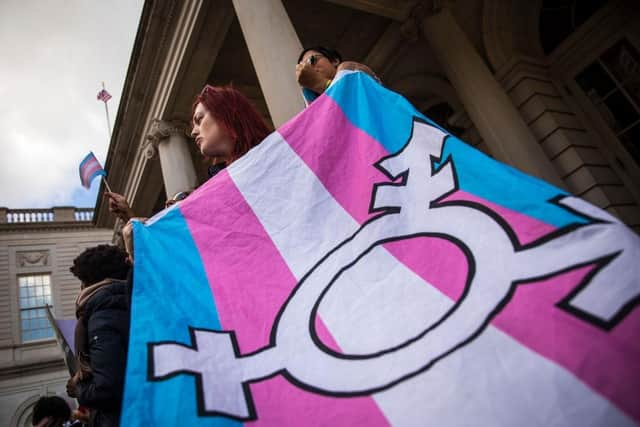

The Scottish government claimed that anyone holding a female Gender Recognition Certificate (a document registering a legal change of gender, for which no surgery or hormones are required) met the definition of 'woman' for the purposes of its 2018 law.
The Scottish government also said that it was relying on the same definition of woman as that of the Equality Act 2010.
But this in turn raised the question of what the 2010 act itself meant when it spoke of "woman", "sex", and "man".
Summarising the case, the judges ruling handed down today states: "The central question on this appeal is whether the Equality Act 2010 treats a trans woman [someone born male who now refers to themselves as female] with a Gender Recognition Certificate as a woman for all purposes within the scope of its provisions, or when that Act speaks of a 'woman' and 'sex' it is referring to a biological woman and biological sex."
The judges concluded that when the Equality Act 2010 talks about "sex", "woman", and "man" it means "biological sex, biological woman, and biological man" – not just someone who holds a Gender Recognition Certificate of their new chosen gender.
To read the act any other way would be "incoherent and unworkable", the judges said.
The practical effect of the ruling is that bodies are able, under the Equality Act 2010, to exclude someone from women's changing rooms if they were born male but now have a Gender Recognition Certificate saying they are female.