
Economist highlights ‘substantial drop’ in GB-NI trade under Irish Sea border as new figures released
There has been a “substantial drop” in the number of businesses in Great Britain selling goods into Northern Ireland since the Irish Sea border arrangements were put in place, a leading economist has said.
Dr Esmond Birnie – Senior Economist at Ulster University – was reacting to new figures from the Office for National Statistics (ONS) – and has warned that policy makers “should note the very problematic implications of the current arrangements”.
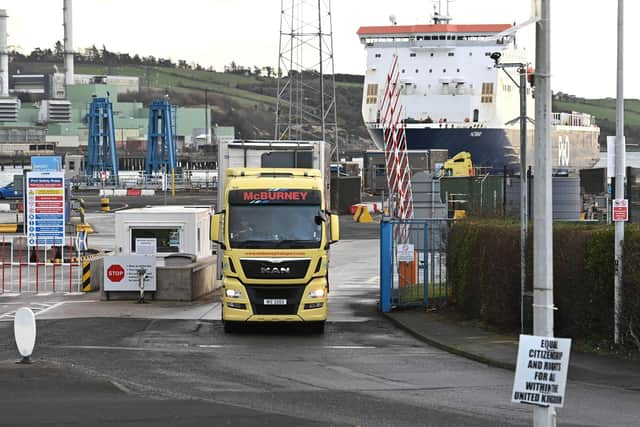

The government is currently undertaking a review of the Windsor Framework, which keeps the province in the EU’s single market for goods and has hugely complicated trade within the UK. Goods entering Northern Ireland’s ports must meet EU standards and therefore require varying degrees of checks, as well as customs declarations.
The review, conducted by former NIO minster Lord Murphy, was triggered after unionists rejected the arrangements in an Assembly vote last year – but they remained in place with Alliance and nationalist support.

Dr Birnie says few areas of UK policy “are in greater need of a careful sifting of the data and evidence than consideration of the business impact of” the Windsor Framework.
He highlights a substantial drop between 2020 (the last year before the Protocol came into effect) and the most recent data for the 12 months up to the end of April 2025.
“For the manufacturing and retail sectors taken separately and for all businesses overall the percentage selling to Northern Ireland dropped by about one-third during the four year period coinciding with the operation of the Protocol/Windsor Framework” the economist said.
Dr Birnie said the figures are “very consistent” with previous data from Northern Ireland Statistics and Research Agency in December last year.
“The latter showed that during 2020-23 the value of goods purchased by Northern Ireland from GB had grown by 24% whereas the value of goods purchased from the Republic of Ireland had grown by 51%” he said.
The Ulster University academic also said that “substantial proportions” of businesses have identified the Protocol as a challenge: almost a quarter of manufacturing and over one-fifth in retail.