
Equality Commission chief praised for 'common sense' statement in wake of Féile an Phobail ban on women's group
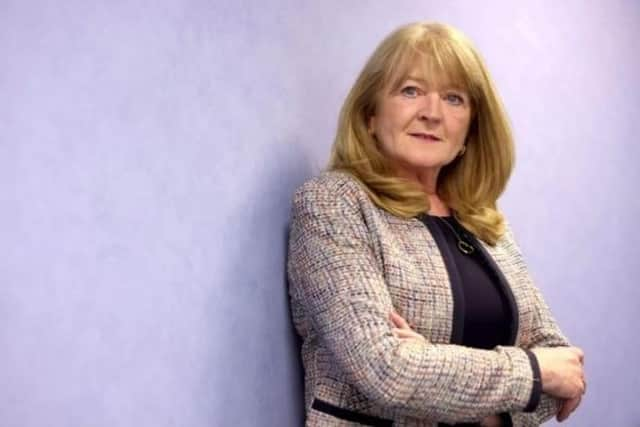
Politicians have welcomed comments by the Equality Commission’s Geraldine McGahey, in which she condemned commentary encouraging harassment of people over their beliefs on sex and gender as “especially dangerous”.
The equality watchdog’s chief commissioner made the comments in the wake of the decision by Féile an Phobail to remove a Women’s Rights Network (WRN) event from its programme after protests from transgender activists online.

The decision fuelled an ongoing debate over whether biological sex or a self-perceived gender identity defines what it is to be a man or a woman.
In a statement issued on the commission’s website, Ms McGahey said she would not comment on the Féile row, but said the “principles of mutual respect, pluralism and tolerance” are hallmarks of a democratic society.
She said the Commission’s (ECNI’s) concern is about the public commentary surrounding the case, saying it is “misleading and wrong” to suggest that people who hold “protected ‘gender critical beliefs’ or ‘gender identity beliefs’ are not entitled to hold those beliefs or should not be able to express them respectfully”.
Ulster Unionist Party leader Jon Burrows welcomed the ECNI chief’s remarks as a refreshing, common sense statement “about freedom of expression, thought and what genuine tolerance and mutual respect means”.
He told the News Letter: “Too often those who preach tolerance have displayed the greatest intolerance to those who hold gender critical beliefs and both officialdom and the human rights lobby have shied away from speaking up for their freedoms of thoughts and expression”.
The TUV said the comments by Geraldine McGahey on free speech are to be welcomed, and that officialdom too often “takes one side in a debate and attempts to silence the other”.
Last week, Féile an Phobail said an agreement it reached with WRN was “a vindication” of its “position in standing up for those who are marginalised”.
They claimed “the agenda of those who involved themselves in this issue was clear for all to see” – and that many of those people were attempting to “attack the West Belfast community”.
The WRN event will go ahead om Tuesday at an as yet undisclosed venue. The organisers say speakers and panel discussions will “explore a range of issues, including women’s sex-based rights, the current legal landscape in Northern Ireland, safeguarding, sport and public policy”.
In her statement on the ECNI website, Geraldine McGahey said: “Legal proceedings in the High Court in Belfast have now concluded in respect of an allegation of breach of contract in relation to the decision by Féile an Phobail to withdraw a Women’s Rights Network event from its programme of events for this year.
“That specific allegation falls outside the scope of the Equality Commission’s remit, and we will not comment directly on those proceedings. However, given the relevance of equality law, it seems timely to reflect on the nature and tone of the dialogue that surrounded the decision”.
She said it is “particularly concerning” that “the complexity of the issues is lost when people quickly choose sides in a heated and very public debate” – saying it is “important that debate is informed by an understanding of the law and conducted in a way that respects the rights and dignity of everyone”.
“Of particular relevance to this debate is the Fair Employment and Treatment (Northern Ireland) Order 1998 (‘FETO’), which prohibits discrimination and harassment against employees because they hold, or do not hold, protected religious or philosophical beliefs or political opinions, or because they have expressed such beliefs or opinions. But remember, FETO also prohibits discrimination against service users on the grounds of the protected religious beliefs or political opinions that they hold, do not hold, or express.
“Employment tribunals and courts in Great Britain have accepted that people who hold, or do not hold, particular beliefs about gender identity may be protected against unlawful discrimination. That protection may apply both to so-called ‘gender critical beliefs’, such as a belief that sex correlates with biology rather than identity, and to so-called ‘gender identity beliefs’, such as a belief that everyone has a gender identity which may differ from their biological sex.
“In the Equality Commission’s view, industrial tribunals and courts in Northern Ireland are likely to adopt similar reasoning and conclusions when applying equality law here”. she said.
Ms McGahey said it was “misleading and wrong” to suggests that “people who hold protected ‘gender critical beliefs’ or ‘gender identity beliefs’ are not entitled to hold those beliefs or should not be able to express them respectfully”.