
'Famine events can't be excuse for Brit-bashing': Fears Ulster Protestant victims could be written out of nationalist-driven commemorations
A nationalist-driven move to hold large-scale commemorations of the Irish Famine in Belfast next year must not be used as an excuse for ‘Brit-bashing’, the TUV has said.
The party’s deputy leader, Ron McDowell, spoke out after the SDLP pushed city officials to set up a programme marking the 19th century famine, as part of their efforts to get an annual event organised by the government of the Republic staged in Northern Ireland’s capital city.
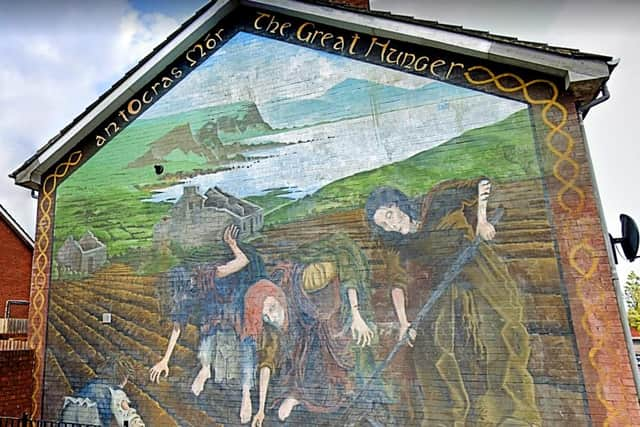

When the event was held in Donegal in 2023, said Mr McDowell, it devolved into “bashing the British” – not criticism of the actions or inactions of Westminster governments and wealthy landlords in the 1840s, but broad attacks on people of a British identity as a whole that the TUV politician characterised as “offensive”.
Nationalists are keen to see the Republic’s National Famine Commemoration held in Belfast next year. To bolster the case with the Irish government, the SDLP wants the city’s council to come up with ways to “mark the 180th anniversary of the famine”, which lasted from 1845 to 1852.

A motion set to be debated in the coming weeks states the programme should “focus on the contemporary shared experience of communities; the impact on Belfast, Ulster and island of Ireland at the time and in the years that followed”.
It should also include details of emigration driven by the famine, as well as “domestic and overseas contributions to altruistic relief” while telling the “stories of ordinary people whose experiences have been forgotten”.
States the SDLP: “This will be an opportunity to discover more about our collective history from this period, and in addition will support the council’s bid to host the National Famine Commemoration in Belfast in 2027.”
But Mr McDowell is concerned the occasion could be used to either attack British people or peddle politicised myths about the famine, both of which he said happened in 2023.
“I watched something of that event, which was very much an Irish state affair with its military and president present,” he told the News Letter.
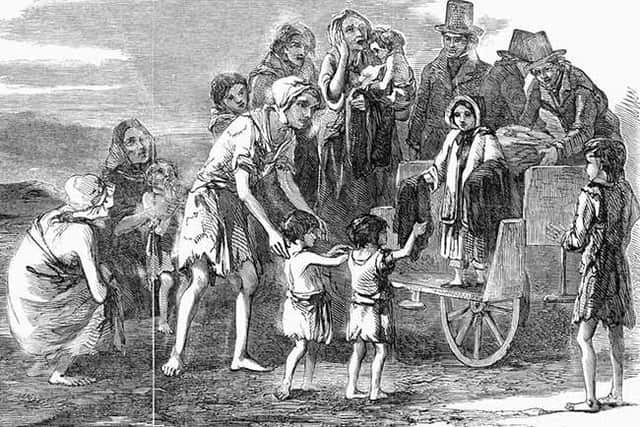
“There was a lot of time devoted to bashing Britain – what the British didn’t do, what the British did by allegedly shipping corn out of the country, which is actually something undermined by recent scholarship showing that food imports vastly dwarfed exports. Frankly, I found that offensive.
“They didn’t talk about ‘the British government’ or ‘some of the rich’, they talked about ‘the British’.”
Those attitudes, he fears, could lead to thousands of Ulster protestant famine victims being written out of nationalist-driven commemorations.
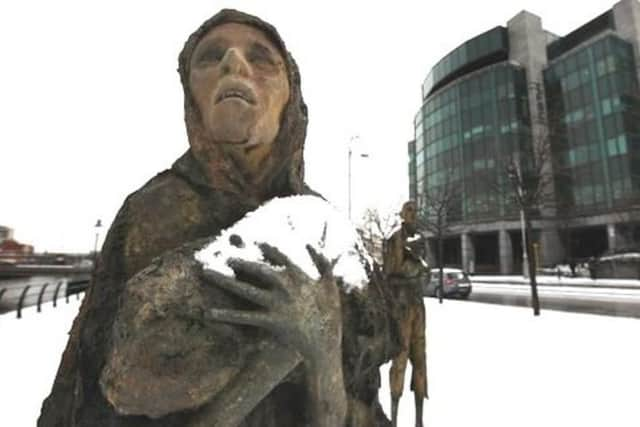
“In Ulster, there were 110,000 people who lost their lives,” pointed out history buff Mr McDowell. “The Presbyterians in Armagh were decimated, there are Grand Orange Lodge reports talking about potato blight in Co Tyrone.
“On Belfast’s Shankill Road, there were reports of vagrants dying at the end of Mateer Street. They were buying victims that deep in the Shankill graveyard that there were just two inches of soil covering the bodies. All those horror stories happened to ‘the British’.”
The National Famine Commemoration began in 2008 and rotates around Ireland’s four provinces. For Mr McDowell, the involvement of the Dublin government means it’s “an Irish state matter, and that being the case should stay in the Republic”.