
First Minister and deputy First Minister's launch of recruitment drive for Irish Language and Ulster Scots Commissioners highlights 'huge disparity' in powers between two offices, says TUV
The Executive Office’s launch of a recruitment drive for Irish and Ulster-Scots commissioners only highlights the huge disparity in contrasting powers of the two roles, it is claimed.
Late on Wednesday night the First and Deputy First Ministers announced the launch of a competition to appoint both commissioners.
However, critics say the Irish commissioner will have power to enforce Irish across all public authorities and their services – while the Ulster-Scots commissioner will merely produce publicity materials.
Marking the launch, First Minister Michelle O’Neill said: “I am delighted to announce the launch of the appointments process for the Irish language commissioner and Ulster-Scots commissioner.”
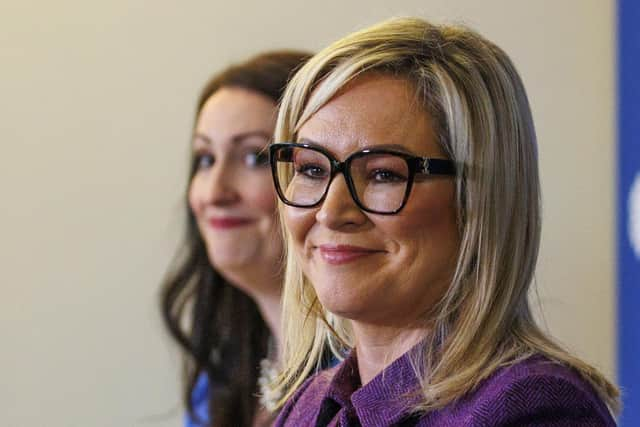

Deputy First Minister Emma Little-Pengelly added: “These appointments are the next step when it comes to establishing the new identity and language bodies.” Advertisements will be launched in coming days.
But TUV vice chairman Allister Kyle said that while Ms Little-Pengelly has promoted the forthcoming appointment of an Ulster-Scots commissioner on social media, “the reality is that their powers and remit is minimal compared to the Irish language commissioner”.
He added: “Anyone who looks at the legislation will discover that the 'main function' of the [Irish language] commissioner is put in the form of a statutory duty to 'protect and enhance the development of the use of the Irish language by public authorities' in respect of their provision of services.”
The commissioner will sett 'best practice standards' for every public authority and monitor their performance.
And unionists will have no veto over the Irish commissioner because statutory authority over them comes jointly from the first and deputy first ministers.
The lesson from Scottish and Welsh language acts, he said, is that “the toe in the door guarantees it will be pushed open wider over time”; The legislation gives commissioners power to review standards any time - and this must be done every five years.
By contrast, he said, the Ulster-Scots commissioner role is merely to “enhance and develop the language, arts and literature associated with the Ulster-Scots and Ulster-British tradition” – without any reference to Orange culture. The means by which the commissioner operates is to “produce and distribute publicity material” he added.
Unlike the Irish language commissioner, he said, the Ulster-Scots commissioner will not be able to enforce any Ulster-Scots “standards” on public authorities, there will be no obligation on them to produce a plan of action and there will be no five-yearly review of progress.
However DUP North Belfast MLA Brian Kingston, who also sits on the Executive Office Committee, responded that there are already many Irish language advocacy groups, but that this will be the first to "rebalance the cultural playing field".
When the identity and language bill behind the two commissioners was passed by the Government in Westminster, he said, only DUP MPs and Peers opposed it – tabling 65 amendments – but they did not have enough votes to stop it.
He said the legislation "did not faithfully reflect previous agreements" and his party continues to have serious concerns about the burdens it will place on public services.
He hit back that it was Westminster which imposed this legislation but that the TUV wishes to scrap devolution and give Labour "full governance" of NI.