
Kingsmills Massacre at 50: ‘Inquest refused to name suspects – but we had no choice in becoming victims’
There was a sharp contrast between the Kingsmills inquest refusing to name dead suspects while the victims had no choice about being thrust into the spotlight, the daughter of one victim has said.
Racquel Brush was only three when her father Kennth Worton was murdered.
She was speaking to the News Letter at the roadside memorial service for his murder, 50 years to the day.
For her it is "unbelievable" that 50 years have passed since his murder.
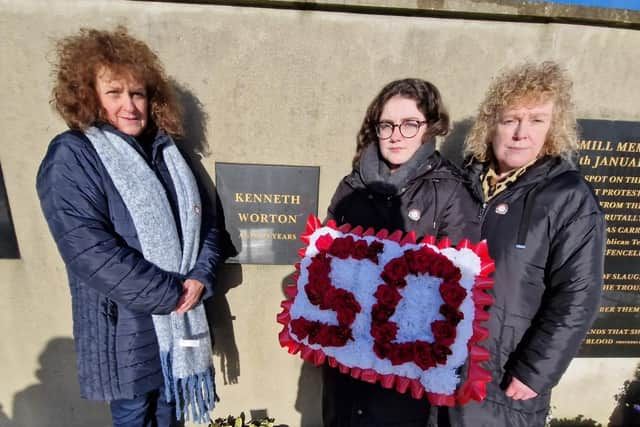

It bothers her that nobody was ever held accountable.
She recounted how the coroner in the legacy inquest refused to name two key suspects who were deceased.
"But our family members are all deceased, and we didn't get a choice. We were all thrown into the spotlight because of the murders. So we didn't have a choice"
Her daughter Kenzee, 22, laid a large wreath for her grandfather.
"It should never have happened," she said.
"He was a lovely man, so young, with two children at home.
"He was just stripped away from us all. And for what? Because he was the wrong religion."
Her grandfather would have been 74 had he not been murdered.
Her aunt Suzanne Hinds was six when her father was murdered.
She and her sister would have sat on each knee in the evenings.
"And he would have told us a story and then we would have gone back to bed."
In 2020 most of the Kingsmills families staged a walk out of the legacy inquest.
Their lawyer said the families were suffering “distress and frustration” over their desire to have the ciphers lifted for two suspects who had been given On-The-Run letters.
The coroner interrupted to ask why the families could not wait until the end of the inquest for his decision on the issue.
But their lawyer replied that there had been “many examples” of inquests naming suspects who were still alive.
The coroner responded that naming deceased suspects was not simple due to matters of national security and the human rights of individuals who might be put at risk.
At that point most families walked out.
In his ultimate conclusions, four years later, the coroner said he did not name any suspects because there was only intelligence against them - not hard evidence.