
Kingsmills Massacre pain 'still felt in families and community 50 years later'
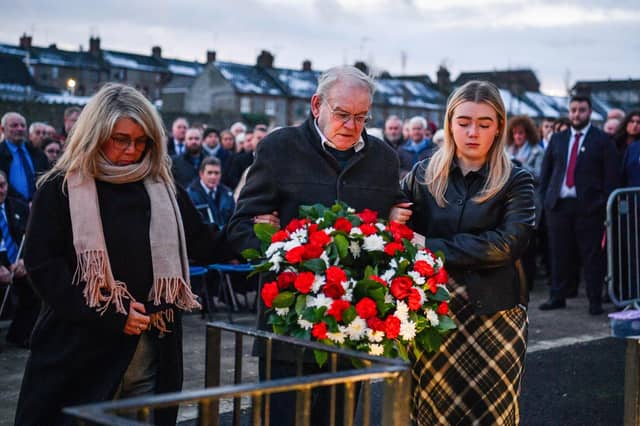

The brutal sectarian nature of the Kingsmills Massacre in south Armagh 50 years ago tomorrow led to an exodus of Presbyterians - and the pain is still felt today, a memorial service has heard.
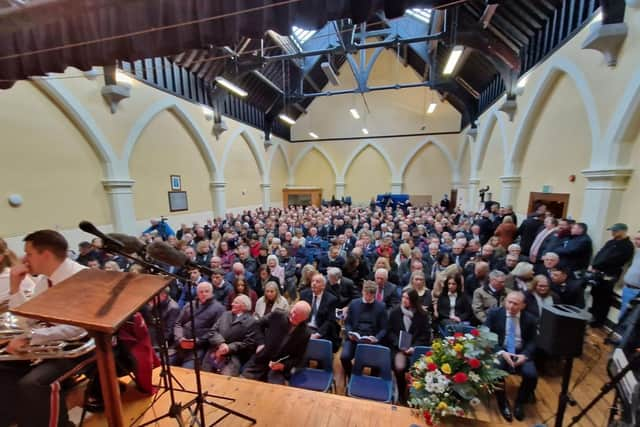
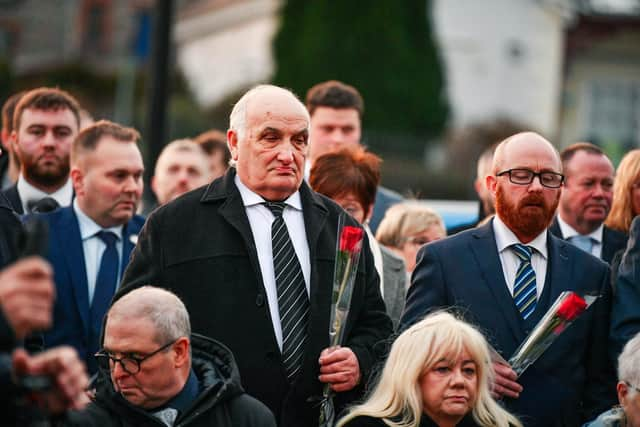
A 50th anniversary service was held on Sunday in Bessbrook Town Hall this afternoon, attended by some 500 people, spilling out in the entrance hall.
The attack took place near Kingsmills in south Armagh on 5 January, 1976 when the IRA gunned down 10 Protestant civilians as they travelled home from their factory jobs in a minibus.
The 10 men were Robert Chambers, 18, John Bryans, 46, Reginald Chapman, 29, Walter Chapman, 35, Robert Freeburn, 50, Joseph Lemmon, 46, John McConville, 20, James McWhirter, 58, Robert Walker, 46, and Kenneth Worton, 24. Sole survivor Alan Black survived being shot 18 times.
The atrocity, one of the most notorious of the Troubles, came amidst a spate of sectarian tit-for-tat murders.
Loyalists murdered three members of the Reavey family in Whitecross and three members of the O’Dowds in Gilford the day before – although the Kingsmills massacre had actually been planned months in advance.
Alan Freeburn, son of Robert Freeburn, sent a message from Canada which was read aloud yesterday.
He said events of 5 January 1976 "shattered our family and things would never be the same".
He added: "Sometimes it is easy to think that you have been forgotten but this memorial service is a testimony to the fact that our loved ones have not been forgotten and their memory is treasured."
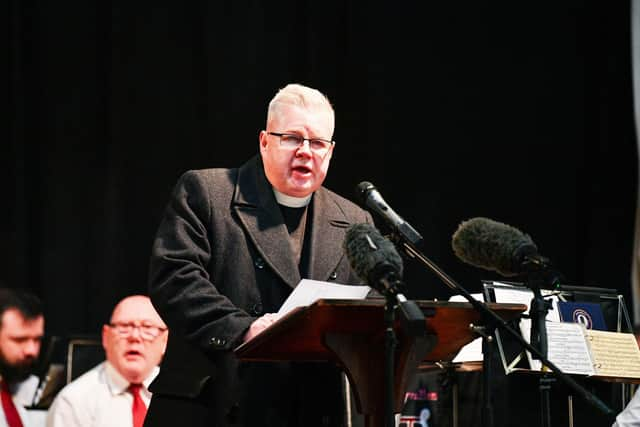
Presbyterian minister Rev Keith McIntyre said the impact of the attack is still felt today.
"It resulted in a substantial departure of many Presbyterian families from the area," he said.
In his 26 years there he has ministered to the families.
He added that "time does not heal, the scars remain and their pain becomes their pastor's also".
"We know only too well that since That time, none of those murderers has faced a moment's earthly justice.
"All the inquests and inquiries have resulted in nothing, just a wall of silence, only adding to frustration and pain, being denied justice for the victims and their families.
"Yet those murderers who planned their actions and carried them out with callous efficiency, may laugh at their victims and feel secure that they have escaped justice.
"But they are wrong. Desperately wrong and deluded.
"Those already dead now know what true justice is and what a fearful thing it is to fall into the hands of the living God.
"Those who still may be alive who carried out that barbarity will one day discover the same.
"God's righteous judgment is inescapable, irrevocable and eternal in its duration."
Church of Ireland minister Rev Alan Synnott said Catholic villagers had been “deeply ashamed at what had been said to have been done in their name”.
But the Kingsmills families told them: “It wasn't you. We know it wasn't you. And you are our neighbours and you are our friends.”
It was explained to him eight years ago when he arrived in the village, why the massacre “did not generate a tsunami of hatred” and “did not generate a great wave of sectarian vengeance, but rather neighbourliness”.
This was because the village was founded by Quakers and their ethos ran deep in the community, he said.
“That spirit of goodness, and that communal dwelling together, that overcomes the divides of our society could be rooted back into that place when the Quakers set this place down upon the earth.”
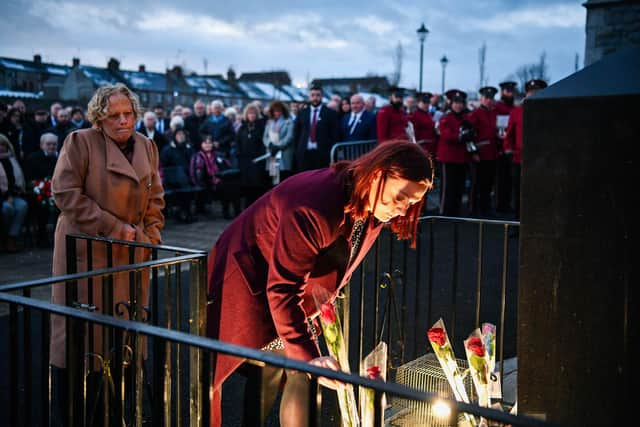
After the service those present exited to the Kingsmills memorial outside where a brief ceremony took place.
Sole survivor Alan Black took part and ten red roses were laid in memory of the ten men who were killed.
A further roadside service will take place at the scene of the shooting tomorrow, Monday at 11am.