
April Fools' Day MLA pay hike branded 'fitting' - as rise approved despite 'overwhelmingly critical' public response
MLAs are set for a £14,200 income hike after the body charged with setting politicians’ pay decided to press ahead despite an “overwhelmingly critical” response from the public to the plans.
The TUV said it is “fitting” that the rise will take effect on April Fool’s Day – and accused the five main parties of benefitting from a process which they designed.
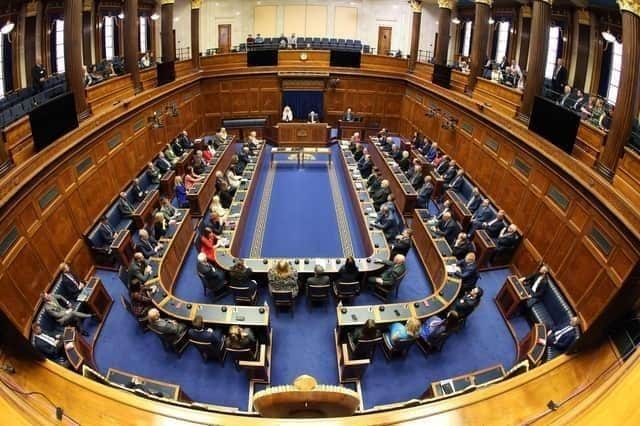

The Independent Remuneration Board announcement came after a two-week consultation carried out with MLAs, the Assembly Commission and the Assembly Members’ Pension Trustees about its proposals first announced last month.
From 1 April, the salary for MLAs will rise from £53,000 to £67,200 per year (an increase of 26.8% since 2016).
The board has also introduced new financial sanctions if an Executive is not formed after the next Assembly election, or the offices of First Minister and deputy First Minister become vacant.
Sinn Fein leader Mary Lou McDonald said the pay increase is “absolutely excessive” while DUP leader Gavin Robinson said he did not think “it plays well at all”.
UUP leader Jon Burrows said he understood public frustration and that the “performance of Stormont is not good enough” – while Alliance boss Naomi Long said she was not going to defend “an unconscionably high rise”.
Timothy Gaston MLA said: “How fitting that the MLA pay hike will take effect on April Fool’s Day. The entire process was designed by MLAs in a way that excluded the voice of the public and ensured the board would examine the issue through a narrow prism that made a pay increase almost inevitable”.
The North Antrim MLA said that “however it is dressed up”, the boards remit “was written by Sinn Fein, the DUP, Alliance, the UUP and the SDLP. They designed the process and they are now benefiting from the outcome”.
Alan Lowry, Chairperson of the Board, said: “Under our legislative framework and in carrying out our responsibilities, the Board is required to balance a number of issues - the importance and complexity of an MLA’s role, the financial viability of a political career and the levels of pay for political representatives in peer parliaments. We also have to reflect on achieving value for money and the broader economic conditions of Northern Ireland. After full consideration of the responses received, the Board is confident that the evidence underpinning its draft determination remains sound.
“We also reflected on correspondence from the public which was overwhelmingly critical of the draft determination. It is clear that the public have been frustrated by the ‘stop-start’ nature of government that has impacted the political institutions in recent years. That is why we are also confirming our proposals in imposing financial sanctions if the institutions should cease to function in their normal way.
“Much of the commentary around our draft determination has been critical, saying that this is not the right time to be tackling this issue. It is clear that the system for considering MLA pay has not been working properly for 10 years, and any delay would only further exacerbate the situation”.
If an Executive is not formed on time following the next and subsequent elections - or if at any time the offices of First Minister and deputy First Minister become vacant - MLA salaries would be reduced by 10% after week six, a further 10% after week 12, and another 10% after week 18.