
None of the big five parties come out either for or against proposed pay hike for MLAs
None of the five biggest parties in the Assembly has come out either for or against the proposed pay rise for MLAs.
A body called the Independent Remuneration Board has proposed raising the basic salary of an MLAs from £53,000 to £67,200 per year – a rise of £14,200, or 26.8% – from April 1.
The proposal is now out to a two-week consultation, and the Assembly told the News Letter: “The board will make the final determination, having reflected on any views they receive from MLAs, the Assembly Commission and the Assembly Members’ Pension Trustees, during the two week period.”
TUV MLA Timothy Gaston came out with a critical statement on Thursday, saying “Stormont has made clear what its priorities are”.
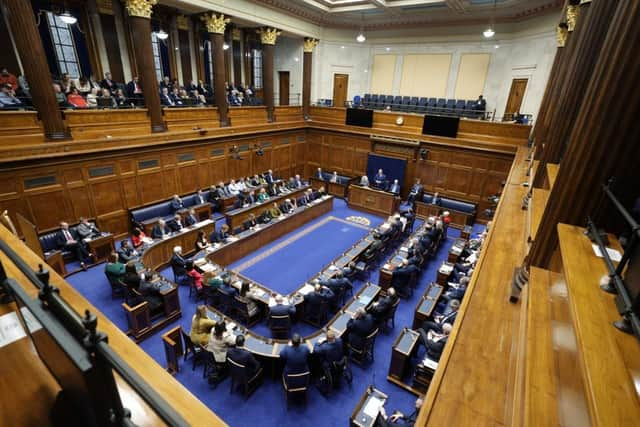

The News Letter has since sought the positions of the larger parties.
The Alliance Party and the UUP have yet to respond.
Asked about the issue by the Press Association today, Sinn Fein first minister Michelle O'Neill said: "It is a recommendation that has been made by an independent board in which we have had no part to play in terms of any determination.
“It’s just been published in the last 24 hours, obviously we need to work our way through the detail of it, but I absolutely acknowledge there is a cost-of-living crisis, people are struggling, people are feeling the pinch right now, so I think it is understandable in terms of how people would feel about it.
“But we will take our time to look at it, and we will respond to the consultation in due course.”
DUP deputy first minister Emma Little-Pengelly said: "This is their recommendation, it is now out to consultation, so we will take at a look at that in detail and I have no doubt we’ll come back to this issue after the consultation has completed.”
The DUP later added in a statement: “MLA salaries are set by an independent board and the process has had no input from MLAs or political parties.
”It is right and proper that those whose pay is being determined have no role whatsoever in its setting. It must be a totally independent process.
“DUP MLAs are elected to serve the people and work daily to help their constituents.
"Our members did not enter public service for financial gain and will continue to work for people in Northern Ireland.”
The SDLP told the News Letter: "It is right that these decisions are taken by an independent body.
"Given the low level of trust the public has in our politics amid continued poor levels of Executive delivery there must be assurances that these decisions are made transparently and based on evidence.
“These proposals are out for consultation and the SDLP will engage with this process and these proposals in due course.”
MLA salaries are lower than those received by MSPs (£74,507), members of the Welsh Assembly (£76,380), MPs (£93,904) and members of the Irish parliament (£102,369).
The proposals from the remuneration board include lowering the pay of MLAs if there no government is established in Northern Ireland for longer than six weeks.
Chairman of the board Alan Lowry said: “Between 2016-25, an MP’s salary went up by 25%, while Members of the Welsh Senedd, Scottish Parliament and Irish Dáil saw increases of 19%, 23% and 34% respectively.
"In the same period, MLA pay increased significantly less, by 8%.
“With the previous Independent Financial Review Panel last making a determination in 2016, it is clear the system of MLA pay has not been functioning normally for a decade.”
As well as raising the pay for a standard MLA from £53,000 to £67,200, the board also proposes raising the pay of:
• Committee chairmen from £65,000 to £79,200;
• The speaker from £91,000 to £105,200;
• The deputy speakers from £59,000 to £73,200;
• Junior minister from £59,000 to £73,200;
• Minister from £91,000 to £105,200;
• and First / Deputy First Ministers from £125,000 to £139,200.
The consultation closes at 4pm on March 5. To respond, email: [email protected]