
Scotland abortion protest buffer zones criticised by JD Vance: Grandmother, 74, willing to go to jail for abortion protest
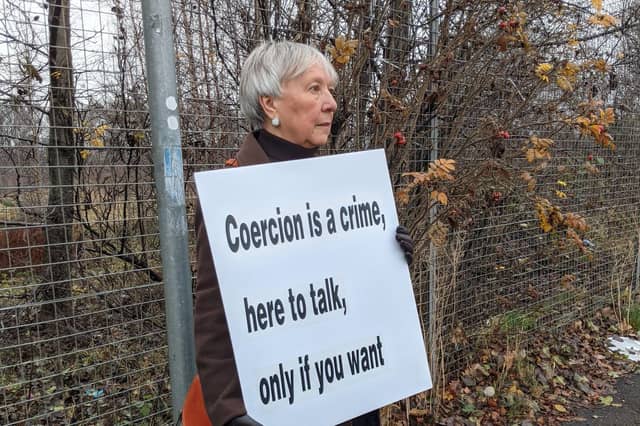

A 74-year-old grandmother, who was handcuffed in a Scottish abortion protest buffer zone, says she is willing to go to jail for the offence.
Rose Docherty was arrested and led away in handcuffs for taking part in an anti-abortion protest outside of the Queen Elizabeth University Hospital in Glasgow on 19 February.
She became the first person to be arrested and charged under a new law which creates buffer zones outside Scottish abortion clinics.
The zones made international headlines in February when US Vice President JD Vance claimed at the Munich Security Conference that such restrictions on free speech in Scotland were a greater threat than Russian aggression.
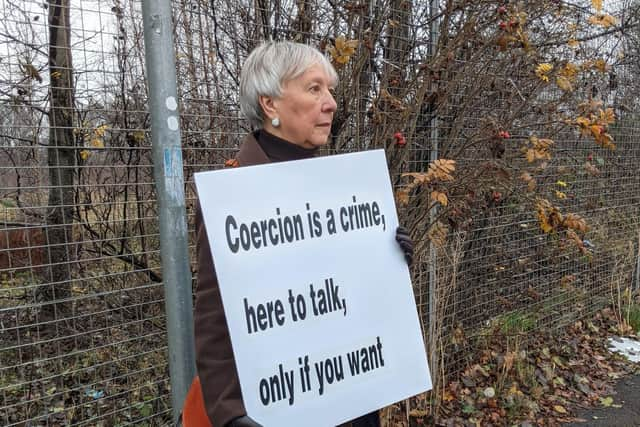
Ms Docherty has rejected a formal warning from Scottish courts - arguing that it was "unjust" - and is waiting to find out what action may now be taken against her.
Doctors at the hospital have previously told BBC Scotland News that such protests are upsetting and intimidating for patients and staff.
Ms Docherty was holding a sign that said "Coercion is a crime, here to talk, only if you want".
In her first broadcast interview since the arrest, she said she had "no reason to regret" the incident.
She said the arrest was an "alarming" and "surreal" experience.
"I don't feel I was breaking the law because I feel this law is an unjust law,” she said.
"I was just standing with a sign that was stating a fact that coercion is a crime.
"I was there to speak with people only if they wanted to speak with me. I wasn't approaching anyone, I wasn't behaving in a manner that was intimidating or harassing anyone."