
The IRA Brighton bomb did not spook Margaret Thatcher into the Anglo Irish Agreement - instead the opposite, says her former aide
The Brighton bomb did not influence Mrs Thatcher into signing the Anglo-Irish Agreement – in fact the opposite.
Lord Powell rejected the idea, put to him in a question by the News Letter, that the IRA atrocity – which killed five people, including one MP and the wife of a Tory cabinet minister, and which also paralysed the wife of another cabinet minister – might have unnerved the then prime minister.
The blast, in Brighton’s Grand Hotel, was detonated during the Conservative Party conference in October 1984, a mere 13 months before the Anglo Irish Agreement was signed. Mrs Thatcher, who came very close to being killed, had also in the autumn of 1984 famously said ‘out … out … out’ after an Anglo Irish summit to any suggestion of an all Ireland state or joint authority over Northern Ireland, yet a year later she signed the deal with Garret Fitzgerald, which gave Dublin a formal say in running NI.
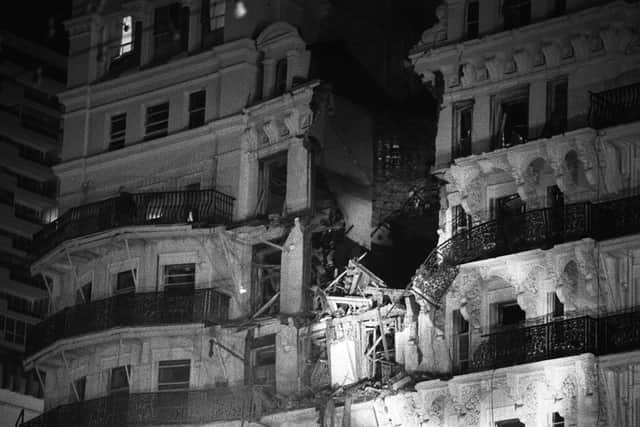

Asked if perhaps that was in part a reaction to the psychological impact of the bomb, Lord Powell said: “No, I think probably the opposite. I mean, the bomb resolved her that we must, must press ahead and do better on getting co-operation across the border on on terrorism. And she was refused to be blown off course by this. And so it hardened her resolve that we must push ahead in trying to get something that would avoid bombs in future."
Charles Powell had been in Brighton the night before the blast. “Robin Butter [the head of the civil service] was there that night. My colleague on the domestic side and I was in London and co-ordinating things from there, which is actually turned out to be rather necessary because there was no way of communicating between London and Brighton = Number 10 and the delegation down there – except coming through the Number 10 Downing Street telephone exchange.”
He said of her reaction at the scene: “It's a pretty remarkable performance. I mean, you know, she got to bed about five in the morning. She was up again at six. She was speaking to the party conference at 10, maybe 11, I can't remember now. And then was going about normal business, having visited a few of those who were wounded in hospital.”