
Transgenderism: Head of the Equality Commission says 'I am no activist - we do not get involved in political activism'
The head of the Equality Commission Northern Ireland has defended herself and her body from the accusation of being pro-transgender “activists”.
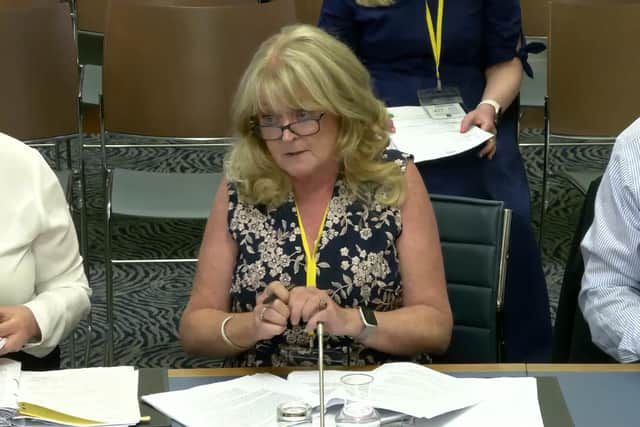
Geraldine McGahey was speaking at Stormont’s Executive Office Committee today, where she also revealed that her organisation has never sent members to a Twelfth event, because they have not been invited.

She sought the help of MLA Timothy Gaston in securing such an invitation in future.
What Ms McGahey was being quizzed about was the UK Supreme Court’s judgment of April 2025, known as the ‘For Women Scotland’ case.
In essence, the court ruled that, when it comes to applying equality laws, the term “woman” means someone who was born female, not to someone who merely self-identifies as such.
This upset transgender activists, who want people who were born male by now identify as female to be regarded legally as women (and vice-versa).
Since that judgment was handed down, people have been awaiting definitive guidance from the Equality Commission Northern Ireland on what exactly it means for Northern Ireland, particularly since the law in the Province differs from GB - in part due to the Windsor Framework.
Its guidance, when it comes, is expected to set out things like what the law demands when it comes to excluding trans-identifying males from women’s toilets in Northern Ireland, for example.
DUP leader Gavin Robinson has accused the commission of being engaged in “activism” against the Supreme Court’s judgment.
Against that backdrop, Ms McGahey was called to answer questions.
“I want to be really clear from the outset,” she told the committee.
“The commission is not challenging the judgment of the Supreme Court in For Women Scotland, which was an important judgment.”
However, she went on to add that “the legal reality is that Article Two of the Windsor Framework does exist and has potential legal significance in Northern Ireland,” adding that this was affirmed in the more recent Supreme Court judgment in the Dillon case, which dealt with the reach of the framework.
At present, the commission is still “seeking clarity” from the courts about applying the law in Northern Ireland before issuing guidance on what the ‘For Women Scotland’ judgment means here, said Ms McGahey.
“The commission has faced calls for resignations and claims that we are acting as activists,” she said.
“I can assure you all I am no activist, nor are my fellow commissioners, and indeed neither are staff colleagues.
“We are simply doing our job and working in good faith to produce legally robust and workable guidance that stakeholders can rely on.”
Asked by Phillip Brett (DUP) about whether commission staff participate in LGBTQIA+ pride events, she replied that by about 2022/23 “there were about four or five members of staff who actually participated in the parade each year”, but they had not done so since.
“We do not get involved in political activism, nor should any of our staff be doing that either,” she said.
However, they have a stall at the annual pride parade to hand out information, she said.
Timothy Gaston (TUV) asked whether they have been to Twelfth events.
She responded: “Can I say that we usually attend events on foot of an invitation, and we have never received an invitation to attend any Twelfth day events, and we would gladly welcome such an invitation, because equality is for everybody…
"We do not favor one more than another, and if you could assist in getting us an invitation to attend a Twelfth event, I would very much welcome it.”
Mr Gaston further asked her whether the wording of various laws in Northern Ireland was “unclear” about the definition of male or female.
"I'm very clear about the biological definition of male and female,” she replied.
"What we are unclear about are the protections afforded to men and women and people who have a gender recognition certificate or are trans.”