
Troubles bill could affect UK’s national security
The government’s Troubles bill is a “national security issue” as it undermines the confidence of the UK’s armed forces that they won’t be prosecuted years down the line for following orders, a former Army general has said.
General Sir Nick Parker, speaking ahead of the 28th anniversary of the Belfast Agreement, says the focus on individual soldiers in the years since the deal was signed is “wholly inappropriate” – and must end.
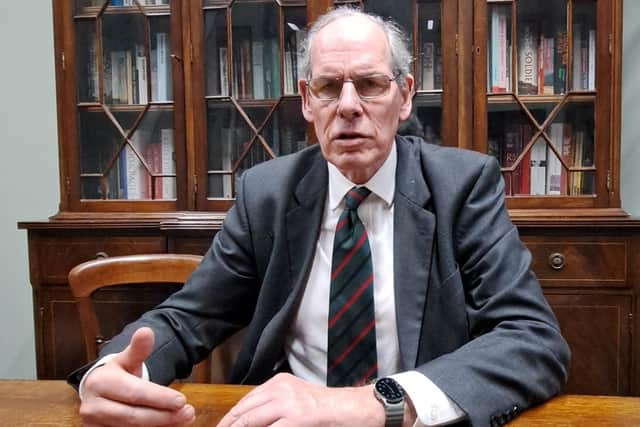

The officer, who oversaw oversaw the withdrawal of troops from the streets of Northern Ireland, also said veterans have become scapegoats for a lack of political leadership in dealing with the legacy of the Troubles.
He is among a number of Army generals who want major changes to the Labour government’s legacy bill. Their proposals would mean no new prosecutions or for Troubles-related incidents without new evidence, and a presumption that individual personnel acted in good faith and in belief of the lawfulness orders they received.
It would also end civil cases unless new evidence emerges or a criminal conviction against the soldier in questions had been obtained.
The government has said its Troubles bill will replace the last government's “unilateral and flawed Legacy Act, which was widely rejected across Northern Ireland, including by all the main political parties”. It also says the deal secured reciprocal information sharing with the Irish state, which the previous legislation did not.
However, Sir Nick says the government has failed to recognise a “deeply strategic issue” with its plans – that they undermine the “moral willingness of your soldier to fight”.
Speaking to the News Letter, the former British Army officer said: “If you turn around and say, ‘Oh by the way, the pawn that we're prepared to sacrifice in these greater strategic desires to have a relationship with Republic are our veterans, who served us during Operation Banner’ – that, to me, is a national security issue for the future.
“If your government sells soldiers down to the river for what they did legally in the past, how are people going to feel about fighting in the future for the country? “If I, as a veteran, am held to account for something I did legally for the state in the past, how is a guy serving today going to feel that they can go and do their duty, in really difficult circumstances, and not have somebody judge them in 10 years time to have behaved badly?”, Sir Nick said.
He said that the 1998 deal was deliberately ambiguous, but he could not have foreseen a situation where veterans were being pursued through the courts almost three decades later.
“I was accountable, as the head of the chain of command in Northern Ireland at the time. Part of me feels that the focus on the individual that's occurred since then is wholly inappropriate – if they've done nothing wrong. Because they were acting on behalf of the chain of command and the state – which I was.
“I had made this assumption that that would continue to be a basic understanding as time drew on went on, which, sadly, has not been the case”.
He said the 1998 political settlement was “deliberately ambiguous” and “drew a line”.
“It required leadership to take people forward without retribution emerging out of the ambiguity. Certainly in 2006 when I was here, I was still making an assumption that we were moving in the right direction”, he said.
The former general, who was the Army’s last General Officer Commanding (GOC) for Operation Banner in the province, said the generals are not seeking immunity.
“If there was new evidence, that showed that there was wrongdoing, that has been assessed… by a Supreme Court judge, then people must be held to account. But without that, you should not hold the individual accountable. If there is a problem that needs to be addressed, then you need to turn your attention to those that gave the orders, and the state that sent us there”, he said.