
Ulster Scots sign bids on Belfast streets that rejected Irish language
Four streets that rejected signs in Irish could now be in line to get them in Ulster Scots.
Three residential roads in heavily unionist parts of east Belfast and one in north Belfast were surveyed for Irish signs by the city council, which in some cases saw the body’s own officials warn that the very act of polling those areas could spark community tensions.
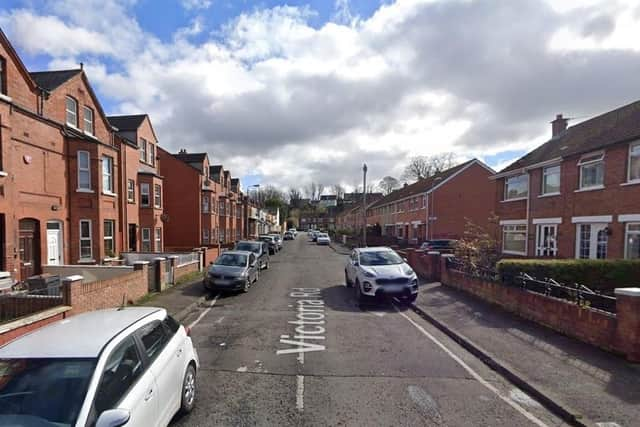

All four of them failed to meet the council’s threshold of 15% of residents in favour of the signs.
Separate requests for Ulster Scots were also filed, but they’ve had to wait as the council only deals with one dual language sign application at a time. At a meeting set to take place tonight, a council committee faces a vote that would kickstart processes on the Ulster Scots bids.
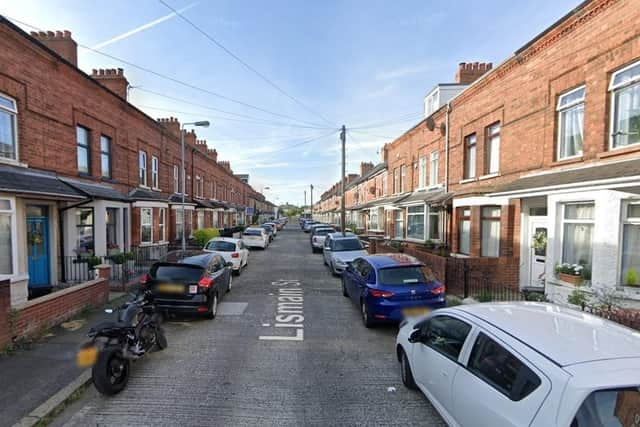
One complicating wrinkle is that additional Irish sign applications for two of them – Isoline Street off Castlereagh Road and Lismain Street near Woodstock Road – came in before the Ulster Scots bids.
Council policy is to wait at least two years before considering a second request for a language that has already been defeated. In these cases, however, officials say that as Irish signs have already failed on both streets, the additional applications for that language should be thrown out so the Ulster Scots bids can get under way.
The other two areas, Victoria Road in the Sydenham area and Sunningdale Gardens in north Belfast’s Ballysillan district, don’t have any additional Irish applications, though both Isoline Street and Victoria Road received multiple requests for Ulster Scots signs.
If any of the four streets back Ulster Scots, it’ll be the first time Belfast Council has built dual language signs in anything other than Irish since the controversial 15% system was introduced.
It only takes a single request from a householder or area councillor to trigger a process that surveys residents’ opinions on dual language signs. Council policy is to build them if just 15% are in favour.
Two weeks ago that hit the headlines in a major way, as nationalists tried to push Irish signs onto an east Belfast street that cleared the threshold by less than 1%, despite two-thirds of its householders being dead against the move. At the time, the council’s SDLP group leader argued the overwhelming majority’s view should be discounted as the polling process is “not about a street by street referendum”.
Belfast Council used to have a much tougher system for adding other languages to city streets, but in 2022 it was massively relaxed. In March of the following year, the first signs were approved under the 15% threshold.
Over the three years since, dual language signs have been approved for 289 streets, all of them in Irish; just 33 areas failed to make the 15% threshold, and applications are still outstanding for more than 900 of the capital city’s roads.
When Isoline Street’s Irish signs bid came up a year ago, DUP councillor Ruth Brooks filed an objection as a neighbouring road is a regular band parade route.
“The introduction of street signs in Irish within this area will be interpreted as political and culturally insensitive, and antagonistic,” she stated, adding that only 8% of people there claim some ability in the language while 11% have ability in Ulster-Scots.