
UUP asks: Why has it taken four years to wrap up an investigation into Ormeau Road lockdown incident?
It should not have taken four years to wrap up an investigation into the police handling of the Ormeau Road Covid altercation, the UUP has said.
Police officers were justified in investigating the gathering of people on Belfast’s Ormea Road in 2021 because of the tight lockdown rules at the time, the Police Ombudsman said on Monday.
However, Marie Anderson also found that one of the officers at the gathering - which turned out to be a commemoration for a loyalist massacre - had failed to behave with "sensitivity".
There have been various statements about the incident issued over the last few years by the ombudsman, PSNI, and the courts.
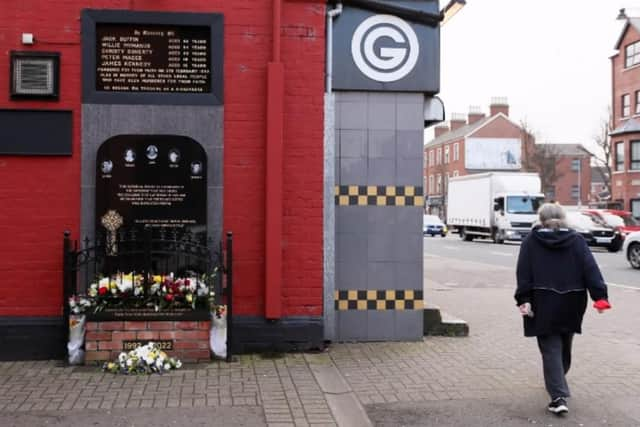

The one from the Police Ombudsman today marks the formal end of its investigation into the matter.
The story began on February 5, 2021, with a gathering at a memorial just off the lower Ormeau Road honouring those shot by the UDA there exactly 29 years earlier.
Five people were killed and seven seriously injured in the loyalist bloodbath in a bookies' shop in the largely Catholic area of south Belfast.
As relatives of the dead gathered police officers attended the scene, initially unaware of the significance of the gathering.
A dispute ensued, leading to a man being arrested for disorderly behaviour and resisting arrest, and placed in the back of a police vehicle for 90 minutes.
He was subsequenty released.
Under pressure from Sinn Fein over the incident, the PSNI suspended one officer involved and moved another – a move that was later found to be unlawful.
In a statement to the press, Ms Anderson today summed up her findings as follows: “Given the restrictions on gatherings which were in place under the Covid regulations at the time, I am satisfied that there was reasonable justification for PSNI to have attended the scene.
“However, after examination of all relevant evidence, including radio transmissions, body worn video and other video footage of the incident, I was of the view that the arresting police officer had not responded to the unfolding events in line with an order to treat the gathering with sensitivity."
Doug Beattie, the erstwhile UUP leader, responded by saying her statement “told us nothing new”.
"However, the length of time it took to formulate a report, just under four years, must be of concern to us all and also the effect it has had on those PSNI officers where a complaint was directed,” he said.
"The Ombudsman and their office must acknowledge this failing.”
He added: "The report lacks any form of analysis of the political interference in the police response to the commemoration.
"Without a doubt there was political interference, and that interference led to a police officer being unlawfully disciplined and ultimately led to a Chief Constable losing his job.
"It is now time for an acknowledgment from political figures who interfered where they should not have and to make an apology to the force they so seriously undermined."
Mrs Anderson said radio transmissions showed that when police officers first encountered the commemoration they did not know what it was.
The officers, both probationary officers with less than 12 months’ service, were given orders to establish what was happening.
Twelve minutes later, when it became apparent what the gathering was about, they were told to “still get footage, but treat with sensitivity”.
Following a verbal altercation, a survivor of the masscre, Mark Sykes, was arrested for disorderly behaviour and resisting arrest.
He subsequently complained to the ombudsman, triggering the investigation.
The ombudsman responded to Mr Beattie’s comments by saying that the before it closed its own file on the case this week, it had waited for PPS and PSNI actions to run their course.
“The length of time taken to bring cases to a conclusion is an on-going issue for the office, PPS, PSNI and the wider criminal justice system,” it said.
"This office has consistently sought improved legislation to allow for the speedier resolution of some cases and this is something which we will shortly be highlighting in another investigation.
"In respect of issues raised about political interference, the Police Ombudsman’s role is confined to investigating the complaint about police conduct which was made by the man who was arrested at the commemoration.”
Meanwhile Chief Constable Jon Boutcher said: “As an organisation we are committed to learning from this case and have accepted the recommendations made by the Ombudsman.
"We have already commenced updating our training, policy and procedures to ensure that incidents of a similar nature do not occur again.”