
"We've been working on this for almost 10 years", says Irish activist as Belfast's city-wide Ianguage blitz gets green light
A plan to plaster the whole of Northern Ireland’s capital city with the Irish language is the result of 10 years of work, the head of a Dublin-based campaign group has said.
Conradh na Gaeilge, known in English as the Gaelic League, is headquartered in Dublin and wants Irish to be the standard everyday language used across the entire island. Several of its recommendations were built into Northern Ireland’s Irish Language Act by the Westminster government.

In the wake of Wednesday night’s vote, the body’s president, west Belfast man Ciaran Mac Giolla Bhein, said: “We have been working with Irish language groups and speakers, Belfast City Council and councillors for almost a decade on this policy.
“We have helped design this policy based on the fundamental principles of parity of esteem enshrined in the Good Friday Agreement to take resolute action to develop and support the Irish language.”
Praising the “thousands of activists who have made this change a reality”, he went on to claim that Belfast would be “a beacon of equality across this island regarding language rights, and this policy will reflect the status of the ever growing Irish language revival across the city”.
But although one of the first priorities for the council will be to overhaul facilities inside the Gaeltacht quarter in Mr Mac Giolla Bhein’s native west Belfast, the policy has ramifications across the whole of the province’s capital city – including districts where Irish is barely spoken and isn’t wanted.
Name and direction signs inside and outside all council-owned buildings are slated to have Irish added to them, as are signs at outdoor facilities such as parks, playgrounds, and sports pitches.
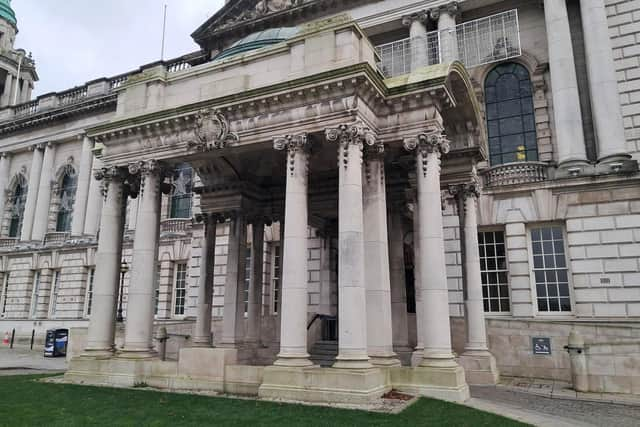
The city centre will be an early target, with the language to go on City Hall, the 2 Royal Avenue building, and the coming £100m Belfast Stories tourist attraction. Belfast Castle and Belfast Zoo will also get dual-language signs.
In the medium term, the council plans to add Irish to leisure centres, playgrounds, parks and sports pitches in any wards where between 5% and 15% of people declared they had “some ability” in the language in the last census.
That could include several areas in unionist East Belfast – according to census data, the ward containing Belmont Park falls into that category, as do some parts of the Cregagh, Sydenham and Ballyhackamore districts.
Long term, all wards where fewer than 5% of people said they had some ability in Irish will get dual language signs, but only when council-owned facilities are being refurbished.
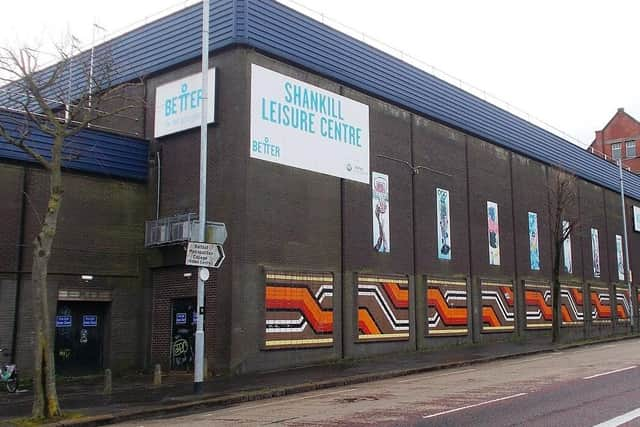
Under the policy, for example, the next time the council overhauls Shankill Leisure Centre, signs in Irish would be put up. The last census says 98% of people in that area have no knowledge of the language.
The province’s last surviving Victorian public bath, Templemore Baths in East Belfast, was reopened two years ago after a £17m restoration job. The new policy would mean that if it is ever refurbished by the council, its existing signs and details of the history of the much-loved building would have to be torn down and replaced with versions also containing Irish – even though 96% of area residents don’t speak it.