
What Northern Ireland's MPs said about assisted dying in milestone House of Commons debate - and how they voted
During today’s long debate on assisted dying, a number of Northern Ireland’s MPs spoke out against it.
In the end, the new draft law which would let medics give patients drugs to kill themselves passed by 330 to 275 (with the DUP, Alex Easton, Robin Swann, and Alliance’s Sorcha Eastwood voting against and Colum Eastwood voting for – meanwhile Claire Hanna did not vote).
Strangford DUP MP Jim Shannon posed a question to Kim Leadbeater, the Labour MP who is behind the bill.
“I remind her that Belgium started off with a simple project like the one she refers to but it deteriorated and expanded to include sufferers of dementia and under-18s – children,” he said.
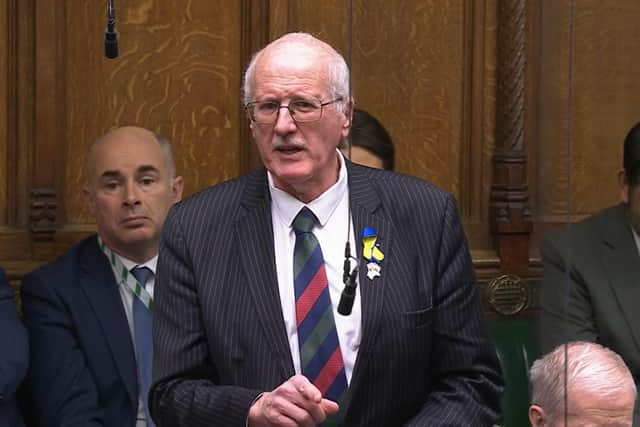

“What guarantees do we have that this legislation will not end up with a situation like that in Belgium, in which case anything goes? Is that what the honourable Lady wants? I do not want that. Does she?”
This drew the reply: “Let us be very, very clear. Huge amounts of research has been done by the Health and Social Care Committee, and indeed by myself and others.
“The model being proposed here is nothing like what happens in Belgium. It is nothing like what happens in Canada. There are strict, stringent criteria, and if the House chooses to pass the bill, those criteria cannot be changed.”
TUV MP Jim Allister voiced fears about how susceptible patients would be to “coercion” towards suicide.
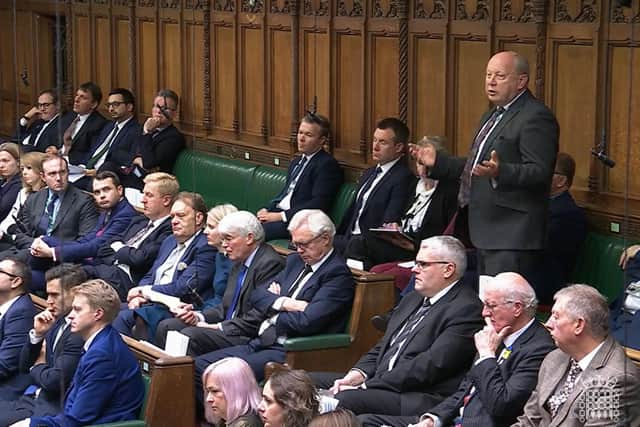
“Anyone who gets a diagnosis of terminal illness is, by reason of that, obviously vulnerable. Many, in consequence, suffer depression and other difficulties, so they are among the most vulnerable in our society.
"Being vulnerable, they are among those most liable to fall under the foul influence of coercion …
“It is those people that this house should be protecting above all, but this bill does not protect people in that situation.
“Oh, we are told, ‘two doctors and a judge’ [will sign someone off as eligible].
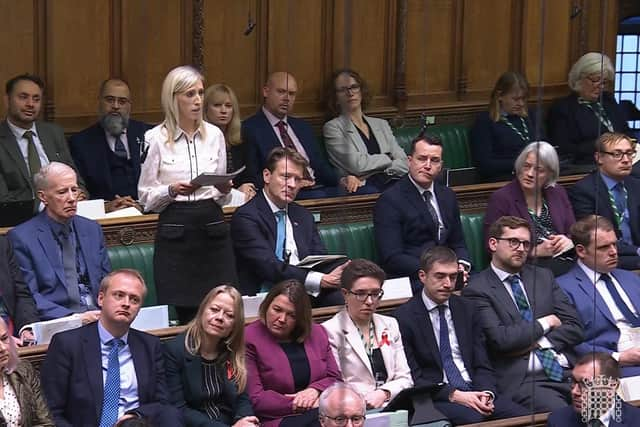
"The judge does not have to, but he might decide to hold a Zoom call with the applicant, but he is not to know if sitting in the corner of the room, out of camera shot, is the coercer. Where is the protection in that?
"I say to the house that this issue cuts to the very quick of our fundamental duty to be the protectors of the most vulnerable.
"There is no part of the state’s function to be promoting or assisting the end of life for people who could be in that condition, and we will never know how many are in that condition, so I cannot and will not vote for the bill.”
Sorcha Eastwood rose to declare: “I cannot stand by the bill because many vulnerable, marginalised people will be impacted by it. I want to support and affirm life, and I want that to be with dignity.”
DUP leader Gavin Robinson said: “We often hear that one of the safeguards associated with the bill is that medical practitioners would be involved and that a diagnosis of a terminal illness, with six months or less to live, would be required.”
But he added that “medicine is not an exact science”, and that it is “the science of uncertainty blended with the art of probability – there is no exactitude in this”.
The longest contribution from a Northern Irish MP was from Carla Lockhart, who said: “Like many others across the house I come to this debate with personal experience.
“Many of us have been at the bedside of a loved one as they have neared the end of their life. For me that was on June 11, 2023, when my dad’s earthly journey ended.
“Terminally ill for five years with a painful, aggressive cancer, he had a faith that sustained him and a health service that sought to support, care, comfort and preserve his life.
“Consultants and medical staff went over and above to ensure that he got every opportunity to see his family, and particularly his grandchildren, grow up. Did I want to see my dad suffer? Absolutely not.
"Equally, though, those difficult times provided us with an opportunity to care for and express love for a person whose life we valued.
“The root of my conviction is this: life in all its forms is of inherent worth and value.”
She went on to add: “The bill undermines the foundation on which our NHS is built – to preserve and protect life. It is not about individual pain; it is about a societal change that would end and devalue lives.
“It puts at risk the lives of vulnerable and marginalised people across our communities, with wholly inadequate safeguards against coercion.
"As has been the case in every country where such legislation has been introduced, it would see the rapid expansion of eligibility criteria, and it cannot protect against the unreliability of a terminal diagnosis.”