
Why has Irish government never published the estimated cost of Irish unification?


The Irish government has never published details on how it could afford to absorb Northern Ireland because the unknown factors and risks are too high, an economist has suggested.
Sinn Féin has previously pressed the government to publish a green paper setting out detailed plans for Irish unification.
However, the Irish Department of Finance has confirmed to the News Letter that it has “not published anything relating to this issue”.
The Sunday Times recently reported leaked Irish government research suggesting that the social welfare bill alone could reach £19 billion in a reunification scenario. The report said this would likely become “the pinch point in any future deal with the UK”.
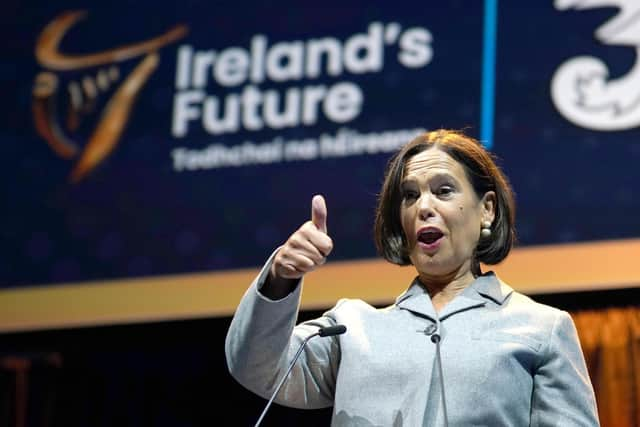
Ulster University economist Dr Esmond Birnie said the Irish government has never published costings because there are too many unknowns and risks.
He noted that estimates vary widely among economists.
Professor John Doyle of Dublin City University has suggested the cost could be as low as “a few billion pounds” per year.
In contrast, Professor Edgar Morgenroth of Dublin City University and Professor John FitzGerald of Trinity College Dublin estimate annual costs of between £9 billion and £18 billion.
But Dr Birnie criticised Professor Doyle’s figures as “far too low”, arguing that they rely on optimistic assumptions about negotiations with the UK.
These include the UK continuing to pay most public-sector pensions and welfare costs, and maintaining subsidies for Northern Ireland even after unification.
Explaining why the Irish government has never published any costings, Dr Birnie said officials could point to major uncertainties and risks in relation to decisions by the UK and US.
Any serious assessment, he argued, would also require a full risk analysis.
“For example,” he said, “What would Irish government finances look like if they tried to fund unification while also suffering the withdrawal of major US pharmaceutical companies - as per Trump policy?
"Taken together, those pressures would pose a massive challenge to public finances.”
"Incidentally, I think it very important to preface any consideration of the cost by stating that almost all the opinion survey evidence continues to show strong support for the status quo as opposed to unity – although the % share of undecideds has grown over the last 10 years.
"This means we are talking about something which is highly hypothetical.”
Sinn Féin and the SDLP declined to comment on the matter.
The News Letter invited the southern economists to respond to his comments.
Prof Edgar Morgenroth suggested Dublin has never published any figures because "this is very political".
He told the News Letter that he and Prof John FitzGerald stand by their estimated cost of between £11bn and almost £21bn to the Irish exchequer each year.
This shows that unification "would be a significant issue even under a benign scenario where the UK pays pensions and Ireland does not have to pay NI's share of UK national debt" he said.
The cost to the Irish economy, he said, would be between 5% and 10% of Gross National Income every year - subject to changes in the NI economy.
Prof John Doyle, stood by his estimate of very low annual costs - between £1.3 and £4.8bn. He defended his figures on the assumption that the UK would pay NI pensions for the same number of years a person had already paid taxes and National Insurance Contributions.
"I do not say this is legally required, just that it is politically likely," he said, which he described as "affordable" and representing less than 1% of Irish Gross National Income per year.