
Storm Eowyn travel chaos: More flights and ferries cancelled while Translink say some Belfast buses back this evening - but rest of province will have to wait until Saturday
More flights and ferries have been cancelled as the effects of Storm Eowyn continue to bite.
And while Translink has said that some bus routes in Belfast are now running again, albeit on a reduced timetable, most of the province won’t see public transport return until Saturday.
All flights into and out of Northern Ireland were cancelled on Friday morning, while no trains moved and bus services were heavily disrupted.
Almost all ferries were confined to port as Storm Eowyn battered the province with hurricane-force winds, while roads all over Ulster were blocked by falling trees.
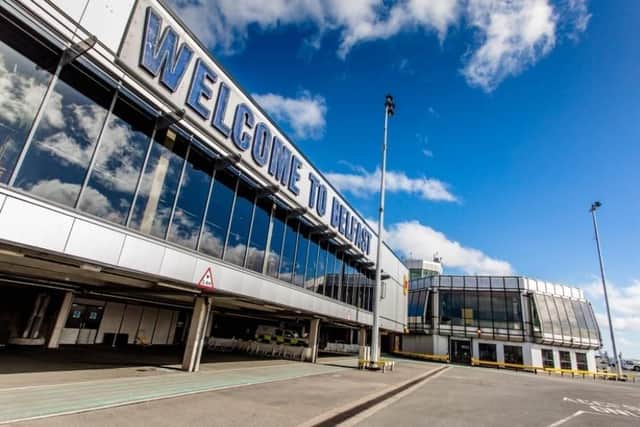

Even after the red alert lifted at 2pm, travel chaos continued to strike across Northern Ireland.
The situation was particularly bad for air passengers, with uncertainty ruling the day as Belfast International Airport proved unable to tell the public what flights were and were not taking off.
The airport had to issue an apology after its live flight information went down on Friday morning.
Although airport spokespeople warned the public to expect serious disruption, people could only find out what was happening by contacting airlines directly – and anecdotal evidence was that proved difficult, as the airlines were being bombarded with calls from worried passengers.
Shortly after noon, International Airport issued a statement confirming that all flights were cancelled for the duration of Friday’s red alert, which ended at 2pm.
That statement added the airport expected some flights to happen later in the afternoon, but didn’t say which ones.
And by 5.30pm, there was no still publicly available live flight information from the airport.
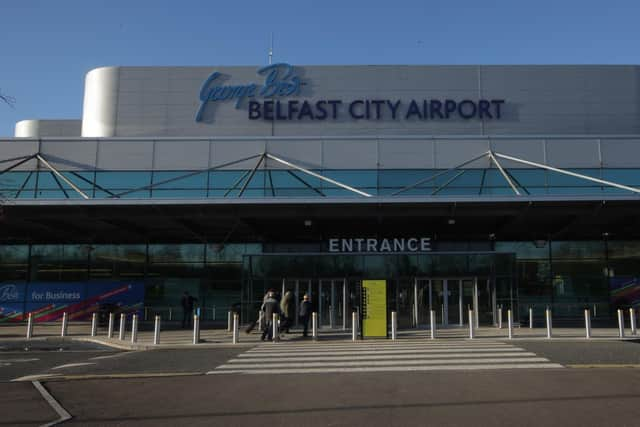
At George Best City Airport, flights were grounded all morning; although some airlines kept afternoon routes on their schedules, some were subjected to heavy delays and several evening flights were cancelled with only a few hours notice.
What happened at the airport was dependent on which airline operated individual flights.
Aer Lingus cancelled all of its routes to and from George Best City Airport all day, but EasyJet hoped to have its first flight arrive from Gatwick shortly before 1.30pm – while the red alert was still on.
That flight wound up being delayed by several hours, as were a couple of afternoon flights EasyJet had scheduled.
The airline then cancelled all of its planned flights to and from City Airport after 5pm.
Most British Airways flights were grounded, though it hoped to start running again later in the evening.
And despite initially scheduling evening flights, KJM eventually cancelled them.
Ferries were off for most of the day.
Stena Line initially hoped to start sailing again around 7.30pm, but scheduled boats to Scotland were axed and by late afternoon the day’s only departure from Belfast was one scheduled to head to Liverpool at 10.30pm.
Translink cancelled all train journeys for the entire day, and warned that timetables would likely still be disrupted on Saturday.
Buses throughout most of the province were also off, and the few areas that did get going again only started operating well after the red alert had passed.
In Belfast, Metro and Glider bus routes started running on a reduced timetable around 5pm, though some shelters for both routes would have been difficult to use after taking a hammering from the storm.
Routes running from the capital city to International Airport, City Airport and Dublin started at the same time.
Ulsterbus and Foyle Metro buses were expected to start up on Saturday, though officials predicted disruption from blocked roads.
Said Translink’s director of service operations, Ian Campbell, said: “There has been significant damage to the railway network including fallen trees and debris, as well as impacts to level crossings, signalling and other railway infrastructure.
“Specialist teams are now carrying out an assessment of the railway and the removal of fallen trees and debris; and repairs are underway to ensure the gradual safe return of rail services over the weekend.”
Roads up and down the province took a battering, with downed trees and power lines causing serious obstructions.
Even normally packed urban commuter routes were deserted, though town and country alike faced a battle to clear blocked roads.