
Summer of extreme weather leads to Northern Ireland recording eighth driest July on record

Northern Ireland had its eighth driest July on record, provisional figures from the Met Office have shown.
The province had 26.9mm of rain, the equivalent of 30% of the average for the month.

The driest July in Northern Ireland was recorded in 1898, when 15.8mm of rain was measured.
And southern England has experienced its driest month ever recorded, as more records tumble amid a summer of extreme weather.
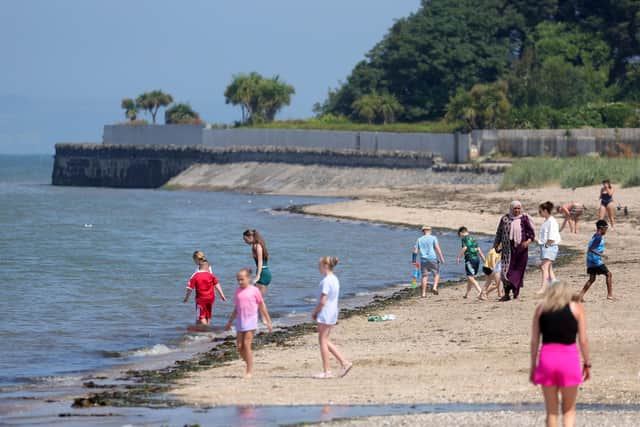
Meanwhile, Northern Ireland also recorded its joint fourth warmest July for mean temperature on record at 16.4C, matching the figure in 1983 and a little below the record high of 17.0C in 2013.
It was the joint hottest July on record for Wales, and the UK and England had their second hottest July ever, with Met Office temperature data starting in 1884.
Other statistics reveal how Northern Ireland recorded its ninth sunniest July ever, with 194.2 hours of sunshine.
The sunniest July since records began occurred in 1955, when 246.9 hours were measured.
However, England and Wales recorded their sunniest Julys on record – and for England and Wales it was the sunniest calendar month ever observed, the Met Office said.
Met Office sunshine data begins in 1910.
Scotland was the only nation not to trouble the record books last month.
The nation received 72.0mm of rain in July, or 69% of the long-term average, along with 178.6 hours of sunshine, with a mean temperature of 14.5C.
The driest July in Scotland was in 1863, with 24.4mm of rain; the sunniest July was in 1955, when 240.9 hours were measured; and the warmest July was in 2006, when the monthly mean temperature was 15.6C.
Met Office science manager Dr Amy Doherty described July as a “truly remarkable month” in the UK’s climate record.
“The combination of record-breaking dryness, exceptional warmth and unprecedented sunshine has delivered one of the most notable summer months in our historical records,” she said.
The latest figures were published as a swathe of England is under another amber heat health alert.
The summer of extreme weather has seen two record-breaking heatwaves, in May and June, that led to more than 2,800 excess deaths, and two more heatwaves in July which has fuelled drought and wildfires.
In the latest heat spike, the UK Health Security Agency (UKHSA) has amber heat health alerts in place for the East Midlands, East of England, South East and London until tomorrow morning.
There are also yellow heat health alerts for the North West, South West, West Midlands, and Yorkshire and The Humber, as the agency warns the latest high temperatures could put extra pressure on the NHS, with more vulnerable people likely to require medical treatment.
Temperatures are expected to gradually decrease in the second half of the week, and there is some more unsettled weather forecast for parts of the UK including a yellow warning for thunderstorms in Northern Ireland.