
How both sides of the border helped Manchester United form 'Busby Babes' legacy
Manchester United has always had an unbreakable association with Ireland, north and south, with some of the club’s most famous players leaving these shores to don the famous red shirt, while for every home game at Old Trafford thousands of fans make the journey by air and sea.
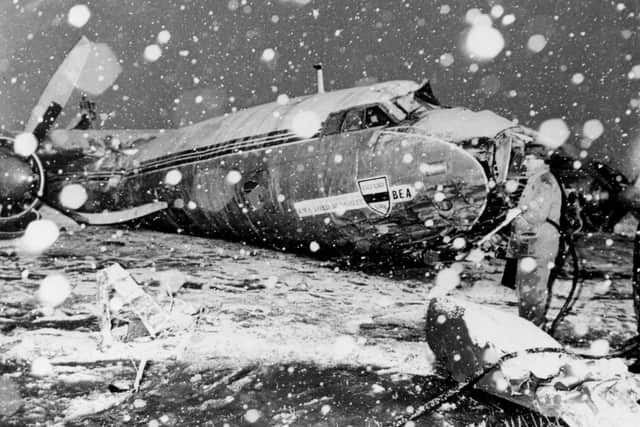
February 6, 1958 is the darkest day in United’s history as the British European Airways flight carrying the team home from successfully reaching the European Cup semi-final for a second consecutive season crashed at Munich-Riem airport.

After attempting to take off for a third time, the incident killed 23 people including eight of the Busby Babes.
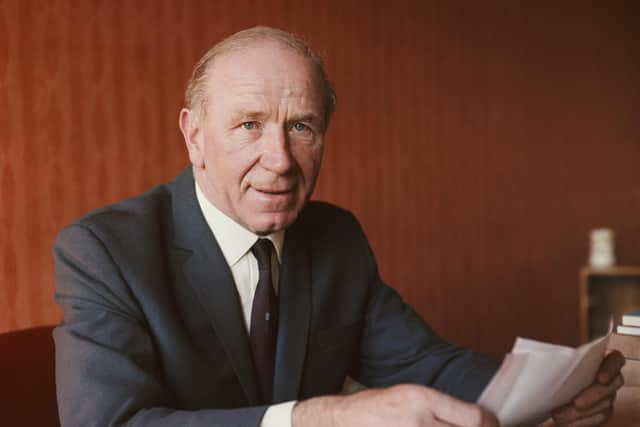
Sir Matt Busby was appointed manager of United in 1945, taking over a team and an Old Trafford that had been decimated by the second world war.
As a player Busby had won the FA Cup with Manchester City in 1934 and captained Liverpool.
Busby’s first trophy at United was the FA Cup, beating Blackpool 4-2 in the 1948 final.
United had finished runners-up in the league in 1947, 1948, 1949 and 1951 before eventually getting their hands on the trophy in 1952 with the side captained by Dubliner Johnny Carey.
A new competition was born in the 1952-53 season, the FA Youth Cup. United won the first five tournaments and with most of the league winning side growing old, Busby assisted by Jimmy Murphy, started to introduce younger players into the squad.
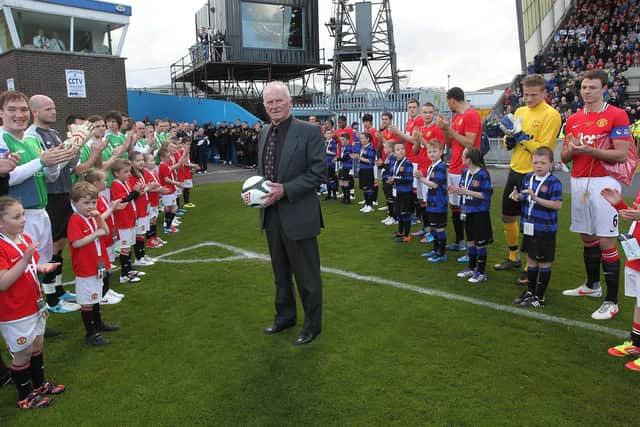
Due to the youth of their team, they became universally known as the Busby Babes.
With the likes of Duncan Edwards, Bobby Charlton and prolific goal scorer Tommy Taylor bought from Barnsley (112 goals in 166 games for the Red Devils, 16 goals in 19 England appearances), United won the league in 1956.
Busby defied the Football League and entered the European Cup, making United the first English team to play in the competition.
United went out to the great Real Madrid side of Di Stefano and Gento in the semi-final, losing 3-1 in Spain before a 2-2 draw in the second leg.
The Babes retained the league title in 1957 and earned another shot at the European Cup.
United drew Shamrock Rovers in the preliminary round, with 45,000 people turning up at Dalymount Park. Dubliner Liam Whelan scored two of United’s goals in a 6-0 win.
Duka Prague were dispatched 3-1 on aggregate to set up a quarter-final against Red Star Belgrade.
Goals from Bobby Charlton and Eddie Colman gave Utd a 2-1 lead in the first leg and they secured their passage to the last four with a 3-3 draw in Yugoslavia.
It was on the way home from that tie as the plane stopped in Munich to refuel that disaster struck.
Jackie Scott better known as Johnny was born in Belfast and signed for United in 1951 after being discovered by Bob Bishop.
Bishop was United’s Northern Ireland scout and is famously remembered for sending Busby a telegram in 1961 which simply read ‘I think have found you a genius,’ he was of course referring to George Best.
With the likes of Colman, Johnny Berry, David Pegg and Dennis Viollet vying for the outside forward positions, Scott was limited to just two appearances for United, leaving Old Trafford to join Grimsby in 1956.
He played for Northern Ireland at the 1958 World Cup in Sweden, making his debut in a 1-0 win over Czechoslovakia, and played in the 4-0 quarter-final defeat by France.
Another Bishop discovery was Jackie Blanchflower. The Belfast-born inside forward was the younger brother of Danny, who captained Tottenham Hotspur to a league and cup double in 1961.
Jackie, who was nicknamed Twiggy by his teammates, was an inside forward but was known for his versatility having to play as goalkeeper in the 1957 FA final against Aston Villa after Ray Wood couldn’t continue in goal following a challenge by Northern Ireland international Peter McParland.
There were no subs back then, Wood despite his injury went onto the wing but in reality, United played with 10 men and the Babes were denied the chance to become the first team to do the double in the 20th century as Villa won 2-1.
Blanchflower made his United debut at Anfield in November 1951, but it was during the 1954 season that he became a first-team regular. He was a left half but with the emergence of Duncan Edwards he was moved further forward.
Jackie was a league winner in 1956 but didn’t get a medal as United retained the league a year later as he only played 11 times.
Blanchflower was forced to retire aged just 24 years old due to never fully recovering from injuries sustained in the Munich air disaster.
He played 105 times for United, scoring 26 goals while at international level, he represented Northern Ireland 12 times, scoring once.
Harry Gregg became synonymous with Munich for the bravery he showed as the plane blazed on the runway. The goalkeeper returned to the burning wreckage several times to recuse his mates Charlton, Blanchflower and Viollet, as well as ordinary passengers.
Born in Tobermore, Gregg was playing for Coleraine when he earned a move to Doncaster aged 18.
In December 1957 United paid £23,500 for Gregg, a then world-record transfer fee for a goalkeeper.
Gregg played in United’s first game after Munich keeping a clean sheet in a 3-0 FA Cup win over Sheffield Wednesday. The programme for the game had 11 blank spaces as nobody knew what team United could field.
Busby returned from his sick bed to lead United out at Wembley for the 1958 FA Cup final, but for a second consecutive season there was controversy around the Red Devils 'keeper.
Bolton centre forward Nat Lofthouse barged Gregg into the net without touching the ball, incredibly the goal was given and United lost 2-0.
Gregg missed the 1963 FA Cup final due to a shoulder injury as United beat Leicester City 3-1 to claim their first trophy since Munich.
The Northern Ireland international didn’t play enough games in the 1965 season to qualify for a league winners medal and was sold before United claimed another title two years later.
Gregg kept 48 clean sheets in over 200 United appearances. He played 25 times for Northern Ireland and was voted goalkeeper of the tournament at the 1958 World Cup after helping his country reach the last eight.
Dennis Viollet was one of the ordinary Babes, born in the Fallowfield area of Manchester. He came through the youth system making his debut against Newcastle in 1953 and helped the club to back-to-back league titles.
Viollet survived Munich but suffered head and facial injuries. He played in the 1958 FA Cup final and scored United’s winner in the first leg of the European Cup semi-final against AC Milan, although Busby’s side lost 4-0 in the San Siro.
Viollet scored 32 league goals in 36 appearances in the 1959 campaign which remains a United record.
His connection to Northern Ireland? After spells with Stoke, Baltimore Boys in the USA and Witton Albion, Busby Babe signed for Linfield in 1969.
His last ever competitive game of football was the 1970 Irish Cup final helping the Blues beat Ballymena 2-1 at Solitude.
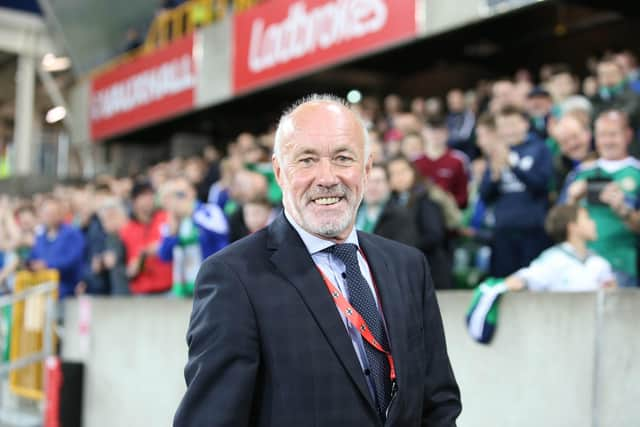
Busby’s final ever signing for United was another Belfast boy Sammy McIlroy who has been dubbed the ‘Last Busby Babe.’
McIlroy scored on his United debut in the Manchester derby. In 1977, he started the FA Cup final as United beat Liverpool 2-1 and went on to make 342 appearances for the Old Trafford club.
He played in all Northern Ireland’s 1982 World Cup matches in Spain and captained the side in Mexico four years later.