
Plaque to Ulster's greatest rugby star, Jack Kyle, unveiled today
Ulster's greatest rugby player is to be honoured today with a blue plaque at the home of his sport.
Jack Kyle represented Ireland, the British and Irish Lions and the Barbarians during the 1940s and 1950s, and was a member of the team that won the 1948 Five Nations Championship with a Grand Slam by defeating all the other participants.
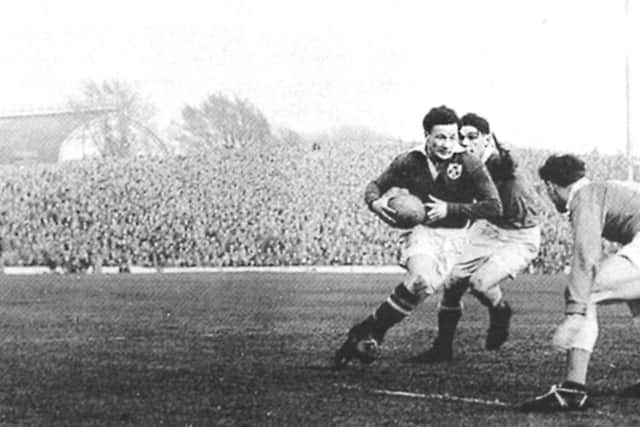

Voted the “greatest ever Irish rugby player” by the Irish Rugby Football Union in 2002, today would have been his 100th birthday and sees a blue plaque marking his incredible sporting achievements unveiled at Belfast’s Ravenhill Stadium.
Jack’s international sporting career began in the immediate aftermath of the Second World War, making his official debut in January 1947 as a 20-year-old medical student at Queen’s University.
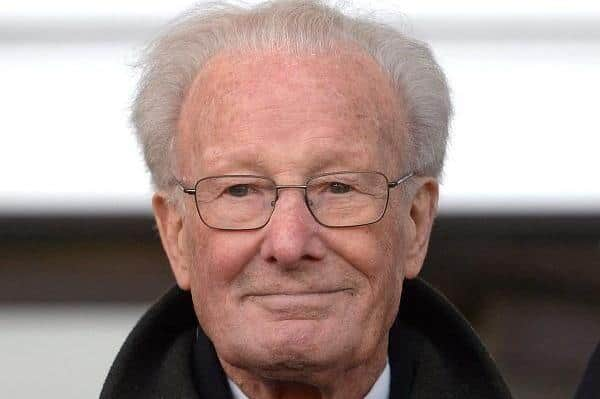
He made 46 full appearances for Ireland between 1947 and 1958, scoring 24 points including seven tries as an out-half.
Jack also played for invitational rugby union club Barbarians, and was a member of the Ulster team that dominated the Interprovincial series in the 1950s.
Awarded an OBE in 1959, he wasn’t comfortable with the level of fame his sporting prowess brought him, preferring to be known for his skills as a doctor. He later said the level of recognition he had was part of his reason for leaving Northern Ireland, in 1962 taking a job as a consultant surgeon in Indonesia.
A few years later he was in Zambia, in the small mining town of Chingola not far from the border with the Congo, where spent almost 35 years. When he moved there with his young family, he was the only trained surgeon in either of the two local hospitals, something he set about changing; his daughter Justine recalls him “constantly reading and coming up with improved ideas for surgeries and procedures”.
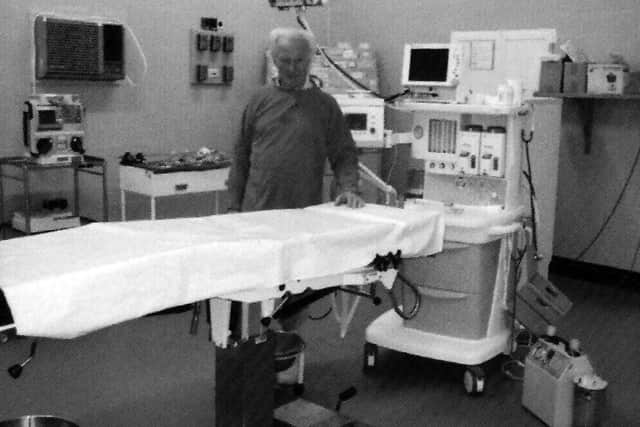
Conditions were difficult in that part of the world, with no scanners or ultrasound machines; worse still was the outbreak of the AIDS epidemic, at a time when the few drugs available were too expensive for most Zambians. He later stated: “I was horrified by the number of patients presenting with symptoms. I remember on one particular night at the hospital five patients died from AIDS. It was a tragedy unfolding before our eyes.”
For his work in Africa, Jack was given a lifetime achievement award by the Irish Journal of Medical Science and the Royal Academy of Medicine in Ireland. “I am delighted they recognised the valuable work I did in Zambia, it meant a lot to me,” he said.
Away from medicine he indulged his love of amateur drama, performing and producing plays in Chingola. After retiring from his work as a surgeon, Jack came back to Northern Ireland and settled in Bryansford, Co Down. He died in 2014.
Hugh McCaughey, CEO of Ulster Rugby, describes Jack as “one of the true giants of Irish and world rugby” with a legacy that continues to inspire today’s players.
“His skill, humility and sportsmanship set standards that still define the game,” he said, ahead of the plaque’s unveiling.
“It is entirely fitting that this plaque stands here to recognise not only Jack’s extraordinary achievements on the field, but also his lasting impact on rugby in Ulster and far beyond.”