
Housing sector must raise its game on nature recovery and climate resilience
Social housing providers from around the UK and Ireland will come together to explore how the sector can create attractive, climate-resilient places that tenants love and in which nature can thrive.
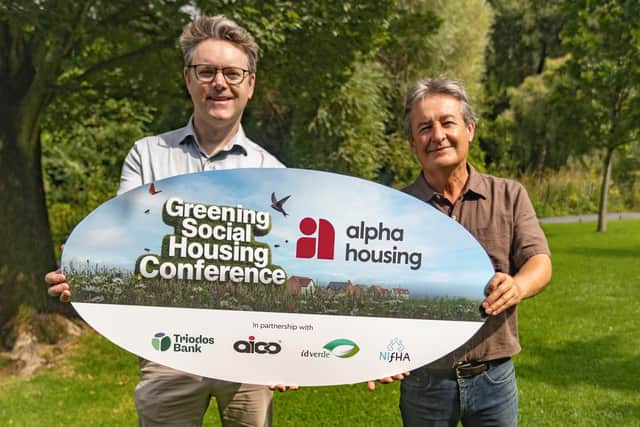

Alpha Housing’s second Greening Social Housing Conference takes place on October 7 with guests including local politicians, environmental groups and policy makers joining housing associations and the Housing Executive. Event partners include Aico, Ideverde, Triodos Bank and NIFHA.
The conference’s theme is Raising Our Game and will explore how social landlords can manage existing sites and build new homes in ways that support nature recovery. Speakers will outline the value of measures such as planting native trees and shrubs, establishing wildflower meadows, integrating habitats into new developments, and using nature-based solutions to prevent flooding.
Northern Ireland is now one of the most nature-depleted countries in the world; research suggests it has lost 50% of its biodiversity based on a 1970s baseline. In this challenging context, government department DAERA launched its Draft Nature Recovery Strategy earlier this year. Alpha Housing believes that as major landowners and housebuilders, social landlords have a vital role to fulfil in this vital task of nature recovery and making neighbourhoods more climate-resilient in response to more frequent extreme weather.
“Social housing providers have a great opportunity to create beautiful places that are as good for nature as they are for people,” said Alpha Housing Chief Executive, Cameron Watt. “In recent decades, environmental decline has continued in Northern Ireland, as is now being made worse by climate change.
“Our tenants want to live in attractive developments that support nature and can cope with greater flooding and periods of drought. Planting more native trees that provide habitats and shade and building in nature-based drainage to new developments, are practical examples of how we can create great places for tenants and wildlife alike.
“Through the Greening Social Housing conference, we are bringing the housing sector together to share innovative approaches, learning from what is already working, and challenging ourselves to be more ambitious. This is not simply about ad hoc steps like planting more trees or creating wildflower meadows; it’s about concerted and co-ordinated action in how we design, develop and manage our developments,” he added.
With a strong practical focus, the conference will showcase exciting work on enhancing nature recovery and climate resilience, not just in NI, but from across the UK and Ireland. These include the Northern Ireland Housing Executive’s recent adoption of the All-Ireland Pollinator Plan and linked commitment to plant 7,000 native trees a year. Meanwhile, charities including Ulster Wildlife, The National Trust and Wild Belfast will share insights from their work for nature and opportunities for partnerships with landlords.
The event will feature leading voices from across the housing and environmental sectors, including Susan Vickers, Head of Environmental Sustainability at Clúid; Sam Jones from The Green Partnership; and Mark Shayler, Head of ESG at idverde. Renowned Irish conservationist and filmmaker Colin Stafford-Johnson will deliver the keynote address, celebrating Irish wildlife, highlighting the urgent need to restore biodiversity, and stressing the important role housing organisations can play in nature recovery.
For its part, Alpha Housing is taking extensive action to make its homes and communities greener, more attractive and climate resilient places to live. In recent years this has included planting hundreds of native trees and hedges; establishing wildflower meadows and no-mow areas; installing bird and bat boxes; reducing the use of herbicides and installing wildlife ponds at sheltered housing schemes in Bangor and Belfast.
Tenants have been central in helping guide and direct this work. One example is Montgomery Manor – a sheltered housing scheme in Bangor – where residents and staff have introduced raised beds, planted wildflowers and native trees, and installed bird boxes and bug hotels. Tenants enjoy greater opportunities to get outside and observe wildlife and the changing seasons.
Alpha has also been taking steps to reduce the environmental impact of its homes, including installing solar photovoltaic panels at sheltered housing schemes and incorporating renewable energy and biodiversity measures into new developments. The organisation has set an ambitious target to reduce its carbon emissions by at least 30% by 2030.
The full conference programme has now been announced, and registrations remain open for housing providers, environmental organisations, contractors and other stakeholders interested in the role social housing can play in supporting nature recovery, biodiversity and climate resilience.