
The hidden costs of housing around the world: skipped meals, delayed healthcare, and families put on hold
New global research from Habitat for Humanity finds 3 in 4 people are cutting back on essentials to afford housing, while nearly half fear one unexpected expense could threaten their housing security


The cost of housing is forcing millions of people into difficult trade-offs, coming at the expense of food, healthcare, financial security and major life decisions. That's according to “Home at What Cost?” new global research from nonprofit housing organization Habitat for Humanity International, which draws on nationally representative surveys conducted in 22 countries and the views of more than 30,000 people.
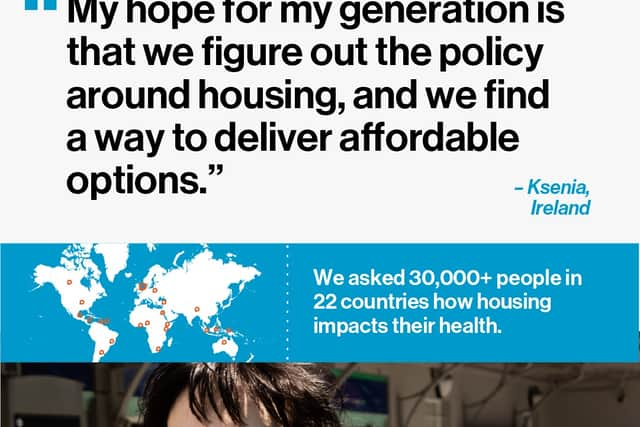
Three in 4 people (75%) say they have cut back on at least one expense in the past year to afford housing costs, with the greatest pressures falling on people already facing greater housing vulnerability, including people living in informal arrangements (89%), lower-income groups (85%) and younger generations (Gen Z and Millennials) (81%). The trade-offs reach the essentials, with one-third of respondents (33%) spending less on food, 32% dipping into emergency money, and 13% delaying or avoiding medical care to afford their homes.
Despite these sacrifices, many households are still exposed, with nearly half of people globally (48%) saying one unexpected problem could threaten their housing stability. Housing affordability is also forcing compromises on safety, with 40% saying they accept some level of housing risk because safer options are out of reach. This rises to 61% among respondents living in informal arrangements and 45% among lower-income groups. Across the board, people lack confidence that solutions are on the horizon, with 56% saying the housing system in their country is broken. In Ireland, this number rises to 74% of those surveyed agree that the housing system is broken.
Jonathan Reckford, Habitat for Humanity International’s chief executive officer, said, “A home should never come at the cost of your health or your future. It should be the foundation of health, opportunity and financial security. Yet more than half of people believe the housing system in their country is broken or simply isn't working for them.
“We cannot accept a future where people have to lower their expectations for what a home should provide. The research shows why we need governments, businesses and communities to work together to create housing systems that help people build a future instead of simply surviving the present.”
Jenny Williams, Chief Executive of Habitat Ireland, said “We were delighted that Ireland was included in the Global Housing Research. It is really challenging to see some of the findings, like that nearly three-quarters (72%) have cut back on at least one expense to afford housing and 41% worry that a single unexpected setback could threaten their ability to stay housed. At Habitat for Humanity Ireland, we work locally to build sustainable communities and enable more local people to improve their homes at a low-cost”.
Delayed families, declining well-being
The impact of housing costs extends beyond household budgets, affecting people's well-being today and the futures they hope to build.
· Over half of people (56%) say housing costs make it difficult to consider starting a family. This rises to 62% for Gen Z and Millennials.
· Nearly 6 in 10 parents (58%) worry that housing costs are limiting opportunities for their children, highlighting how housing pressures are delaying major life milestones and making long-term security harder to achieve.
· Concerns over future homeownership are highest in developed countries, including Ireland, where 89% believe rising housing costs make it difficult for people to become homeowners, and 45% say they don’t expect to own a home at some point in their life.
· Meanwhile, housing dissatisfaction is highest in countries with low national gross income, such as Côte d’Ivoire (66%) and Ethiopia (63%), compared with a global average of 35%.
· More than 1 in 3 people (35%) say their housing situation is one of the biggest sources of stress in their lives, rising to 64% among respondents living in informal housing arrangements, 39% among Gen Z and 39% among Millennials.
· Housing pressures are also taking a greater toll on renters (28%), who are almost twice as likely as homeowners (19%) to say housing negatively affects their health.
Meanwhile, 89% say safe, comfortable and reliable housing helps them stay mentally healthy, underlining that housing is not simply a financial issue, but one that increasingly shapes people’s well-being, resilience, and ability to care for themselves and their families.
Housing safety is also becoming increasingly impacted by climate change, with nearly a third of people (30%) expecting extreme weather to make living where they are harder over the next three years, while 18% say their home does not protect them from extreme weather such as heat, cold or flooding.
The report includes a more detailed breakdown of these findings, including regional and demographic-specific data. To find out more about the report or Habitat for Humanity Ireland, visit habitatireland.org/homeatwhatcost.