
Why Northern Ireland is attracting investment in advanced manufacturing
Northern Ireland is strengthening its position as a destination for advanced manufacturing investment, combining an established engineering base with new research facilities, government support and access to international markets. Recent developments, including a major investment by a Chinese manufacturer in Larne and the opening of a nearly £100 million innovation centre near Belfast, highlight the region’s ambitions to attract higher-value industrial activity.
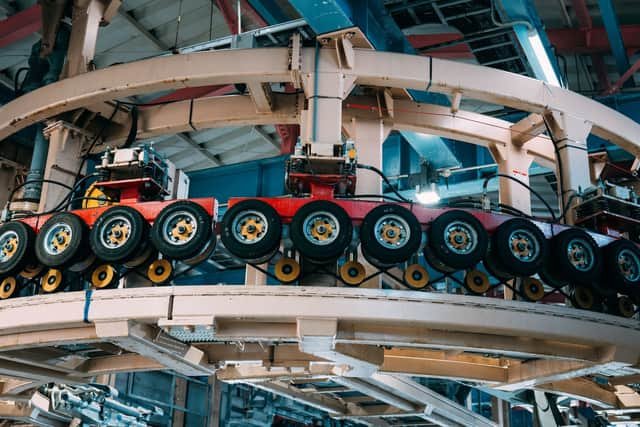

One notable example is Xi’an Superconducting Wire Technologies, a Chinese specialist in superconducting materials that has established its first manufacturing facility outside China in Larne. Operating as Superconducting Technologies Northern Ireland, the new business will produce materials used in superconducting wire, primarily for magnetic resonance imaging (MRI) machines.
The investment is expected to create 41 engineering and operational jobs, with Invest Northern Ireland offering £287,000 in financial assistance. The company’s arrival demonstrates how Northern Ireland can attract highly specialised manufacturing rather than competing solely on production costs.
The investment also reflects the importance of local support when international companies evaluate potential locations. Invest NI and Mid and East Antrim Borough Council helped the business assess suitable premises and navigate practical requirements associated with establishing its operation. For overseas manufacturers, access to appropriate facilities, a skilled workforce and guidance on local regulations can all influence the decision to invest.
Belfast is developing its own capabilities through the Advanced Manufacturing Innovation Centre (AMIC), officially opened in October 2026 at Global Point in Newtownabbey. The almost £100 million facility forms part of the wider Belfast Region City Deal and is designed to help manufacturers test new processes, develop products and adopt emerging technologies. Its capabilities include robotics, automation, advanced materials, digital twins and precision engineering.
The centre is expected to contribute £1.3 billion to the economy and support the creation of up to 1,500 jobs across Northern Ireland, alongside training opportunities for future manufacturing workers. By connecting universities with industry, AMIC aims to make specialist equipment and engineering expertise more accessible to companies that might otherwise struggle to fund their own research and development facilities.
This infrastructure matters because advanced manufacturing increasingly depends on more than machinery and factory space. Businesses must continually improve productivity, reduce waste, manage energy consumption and maintain consistent product quality. Access to testing facilities and specialist engineers can help companies evaluate new production methods before committing to expensive changes, reducing the risks associated with innovation.
Public investment is another part of Northern Ireland’s proposition. The £150 million Enhanced Investment Zone is intended to accelerate growth in advanced manufacturing, with a focus that includes photonics and biotechnology. Funding initiatives are also supporting skills development, helping businesses build the engineering, digital and technical capabilities required to adopt new technologies and compete internationally. These programmes are particularly relevant to smaller manufacturers that may lack the resources of larger multinational groups.
International market access provides a further consideration. Northern Ireland’s position within the UK, alongside its distinctive arrangements for trade in goods under the Windsor Framework, can be relevant to companies evaluating how to serve different markets. The practical implications depend on the products involved and the applicable regulatory requirements, so investors need to assess their intended supply chains carefully rather than assume that one location automatically provides unrestricted access to every market.
For companies considering an overseas expansion, establishing the right corporate structure is another important step. Investors entering Northern Ireland must consider matters such as company registration, taxation, employment obligations and regulatory compliance.
Similarly, businesses looking to expand into China may need specialist advice on the appropriate local entity and the requirements associated with operating there. Services covering China company registration and corporate services can help businesses understand the considerations involved in establishing a presence in the Chinese market.
Northern Ireland still faces challenges, including competition for skilled workers, infrastructure constraints and the need to turn research into commercially successful products. Attracting an investment is only the beginning; maintaining a competitive operation requires a reliable supply chain, continued workforce development and the ability to respond to changing market conditions.
Nevertheless, the combination of international investment, dedicated innovation facilities and targeted public support gives Northern Ireland a stronger platform from which to develop its advanced manufacturing sector. If the region can convert these advantages into sustained productivity gains and long-term industrial growth, it could attract further investment in specialist engineering, medical technology and other high-value manufacturing activities.