
Food producers in focus as leading expert to host talks on sustainability and security in Northern Ireland
Local farmers, food producers, and growing groups will explore civil food resilience, environmental protection, and sustainable practices under Northern Ireland’s Food Strategy
A prominent British expert in food policy and production will help shape Northern Ireland’s future approach to greater sustainability, environmental preservation and security across the extensive supply chain here.


Professor Tim Lang will lead discussions relevant to all areas of food supply including food producers in an initiative to ensure robust emergency plans across the local food supply chain, one of five key pillars of the crucially important Northern Ireland Food Strategy and Action Plan.
Food at the heart of our Society, developed by the Department of Agriculture, the Environment and Rural Affairs in collaboration with other departments, industry bodies like Food NI and the Ulster Farmers’ Union.
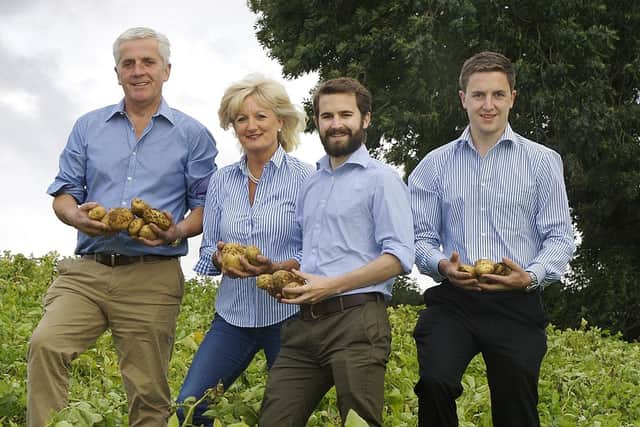
Many producers here, including enterprises like Mash Direct Boatyard Distillery in Fermanagh and Suki Tea Makers in Lisburn are implementing sustainability measures that have attracted endorsement from international bodies like B Corp.
Currently serving as Professor Emeritus at City, University of London’s Centre for Food Policy, which he founded in 1994, Prof Lang will be leading discussions with farming representatives, food producers and local growing groups at Royal Hillsborough Estate and Carrick Greengrocers on 24-25 March. It’s likely that representatives from Queen’s University, Ulster University, CAFRE and FoodOvation in Londonderry will also be involved.
Carrick Greengrocers is a community-owned greengrocer established by people who live in, work in Carrickfergus. It supports a sustainable environment and economy.
Furthermore, the group provides opportunities for learning, community interaction and engagement. All profits are directed back into the business and into other local initiatives aimed at benefiting the Carrickfergus community.
Prof Lang’s interest in farming and food policy began in the 1970s when he worked as a hill farmer in Lancashire. He is now a recognised voice on the need for ‘civil food resilience’ and enhancing the sustainability of food supplies. The professor is one of the world’s leading experts on food resilience and has advised successive UK governments on measures to secure the nation’s food vital supply.
In addition to supply chain resilience, the strategy pinpointed four other priorities: Health & Wellbeing by connecting food to better health and building a food-conscious society through education; Economic Prosperity - fostering sustainable economic growth within the food sector; Natural Resources - protecting and enhancing the environment and Food Culture - developing a stronger food culture and promoting informed choices by the public.
UK food supply is highly complex and reliant on international trade, with approximately 50% of food currently imported, making it vulnerable to global shocks.
While generally secure due to diversified sourcing, experts warn that resilience is threatened by climate change including floods and drought, geopolitical conflicts like the Ukraine war, and labour shortages, often leading to price spikes and, rarely, rationing of fresh produce.
UK food is currently imported, with 80-95 percent of fruit and vegetables sometimes sourced from abroad.
The UK government classifies food as critical national infrastructure, though there are no substantial public food reserves, placing high reliance on just-in-time supply chains.
Domestic production of fresh fruit increased slightly to 16 percent in 2023, but a long-term decline in natural capital (soil, water) poses risks to future production. The food system is vulnerable to labour shortages, energy price volatility, and, increasingly, cyber-attacks.
The UK Food Security Report 2024 suggested that while the overall, diversified supply chain has held up well, it faces increasing pressure, requiring improved sustainability and stronger domestic production to improve long-term resilience. It warned that the UK continues to be “highly dependent on imports to meet consumer demand for fruit, vegetables and seafood”.
Prof Lang’s impressive work has focused on the intersection of food, health, the environment, and political economy. He advocates for sustainable, ‘public interest’ food systems.
He directed the Centre for Food Policy until 2016 and has held roles as a Professor of Food Policy since 2002. Prof Lang has advised numerous organisations, including the World Health Organisation, the European Commission, and the UK Government’s Sustainable Development Commission.
His research covers sustainable diets, food security, and the impact of Brexit on the food system. He has authored or co-authored influential books such as Feeding Britain (2020), Sustainable Diets (2017), Food Wars (2015), and Ecological Public Health (2012).
Civil food resilience is defined as “the capacity of individuals, communities, and society to anticipate, withstand, and recover from food supply disruptions”.
It involves developing skills in cooking, growing, and sharing food at the local level; moving from vulnerable ‘just-in-time’ supply chains to ‘just-in-case’ systems that prioritize having buffer stocks and decentralised, regionalised food sources; greater public engagement; shifting from ‘me-me-me’ consumerism to a "we-we-we" approach to collective security, reducing panic buying and strengthening community support. Civil food resilience aims “to bridge the gap between household preparedness and national food policy”.