
'He raised his head on many occasions above the proverbial parapet on behalf of his fellow workers': Blue plaque to honour Belfast trade union pioneer
Co Down trade union leader and early champion of workers’ rights to be commemorated in Belfast for his contribution to Irish labour politics
One of Belfast’s most influential early labour figures is to be commemorated with a blue plaque recognising his contribution to trade unionism, workers’ rights and radical politics in Ireland.
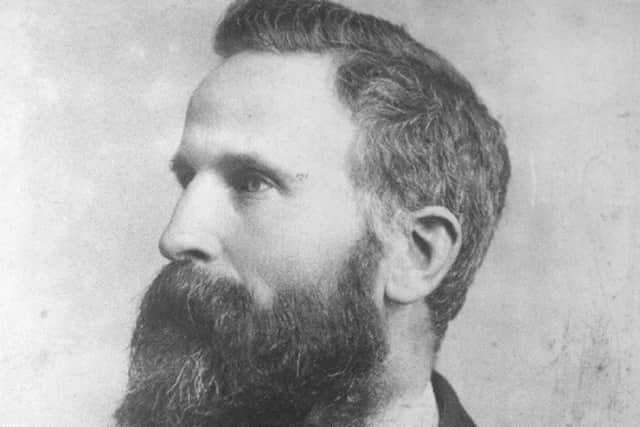

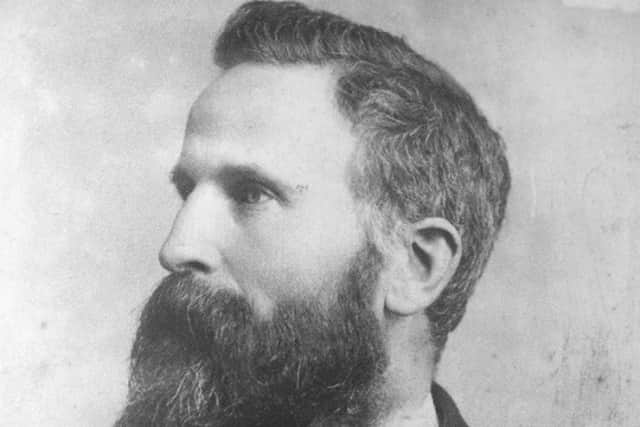
The plaque, organised by the Ulster History Circle, will honour Alexander Bowman, the founding secretary of the Belfast Trades Council who later became president of the Irish Trades Union Congress.
The unveiling ceremony will take place on today (Tuesday afternoon) at the Irish Congress of Trade Unions building on Donegall Street in Belfast, close to where Bowman carried out much of his campaigning on behalf of working people during the late 19th and early 20th centuries.
Bowman is widely regarded as one of the pioneering figures of organised labour in Ireland and, in 1885, became the first working-class man in Ireland to stand for Parliament when he contested the north Belfast Westminster seat as an independent labour candidate.
At the time, labour representation in Westminster was almost non-existent, with Parliament dominated by landowners and industrialists. Bowman’s campaign focused on issues affecting ordinary workers and called for free primary and technical education, reduced working hours, female suffrage and stronger protections for factory workers.
His candidacy generated fierce opposition and, during the election campaign, tensions spilled over into violence. A public meeting held in a Belfast schoolroom descended into chaos when opponents disrupted proceedings, while Bowman’s family home in Berlin Street was attacked and wrecked, forcing his wife and children to flee.
Despite ultimately losing the election to Conservative MP William Ewart, Bowman remained defiant, declaring afterwards: “I have been beaten. I have not been deterred.”
Born in County Down, Bowman experienced hardship from an early age. Christened Patrick McKeown, he later adopted the surname Bowman following complicated family circumstances after the death of his mother’s first husband.
His widowed mother moved the family to Belfast to avoid destitution and the workhouse, and by the age of 10 Bowman was already employed in the city’s linen industry, working as an apprentice flaxdresser.
The physically demanding role exposed him to the harsh realities of industrial life and helped shape his lifelong commitment to improving conditions for working people.
At the age of 20 he was dismissed from his job after helping lead a delegation to management over workplace grievances — an experience that strengthened his involvement in trade unionism.
A gifted speaker and largely self-educated, Bowman became known for his intelligence and passionate advocacy on behalf of labourers. He was a regular representative at British Trades Union Congress meetings and gained prominence within Belfast’s growing labour movement during the 1880s.
However, his support for Irish Home Rule proved controversial within sections of the union movement and caused divisions among fellow activists.
Bowman believed working people would benefit from a Dublin parliament linked to Westminster and became involved in Liberal politics as well as the Irish Protestant Home Rule Association. His views attracted criticism from political opponents and cost him employment opportunities, while concerns for his family’s safety forced several house moves.
Following periods living in Glasgow and London, where he worked alongside future Labour Party founder Keir Hardie and other socialist figures, Bowman eventually returned to Belfast.
In 1897 he successfully stood for election to Belfast Corporation as a Labour councillor for Duncairn, topping the poll as one of six Labour representatives elected that year.
During his time on the council he campaigned on issues including workers’ pay, public services and living conditions, helping place the welfare of ordinary citizens higher on the political agenda in Belfast.
His trade union career reached its peak in 1901 when he was unanimously elected president of the Irish Trades Union Congress at its annual meeting in Sligo.
In his presidential address, Bowman appealed for unity among Irish workers across political and religious divides, arguing that trade unionism offered common ground in an increasingly divided society.
“Our people are so sharply divided by race, by religion and by politics, that they have never been able under present conditions to make a really effective, hearty and unanimous effort for the wellbeing of our common country,” he said.
“In trades unionism we have a platform broad enough and an ideal lofty enough for every Irishman.”
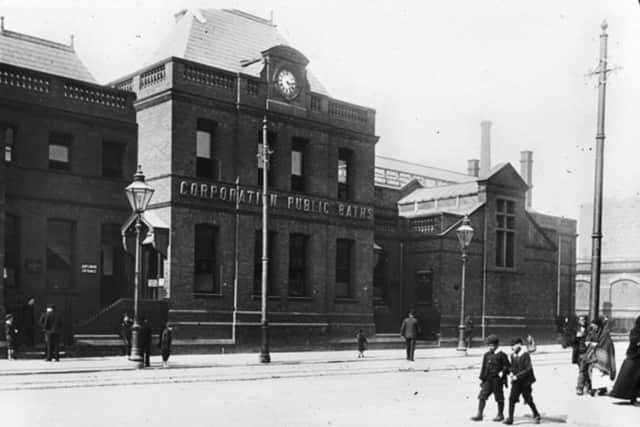
Later that same year, Bowman stepped away from frontline politics and union activism after becoming superintendent of Falls Road Baths, a role he would hold for more than two decades.
He introduced a range of improvements during his tenure, including converting part of the facility into a reading room and expanding access for young workers.
Bowman retired in the early 1920s as his health deteriorated and died in November 1924. He was buried in Victoria Cemetery in Carrickfergus.
Speaking ahead of the unveiling, Chris Spurr said Bowman deserved recognition as one of Ireland’s earliest labour pioneers: “Alexander Bowman is rightly recognised as a pioneer of Labour politics in Ireland, and his life and work epitomise the working-class struggles of his era. The Ulster History Circle is pleased to commemorate this radical trade unionist, acclaimed as the ‘People’s Champion’, with a blue plaque on the ICTUNI building in the city where he was elected a Labour councillor in 1897.
“The Circle is grateful for the financial support towards the plaque from several trade unions, and to Kevin Doherty and Terence Bowman for their valued assistance.”
Bowman’s great-grandson, Terence Bowman, said his ancestor had consistently fought for ordinary workers throughout his life: “My great-grandfather would not have seen himself as being any different from others involved in the early days of the local trade union movement. However, he deserves this accolade from the Ulster History Circle.
“Alexander Bowman raised his head on many occasions above the proverbial parapet on behalf of his fellow workers, whether as a 20-year-old flaxdresser sacked in 1874 for approaching his employer over a work grievance, seeking at seat at Westminster in 1885, topping the poll in the Belfast Corporation elections of 1897, or serving as president of the Irish Trades Union Congress in 1901. Put simply, he made a difference.”