
Lockhart sets out proposals to sanction ministers - with lawbreaking politicians turfed out of office under 12 month ban
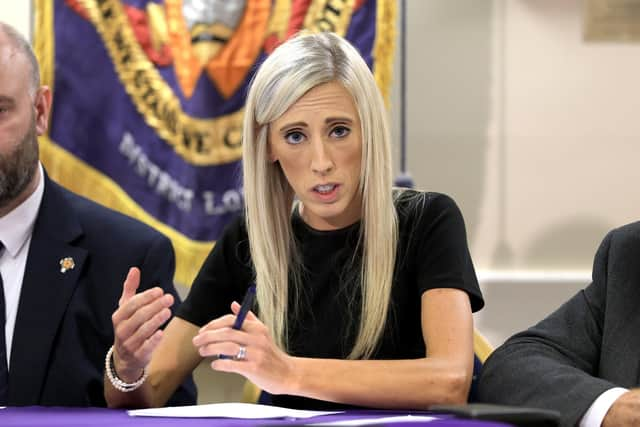
Carla Lockhart has set out proposals to remove from office any Stormont minister convicted of breaking the law – but insists her former party should eject Michelle O’Neill now by resigning her DUP counterpart.
The Upper Bann MP has released detailed proposals on how executive ministers could be removed from office, including draft legislation for the government to consider.

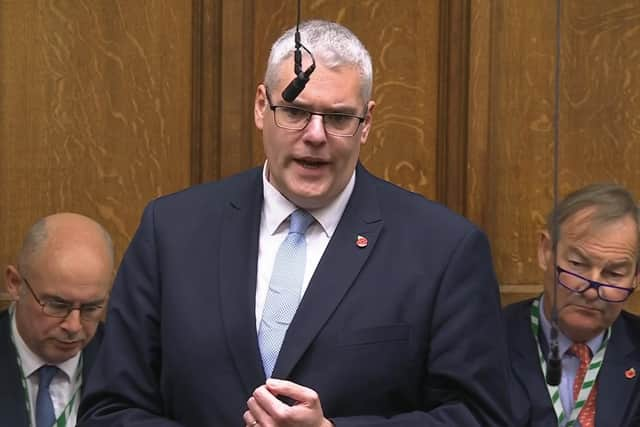
It comes after DUP leader Gavin Robinson pressed the Government to amend the Northern Ireland Act so that ministers who breach their Pledge of Office can be held accountable.
Michelle O’Neill and other nationalist politicians have been interviewed by police over their involvement in a protest on the Garvaghy Road which blocked a legal Orange parade, but no decisions have been made so far on whether to prosecute.
Unionist parties have been split on whether the Executive should be collapsed over the matter, with the DUP withdrawing Emma Little-Pengelly and therefore Ms O’Neill.
Gavin Robinson said yesterday that political stability in Northern Ireland cannot be taken for granted, and depends on ministers upholding their commitments to support the police, the courts and the rule of law.
“Where ministers breach those commitments, consequences should fall on those responsible. The public should not be punished for their lawbreaking conduct”, he said.
In proposals seen by the News Letter, Carla Lockhart says there must be three core commitments in any law change: removal of lawbreakers from office for 12 months; no ability to nominate a minister found guilty within the previous 12 months; and the removal of ministers from office if the High Court decides they broke their pledge of office.
It would apply to anyone convicted of a criminal offence which carries a potential punishment of six months or more.
“I have been clear that unionism cannot remove every Sinn Fein Minister who defied the law on the Garvaghy Road. We do not have the legal tools available to do so. But unionism can remove the figurehead, Michelle O’Neill, from office. The Assembly would continue until the next election, and other Ministers would remain in post. This is the appropriate political sanction unionism can deliver in the here and now”, Ms Lockhart said.
“This accountability framework cannot leave it to MLAs to regulate themselves, otherwise this is a recipe for partisan efforts to use the mechanisms to remove political opponents.
“It must be taken out of the hands of MLAs, and subject to independent determination, within a structured framework that applies objective standards to which all Ministers are equally subject”, she said.
The Upper Bann MP said: “An objective standard for removing Ministers from office: if convicted of a criminal offence, which carries potential punishment of six months or more, then the Minister would be removed from office for a period of 12 months. Note, this doesn’t mean your sentence must be six months imprisonment or more, but rather merely that the offence of which the person has been convicted carries such a potential punishment. It would mean for example anyone convicted of offences under section 7 or section 14 of the Public Processions Act 1998 would be removed from office and could not be renominated to office for a period of 12 months.
“The Bill would not only remove current Ministers from office if convicted of an offence and prevent their renomination for a period of 12 months, but any MLA convicted of an offence would be prohibited from being nominated to Ministerial office if the conviction comes within 12 months of the date of proposed nomination. This would prevent removal from Ministerial office of a lawbreaker, only for another lawbreaking MLA to be nominated to fill the office.
“The pledge of office would be given enforceability. If 30 MLAs believe a Minister has breached the pledge of office, then a referral can be made to the Attorney General and unless this referral reaches the threshold of being “vexatious” or “frivolous”, the Attorney General shall refer it to the High Court. At this point a High Court judge would independently determine, on the balance of probabilities, whether there has been a breach of the pledge of office and, if so, the court shall remove the Minister from office.
“The Act would come into effect at the date of Royal Assent, so could apply to offences for which a person has been convicted in the 12 months previous. This could prevent the nomination in a future mandate of anyone convicted within the preceding 12 months of a criminal offence”.