
Social media ban ‘not silver bullet solution’
Banning social media for under-16s is on its own not “the silver bullet solution”, but should be part of a “basket of measures” to protect children online, the culture secretary has said, ahead of Sir Keir Starmer's expected announcement of a ban.
The prime minister will today announce plans to bar children from certain platforms, going further than Australia by including chatbots and imposing a curfew for older teenagers in a bid to end late-night scrolling.
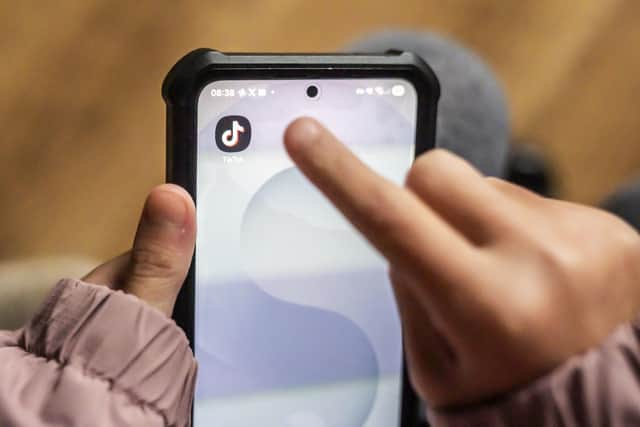

The UK will follow Australia's example in raising the minimum age to 16 for sites including TikTok, Instagram, Threads, Facebook, X, YouTube, Snapchat and Reddit, according to The Sunday Times.
The newspaper reported that restrictions will also be placed on romantic or sexual AI chatbots, while daily social media use will be limited for under-18s.
Culture Secretary Lisa Nandy declined to pre-empt Sir Keir's announcement, but said the government's consultation was launched with “a question of how we better protect young people online, not if we do so”.
She told the BBC's ‘Sunday With Laura Kuenssberg’ programme: “The responses to the consultation were overwhelmingly clear.
“Not everybody wanted to see a social media ban for under-16s, but the vast majority of people who responded did.
“That came through not just from parents and from campaigners, it did also come through from many young people themselves who are feeling that they're being pulled into something quite toxic at a very young age.”
The government's consultation received about 116,000 responses, making it the second-largest government consultation in history after a consultation on equal marriage in 2012.
The minister said Australia's experience showed that while a ban would not prevent all young people from accessing social media platforms, it could help shift the culture by changing the expectation that children as young as eight, nine, 10 and 11, who were “not really emotionally equipped to be able to cope with it”, should be online simply because all of their friends were.
“I don't think banning social media on its own is the silver bullet solution, but I do think Australia has shown very clearly that it has a significant role to play,” Ms Nandy said, adding that it should be part of a “basket of measures”.
She signalled there could be more stringent age checks than in Australia, where there have been concerns that some under-16s have bypassed the ban imposed in December by using virtual private networks (VPNs) or creating accounts with fake dates of birth.
Polling published in April found three in five Australian children aged between 12 and 15 still have access to one or more online account which should have been restricted as a result of the law.
Meanwhile, a survey found that one in seven adults trust government ministers to decide which social media platforms are appropriate for children, with more expressing confidence in parents, regulators and schools.
An Institute for Public Policy Research (IPPR) survey of more than 2,000 adults, carried out over Wednesday and Thursday, found 51% trust parents to decide which platforms are appropriate, 49% trust an independent regulator, 22% trust schools, 16% trust technology companies and 15% trust government ministers.
The polling, conducted by YouGov , also found 44% support banning under-16s from social media while 39% prefer tighter regulation.