
Unionists and Alliance help to narrowly defeat assisted dying bill as MP brands it 'state-sponsored suicide'
Unionist politicians have rejoiced in the defeat of the assisted dying bill after two years of passionate debate.
The DUP’s Carla Lockhart, TUV’s Jim Allister and the UUP’s Sir Reg Empey all hailed the collapse of the proposed law, which would have let the state provide poison upon request to people who had less than six months to live.
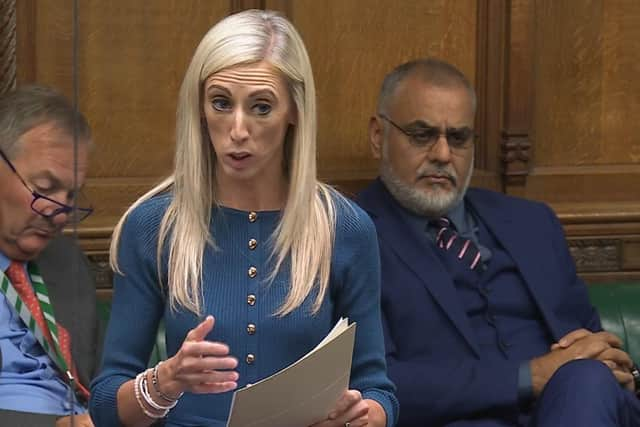

Ms Lockhart, the only Northern Irish MP to speak during the debate, insisted that it is “misleading” to refer to the proposed practice as “assisted dying”; instead, she said, it would be more honest to call it “state-sponsored suicide”.
She lamented the “irony” of the fact the bill was coming before the house one day after World Suicide Prevention Day.
The bill, which was first introduced to Parliament in October 2024, fell upon its second reading in the Commons this afternoon by 286 votes to 270.
The vast majority of ‘pro’ votes were Labour and Lib Dems plus a small minority of Tories – though a minority of Labour MPs also made up the bulk of the ‘anti’ camp.
Unionists opposed it, the SDLP did not vote, and Alliance’s Sorcha Eastwood voted against.
Afterwards, Ms Lockhart said "the answer to suffering must be better care, not a pathway to death”, adding: “Once the state crosses the line from protecting life to facilitating its ending, the consequences are profound.
"Parliament was right to reject that course today.”
Mr Allister said he was “delighted” by the outcome, adding: “This is a tremendous victory for those who believe in the right to life, and I’m glad to have played my small part in delivering that victory."
And Sir Reg voiced “relief” at the news, saying the bill “would have left very many vulnerable people at great risk”, and that “of disasbled groups throughout the UK – of whom there are nearly 400 – there wasn’t a single one supported it”.
"Very many vulnerable people could have been coerced into taking their own lives on the basis that they didn’t wish to be a burden on their relatives,” he said.
The original version of the bill had later seen even its own propsers try to tack on 76 amendments to it, he said, so “even the proposers recognise the bill was flawed".
"I think that closes the chapter on this issue, certainly in this parliament,” he said.
The drive for the bill had been “funded largely by humanists” who have “lots of money and deep pockets”.
"But despite all of that, the Commons has accepted the Lords’ analysis that the bill was unfit for purpose, and I warmly welcome that.”