
Two former paratroopers acquitted of murdering Official IRA commander 53 years ago win permission to challenge decision to order fresh inquest
Two former paratroopers acquitted of murdering an Official IRA commander 53 years ago have secured legal permission to challenge the decision to order a fresh inquest into his killing.
They were granted leave at the High Court today to seek a judicial review into claims that Northern Ireland’s Attorney General wrongly directed a new tribunal into the death of Joe McCann just before Troubles-era cases were ended.

But a judge put the challenge on hold amid ongoing uncertainty over UK Government plans to introduce legislation to restore inquests halted by the controversial Legacy Act.
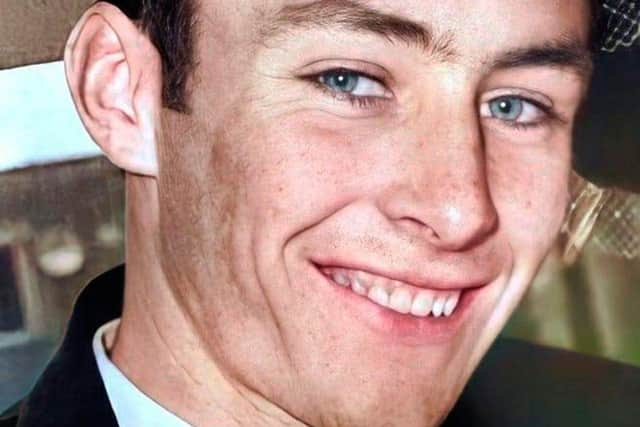
Mr McCann, 24, was shot dead in disputed circumstances after a British Army patrol opened fire near his home in the Markets area of Belfast back in April 1972.
Two members of the Parachute Regiment, referred to as Soldiers A and C, were subsequently accused of his murder.
In 2021 they were formally acquitted after the trial collapsed because key evidence based on statements given to Royal Military Police back in 1972 and to Historical Enquiries Team (HET) investigators in 2010 were ruled inadmissible.
Following that outcome members of Mr McCann’s pressed for the establishment of another inquest.
In April last year Attorney General Brenda King announced that she had directed a fresh hearing, saying it would not be inhibited from considering the soldiers’ written statements and would be able to provide a public record of what occurred.
The move was made just 12 days before the Legacy Act introduced by the previous Conservative Government brought an end to Troubles-era inquests.
Lawyers representing Soldiers A and C brought judicial review proceedings in a bid to have the decision quashed, arguing it was both unlawful and irrational.
They claimed the Attorney General was seeking to compel another public authority, the Coroners Service, to take a step which could never be legally fulfilled.
A total of eight shots were fired by members of the Army unit during the incident where Mr McCann was killed.
With six of the rounds discharged by another paratrooper who has since died, the court was told another inquest will never be able to establish who fired the fatal bullet.
Soldier A has stated he now suffers from brain damage and significant memory loss which have left him with no recollection of the previous investigations.
His former colleague, Soldier C, provided an affidavit that the decision to order a fresh inquest has brought back the anxiety and sleeplessness he endured during the criminal proceedings.
Their barrister insisted all of the remaining statutory questions to be addressed by an inquest have already been answered.
Counsel for the Attorney General responded that the challenge should be dismissed due to the current legislative circumstances making it impossible for an inquest to be convened.
He also confirmed there is currently no timetable for primary legislation required to change the current position.
Mr Justice Humphreys held that Soldiers A and C have established an arguable case on grounds of challenge centred on alleged errors of fact about their 1972 statements and the impact of the Legacy Act on the decision making process.
“It is inescapable that, on the law as it currently stands, there can be no fresh
inquest into the death of Mr McCann,” he said.
“Legislative change may occur, but it remains a matter for Parliament to determine whether, and to what extent, inquests caught by the Legacy Act may resume.”
The judge ruled: “I propose, therefore, to grant leave on those grounds… but (direct) that no further steps be taken in this litigation until further order.”