
IRA's bomb murder of retired RUC reservist and his wife among 14 cases to be probed by new Troubles legacy body
The IRA’s killings of a retired RUC reservist and his wife are to be investigated by a new Troubles legacy body.
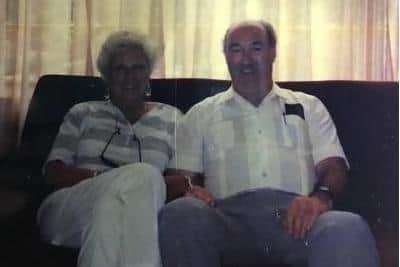
Along with 13 other cases, the 1990 murder by car bomb of James and Ellen Sefton is to be examined by the Independent Commission for Reconciliation and Information Recovery (ICRIR).
The commission was created by the Conservative government’s controversial Legacy Act, which halted scores of civil cases and inquests into Troubles deaths.
Bereaved families, victims and certain public authorities can instead request the ICRIR carry out an investigation.

While Labour has committed to repealing the Act and has said legacy inquests will resume, it is continuing with the ICRIR.
The cases include the killing of James and Ellen Sefton in June 1990.
Mr Sefton, a retired RUC reservist, and his wife were on Belfast’s Ballygomartin Road when an “up and under” bomb the IRA planted on their car detonated.
Their family has campaigned for years for an investigation into the murders.

Other cases to be probed by the ICRIR include the shooting of bus inspector Alexander Millar at Ardoyne Bus Station in May 1975. He was believed to have been a UDA captain, and the killing was almost certainly carried out by Republican paramilitaries.
The ICRIR is also to investigate the death of 19-year-old Seamus Bradley in Londonderry in 1972. An IRA member, a coroner has previously ruled that the British Army’s shooting of Bradley during Operation Motorman was unjustified.
And it will look into the shooting of Thomas Sheppard in Ballymena in 1996, after he was accused by the UVF of being a police informer.
The only case the commission had previously confirmed was its investigation into the Guildford pub bombings in 1974.
The ICRIR says it has accepted 14 individual requests for an investigation and is working with more than 100 individuals on taking their cases forward.
The commission is headed by former Lord Chief Justice, Sir Declan Morgan.
He said: “With over 100 individuals coming to the commission, a figure that is continuing to rise, we have a crucial role to play in supporting the vast number of victims, survivors and families who are still looking for answers.
“We will do so with integrity, independence and a focus on providing them with the unvarnished truth about what happened to their loved ones.”
Sir Declan also welcomed a pledge from Northern Ireland Secretary Hilary Benn that inquests which had been halted by the Legacy Act would be allowed to proceed.
The ICRIR has faced sustained criticism from groups representing Troubles victims since it was established by the Legacy Act.
In a case brought by Troubles victims two months ago, the Court of Appeal ruled that a government veto over what sensitive material can be disclosed to bereaved families by the commission is incompatible with human rights laws.
The court also found that the work of the ICRIR does not provide victims and their next of kin adequate means to participate in its processes.
However, other grounds of the appeal were dismissed, including a challenge over the commission’s operational independence.