
'People were screaming. High-pitched guttural screams of pain and distress': police officer's horrific testimony during the last week of Omagh bomb inquiry's first phase

Four weeks of heartbreaking testimony from Omagh bomb families, survivors and first responders came to a close on Wednesday at the inquiry into the 1998 Real IRA atrocity.
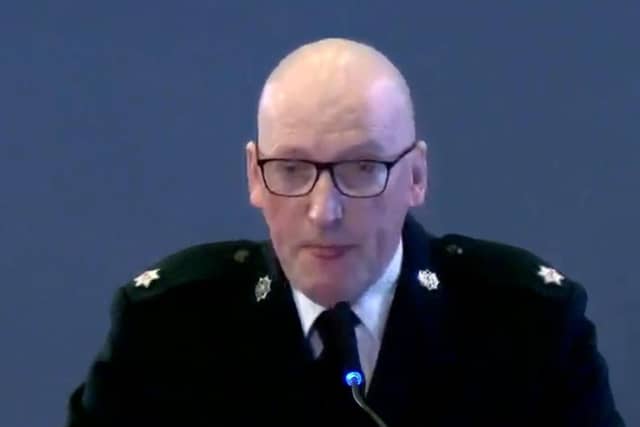
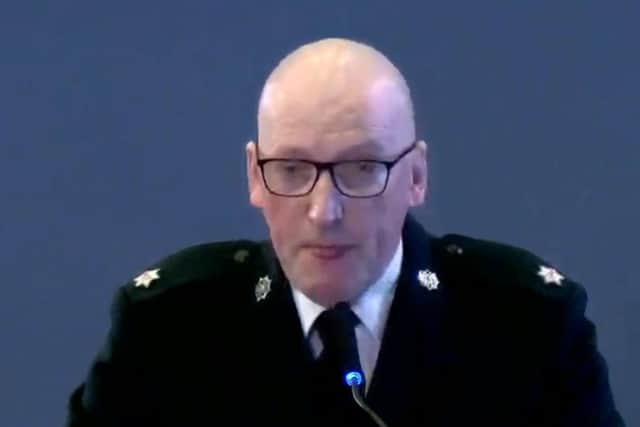
Among those giving vivid evidence of the terrible evil inflicted on the Tyrone town that day was police officer Norman Haslett, who told how the scene resembled “hell” after the explosion. He said it was his "personal opinion and belief" that the bombers most likely set out to murder police when they left a massive car bomb in the centre of town.
Mr Haslett is a PSNI superintendent but was an RUC constable based in Omagh in 1998.
The dissident republican attack killed 29 people, including a woman who was pregnant with twins.
In the past four weeks all of those who were killed in the attack have been remembered at the inquiry in the Strule Arts Centre.
It also heard evidence from those who were injured and impacted by the bombing and the emergency services which responded on the day.
On Wednesday, Lord Turnbull said that listening to the evidence had been a “humbling experience”.
The next hearing of the inquiry will be in the week beginning June 23 when core participants will make oral statements.
In his evidence on Tuesday, Mr Haslett told the inquiry that he had been on duty on the day of the bomb and was involved in the operation to evacuate people from the area around the courthouse in Omagh after a number of bomb warnings using a recognised codeword had been made.
He said: “I remember very clearly people not taking the bomb warning seriously.
“Some people behind the security barrier were shouting ‘bang’ and then laughing.”
He added: “I was standing just outside a dry cleaning premises when I heard an explosion. I knew immediately that this was a bomb explosion.
“When I looked in the air I saw a large pall of black and brown smoke descending from the direction of the lower end of the town centre.
“My immediate thought was that is definitely not at the courthouse.”
Mr Haslett said he heard screams coming from the police radio network.
He said: “I had never heard screaming like that on the police net before, or since.”
The officer said he went to Market Street, where the bomb had exploded.
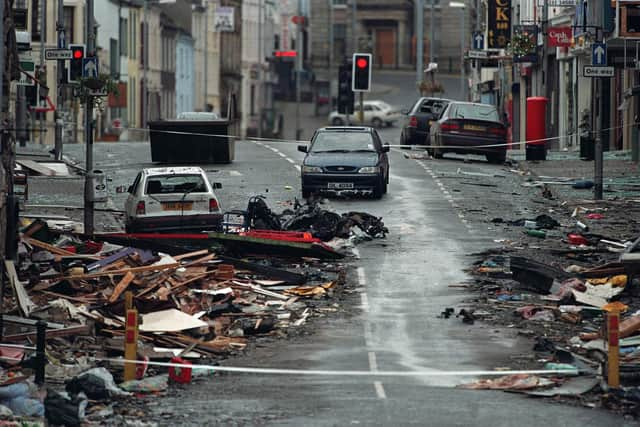
He added: “If there is a hell, and I think that there probably is, then I am fairly certain that what I saw and heard and smelled just at that moment must have resembled it.
“It was pure carnage and chaos. The street was completely wrecked.”
He continued: “People were screaming. High-pitched guttural screams of pain and distress.
“People who had been injured by the explosion were being tended to by members of the public and police officers.
“Some were crying out in pain but some were very quiet and still.
“I remember seeing people who were obviously beyond help, some horribly mutilated, with arms and legs missing.
“The further I walked down Market Street, the more bodies and injured people I encountered, women, men and young children.”
Mr Haslett told the inquiry that he had brought an injured woman to the local hospital, but that she had later died.
He said he wanted to contact his parents, to tell them that he was safe, but they were away from home.
When they heard the news about the bomb on the radio they attempted to phone a police station for information.
Mr Haslett said: “A female police officer was able to tell them that there had been casualties but she didn’t know if any were police.
“She actually told my mum that all she could do at that stage was to pray.”
He returned to the bomb site where, he said, the police operation had moved to recovery of the dead. He said bodies were lying in the middle of the street.
He said: “I remember almost being in disbelief that a human being could possibly inflict such damage to another human being for any reason, never mind for the sake of a political cause.”
Mr Haslett said a decision was taken to move the bodies to a small alleyway at the side of Market Street.
He said: “As the dead accumulated in Market Street arcade, we started numbering them using torn-up strips of paper and a biro pen.
“Looking back this sounds awful and terribly impersonal, but it was the only way we could keep an accurate account of the number who had died and who we had recovered.”
He said the alleyway filled up with bodies so police instead had to use a nearby shop.
He said: “When we were satisfied there were no further bodies to recover from the wreckage and the street, a total of 20 bodies and a body part lay in Market Street arcade and in the shop.”
“They had been numbered consecutively from 1-21.”
Mr Haslett said a temporary mortuary had been established in the gym of an army barracks in the town.
He said: “All the victims from the scene were laid out on the floor of the gym. Seeing them all laid out as they were was quite a profound and distressing sight.
“I think this was the first time that the enormity of what had just happened actually struck me.”
He was then instructed to search the bodies for identification.
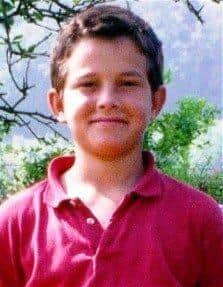
He told the inquiry that he later discovered that one of the bodies he had searched was 12-year-old Spanish victim Fernando Blasco Baselga.
He said the boy did not have a mark on his body and he discovered a Swiss army knife in his pocket.
He said he later learned Fernando had been killed when a small piece of shrapnel had entered behind his left ear
Mr Haslett said: “He just looked to me like he was lying there asleep.
“He was just a wee innocent boy on his holidays with his pen knife in his pocket and he was murdered for a political cause by people of insignificance whose humanity was indifferent to the consequences of their actions.”
Mr Haslett told the inquiry: “Whilst I fully acknowledge, as a result of this atrocity, 29 innocent civilians and two unborn children were brutally murdered, I personally believe the intended purpose of the positioning of the bomb in Market Street was to kill and injure police officers who the Real IRA knew would have to set up cordon points and evacuate the relevant area.
“RUC officers were the target, this is my personal opinion and belief.”
He added: “The blame for this atrocity can only lie with the people who deliberately left a car bomb in the centre of a busy market town in Co Tyrone on a Saturday afternoon just before the start of a new school term.
“On the day we, as first responders, were acting on the information available to us at the time, and that is all that we could do.”