
Concern for victims raised as criminal barristers in Northern Ireland are to fully withdraw from Crown Court cases

Criminal barristers in Northern Ireland will stage a full withdrawal from all Crown Court cases early next year, marking a major escalation in their long-running dispute over legal aid funding.
The Criminal Bar Association (CBA) confirmed the move after balloting its membership, with 89 per cent of the 193 participating barristers voting in favour of the action.
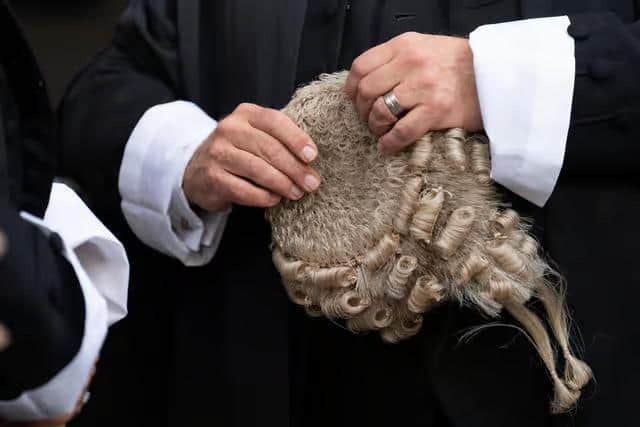

A limited withdrawal of services already under way will now expand to a complete halt on work in all active Crown Court cases from January 5 next year.
In a statement, the Bar Council says it “regrets that the situation has reached this point” but that it has “been sounding the alarm on an Access to Justice crisis for some time now.”
It added: “Criminal barristers want to be in court, representing their clients, running and resolving criminal cases - cases that often involve deeply complex and serious matters. The Criminal Bar Association has not taken the decision to increase its withdrawal of services lightly.”
An interim 16 per cent rise in legal aid fees announced in December 2024 has still not been implemented.
"In December 2024, the Justice Minister announced the first interim fee uplift in 20 years for Crown Court work and she later undertook to have it in place by May 2025,” the statement continued.
"Although welcome as a short-term, interim measure, this increase fell significantly short of 20 years of accumulated inflationary pressures.
"Furthermore, it is not expected to be delivered until January 2026 at the earliest, almost 18 months from the date when the increase was recommended by an independent review and more than six months from the date when the Minister ought, at the latest, to have delivered it.
"Despite extensive engagement, no other increases have been agreed to date and there is no guarantee of any further increases in the near future.”
UUP Justice Spokesperson Doug Beattie has warned that victims of serious crimes will bear the brunt of escalating industrial action.
He said: “This industrial action, over pay, will have a serious effect on an already beleaguered, and at times dysfunctional, criminal justice system.
"Victims will be at the heart of this disruption and some high profile and long-standing cases, which have been waiting years to be heard, will now be postponed again with the ability to list any cases disrupted given that this industrial action has no end date.”
However, he added: “Where I do have some sympathy for the Criminal Bar and would urge the Department for Justice to redouble efforts to find a solution, I do not believe that allowing the focus of disruption to fall on the victims is the best way to deal with this issue.
"I call on the Justice Minister to urgently outline plans she has in place to deal with this issue and the pressure it will now bring to bear on the remainder of the criminal justice system, including our prisons where remand prisoners are already at a high level.”
Responding to the decision, Commissioner Designate for Victims of Crime Geraldine Hanna, said: “This is going to be disastrous for victims of the most serious crimes.
“I am angry that after nine months of a working group focused on a productive solution we are seeing that the situation is only going to get worse for victims.”