
Owen Polley: Pandering to Northern Ireland haters over the Ulster Banner is doomed to fail
As this paper reported last week, Northern Ireland’s Commonwealth Games bosses are planning to ditch the Ulster Banner ahead of the next tournament, in Glasgow.
This divisive campaign has been driven by Conal Heatley, the Commonwealth Games Northern Ireland (GWGNI) chief executive, and former hockey player Stephen Martin.
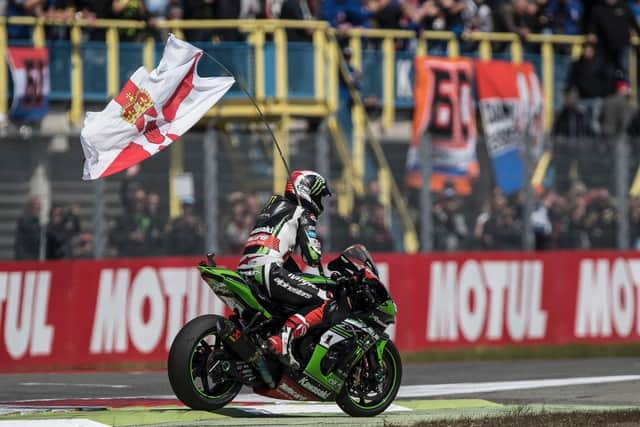

At an AGM on Wednesday, the organisation demanded that Stormont come up with an alternative. But if that fails, as it is almost bound to, Heatley and Martin want athletes in 2026 to use the CWGNI corporate logo.
This kind of initiative is always accompanied by a lot of worthy talk about inclusivity that comes apart when you scratch it.
In this instance, the argument is that the Ulster Banner does not have official status (it was the flag of the old government of Northern Ireland that was prorogued in 1972), so it is inappropriate for the current team. Heatley claimed that many people feel it does not represent them and ‘parts of the community’ find it ‘offensive’.
It was revealing that this reasoning was soon accompanied by allegations that the banner is linked to ‘race hate’. As Baroness Hoey suggested in the News Letter, that smeared and insulted everyone who values the flag, as well as sportspeople who have celebrated under it in the past.
While the Ulster banner may not have official status, it has been Northern Ireland’s de facto flag for decades and it is an emblem unique to this place. It has also been a fixture of our sporting history, associated with some of our favourite competitors’ most memorable achievements.
The Ulster rugby team is strictly speaking a provincial side, but when its players became the champions of Europe in 1999 and the final was played in Dublin, the Republic’s capital was bedecked with the red and white flags. That caused little controversy, principally because it was a joyous occasion not only for Northern Ireland sport, but for Irish rugby fans too.
The flag was a central part of our national football team’s appearances at major tournaments. For people of a certain vintage, the 1982 and 1986 World Cups are linked inextricably with the symbol, while younger fans displayed it proudly at Euro 2016.
In 2015, Josh Magennis scored one of the vital goals that beat Greece 3-1 at Windsor Park and booked Northern Ireland’s place at the tournament in France. The next day, many newspapers carried an image of the big man from Bangor with his country’s flag, which summed up the occasion perfectly.
Our golfers have never been shy about using Northern Ireland’s emblems either, celebrating famous major victories and Ryder Cup wins under the banner. It is recognised far beyond these shores, and when Rory McIlroy, Graeme McDowell or Darren Clarke appear on a leaderboard in the PGA Tour, so does the flag.
The footballer, Conor Bradley, is perhaps Northern Ireland’s brightest young talent, and he has delighted the province’s many Liverpool fans by establishing himself as an important player in the first team squad at Anfield. When the Reds’ line-up is announced on TV, his name appears beside our flag, and the same is true of other Premier League players from this part of the world.
The symbol is recognised almost universally and associated inseparably with this region of the UK.
If the flag attracts antipathy, let’s be honest, that’s because some people here will never accept anything that represents Northern Ireland, particularly if it also reflects our place in the United Kingdom.
There have been some interesting ideas, in the past, about using the red saltire of Saint Patrick in a revamped Northern Irish flag. That is, after all, the symbol that represents this part of the UK in the Union Flag. But those suggestions were quickly shot down by nationalists, who claimed it was associated with the army or royalty.
The CWGNI has now reportedly set a deadline for Stormont to come up with a new emblem before the 2026 games. The executive, though, is unlikely to agree an official flag for Northern Ireland, however long we wait. That’s primarily because 40 per cent of the ministers hate this place and its symbols. They will never support anything that entrenches a sense of Northern Irishness, or encourages pride in this part of the UK.
In that context, Mr Heatley must know very well that, under his proposals, Northern Ireland would probably compete in the Commonwealth Games under a corporate white flag that made us look like some kind of stateless territory. And he must think that is preferable to using an established banner that carries with it a proud history of sporting achievement.
The truth is, that as Northern Ireland’s existence has enjoyed increased buy-in from across communities, the Northern Ireland flag has actually become more accepted as an emblem of our teams and identity. Indeed, many athletes who competed for the Republic in the Olympic games have displayed it proudly during their Commonwealth Games exploits for this province.
This campaign against the flag, supported, predictably, by politicians in Alliance as well as nationalists, will only make its use in the future appear more controversial and divisive.
It can seem that, these days, at the helm of every organisation in Northern Ireland is someone who wants to strip away our traditional symbols in order to appease opponents of Northern Ireland. The problem with that strategy is that it has no end, because you can never satisfy people who hate this place and want to destroy it.