
Roamer: Children around the world loved 11-year-old 'King William'
During the recent 12th of July, with the focus firmly on King William III’s victory at the Battle of the Boyne, it might have been considered flippant for Roamer’s page to feature an 11-year-old schoolboy King William.
“I often refer to him as my Frankenstein monster,” author Richmal Crompton admitted in a 1968 radio interview, adding “I’ve tried to get rid of him, but he’s quite impossible to get rid of.”
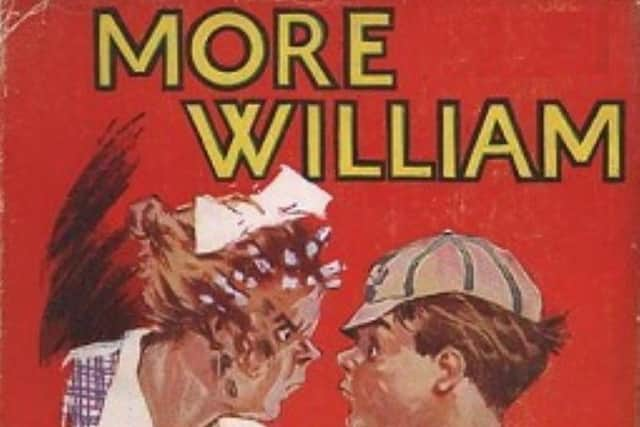

She was referring to William Brown, the constantly dishevelled 11-year-old hero of her William books, who became a king in the second of 38 books published between 1922 and 1970.
In each story William runs riot inside and outside his English family home, constantly annoying his elder brother and sister - Robert and Ethel - and thoroughly exasperating his exhausted parents.
Incalculable millions of copies of William stories have been sold, with countless reprints and adaptions, and are still selling - over 12 million to date in the UK alone - with translations into more than 20 languages, numerous television, film, theatre and radio versions and huge numbers of fans, like the worldwide Just William Society.
Intriguingly, William is always an 11-year-old, even though each story is set in the time it was written.
The enormously popular ITV Just William programme ran for two series between 1977 and 1978 starring child actors Adrian Dannat as William and Bonnie Langford as Violet Elizabeth Bott, William’s irritating next-door neighbour who had ringlets, a lisp, was hideously spoilt and threatened to ‘thcweam and thcweam’ until she made herself ‘thick’! Diana Dors played Violet Elizabeth’s mother.
Packed into the 38 William books are over 300 short, stand-alone stories about the errant school boy and his chums - the Outlaws.

Meanwhile, Crompton wrote over 40 other novels, sometimes at the rate of two a year. Born in Lancashire in 1890, Richmal was a vicar’s daughter who taught in a girls school until her early 30s, when she lost the use of her right leg due to polio.
Unable to continue teaching, she concentrated on writing and within three years her earnings enabled her to have a house built for herself and her mother.
Her first story, Rice-Mould, aimed at adults, was published in February 1919 in Home Magazine.
In October 1923, William Goes To The Pictures, the opening story of Crompton’s first William book - Just William, published in 1922 - was transmitted on BBC radio as a children’s programme.
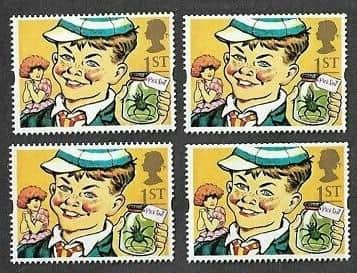
It was a huge success...and the rest is history, with much-loved titles like William Again, William the Fourth, Still William and William in Trouble cascading from the author’s typewriter.
She was 78 years old and halfway through another book when she died in 1969, having transformed her errant schoolboy into William the Conqueror, William the Dictator, William the Pirate, William the Detective and numerous other roles.
His elevation to royalty came earlier, in Crompton’s second book called More William, published in 1922, in which her mischievous young scoundrel with dirty knees, astonishingly, becomes King!
More William is a compilation of 14 stand-alone short stories which includes The Ghost, where William initiates a ‘psychic encounter’ for his cousin Mildred and a story called Knight At Arms with Willam and his fellow-outlaw Ginger rescuing a damsel in ‘distress’, a sort of youthful Don Quixote tale!
The seventh story in the compilation, The May King, is a chaotic tale where William is chosen as ‘courtier’ to the May Queen in his school’s May Day pageant.
A little school girl whom he absolutely despises called Evangeline Fish is chosen as the Queen. William has greater ambitions than a minor role in the shadow of a girl he dislikes, and devises a plot to dethrone Evangeline, to install a more likable Queen, the mischievous Bettine Franklin, and to cast himself as King!
On the morning of the pageant William tempts sweet-toothed Evangeline into a wood-shed full of buns, pastries, cakes and bottles of lemonade, financed unwittingly by his overgenerous uncle.
“They’re all for you,” he tells Evangeline “Go on! Eat ‘em all!” and he exits the shed, locking the door.
The story ends with rapturous audience applause for Queen Bettine, wearing a hastily cut out paper crown, and King William, with a burnt-cork moustache on his upper lip and a toy bus conductor’s cap on his head. And Evangeline Fish is in the wood shed greedily munching another currant bun!