
Roamer: The day WWII ended the banana was finally liberated
Most of the world paused for yesterday’s VJ Day commemorations amidst huge press and media focus on the 80th anniversary of Victory over Japan and the end of war in 1945.
“The day WWII finally ended, I was in Senior Infants at Kelly Memorial School in Portrush,” recalls local historian, journalist and former editor of the Coleraine Chronicle, Hugh McGrattan.
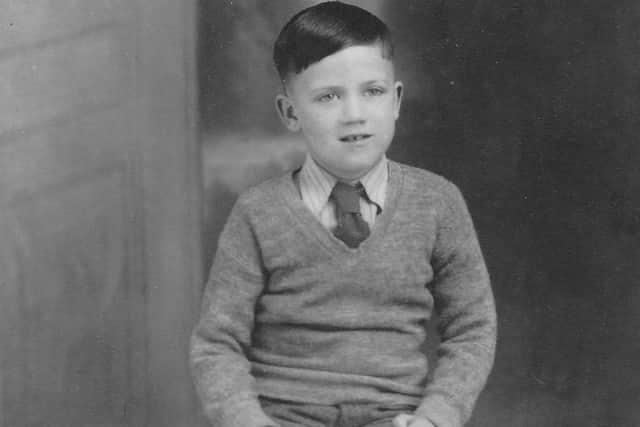

“I can’t remember much about either VE or VJ Day,” he admits, “but I do recall one reason we celebrated...the banana was back!”
The rest of today’s page is Hugh’s:
The vision of the banana was a symbol of victory to our Class of ’45 - that’s what we seven-year-olds were fighting for!
Forget Churchill’s ‘V’ for Victory sign, or the four-note opening of Beethoven’s fifth symphony, or the iconic spitfire victory roll - no, the banana was what we believed in and the day it was liberated, the lights really lit up again.
It was, of course, some weeks after hostilities ended before that great post-war vision came marching home. I’d probably never tasted one, but that didn’t mean I didn’t want one, encouraged by the great wartime song: “Yes, we have no bananas”.
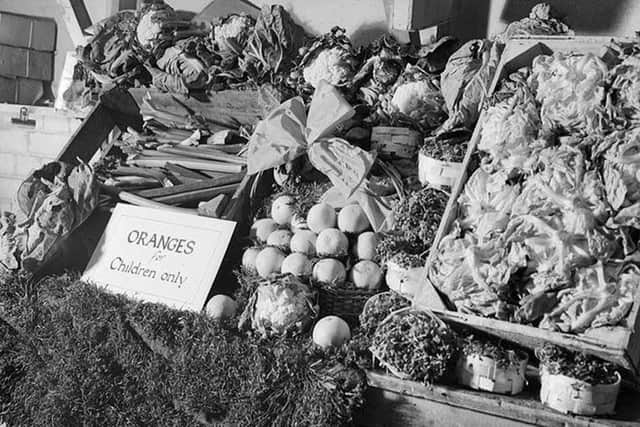
Oranges were something of a compensation back then - when and if they were in the shops, individually wrapped in little squares of tissue paper. My mother stored them in our front room sideboard, to be distributed sparingly at appropriate times.
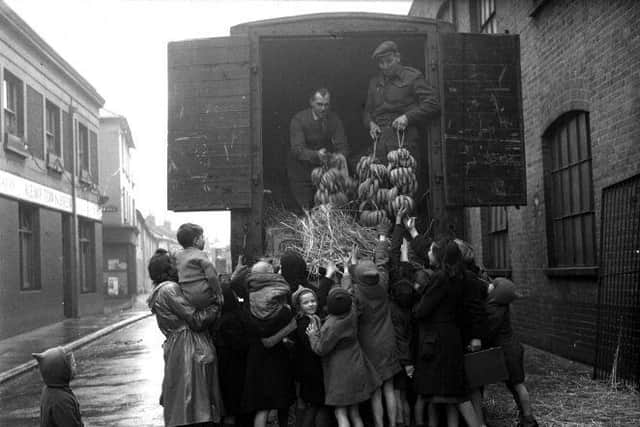
Then we heard that bananas were on their way and expectations probably hadn’t been greater since news broke of the Americans coming here. In those days we bought most of our fruit and vegetables from Mrs. Hall’s narrow little shop overlooking Portrush Harbour. Mrs Hall was a tiny and dignified Jewish lady, who had come to Portrush from Belfast, I believe, to escape the blitz. Next door was old Mr. McAllister’s confectionery shop. He’d survived the Portrush Lifeboat tragedy of 1889 when three lifeboatmen were drowned.
We wartime youngsters had other things on our minds as we studied the market each week with cold calculation in order to get the best return on a spartan allocation of sweetie coupons.
The confectionery situation was not as grave in our household as in some.
Dad was in the Navy and didn’t eat sweets or chocolate. Before he came home on leave he spent his entire coupon ration and half-filled his suitcase with goodies which ended up in the sideboard beside the oranges, under the same strict allocation.
I well remember the day sweetie rationing ended in the early 1950s and soon there wasn’t a sweet or square of chocolate to be found in all of Portrush!
But back to the banana.
That precious yellow crescent I carried up Ramore Street on Liberation Day wasn’t the first I’d ever seen in the flesh (or the skin) but that previous encounter with the banana had been less than satisfactory.
Picture the scene in our class at Kelly Memorial. Enter one of the big boys (on the instructions of Mr. Gillespie, our headmaster) bearing from classroom to classroom, for our edification, an object purporting to be a banana.
We sit, first in puzzlement, then in total disbelief, as the messenger holds aloft the said alleged banana.
It is black!
But we weren’t stupid - we knew from pictures that real bananas were yellow. Interest turns to scorn and the messenger retreats. But how were we, denied access to the banana for so long and ignorant of its characteristics, to know that it turned black in a short space of time? The said example had no doubt escaped several months earlier and been on the run ever since. That close and brief banana encounter left us unsatisfied and unconvinced.
However, all was to change when the real banana came marching home for good.
Other things marked the end of the war - VE Day and VJ Day bonfires on Ramore Head which I can barely remember and a victory parade (or two) which I can’t remember, though I recall the street lights coming on.
And I remember getting free tickets to Barry’s and children’s parties in the British Legion Clubrooms and my new English uncle (ex-Middlesex Regiment) coming back to stay.
Doubtlessly there were other celebrations, extravagances and goodies back within our grasp. But I do remember the banana - a vivid and unbending yellow beacon of childish hope in a flickering kaleidoscope of half-remembered 1940s images!