
Trevor Ringland: Dublin and London risk perpetuating the imbalance in legacy probes in favour of terrorists, and against state forces
A letter from Trevor Ringland:
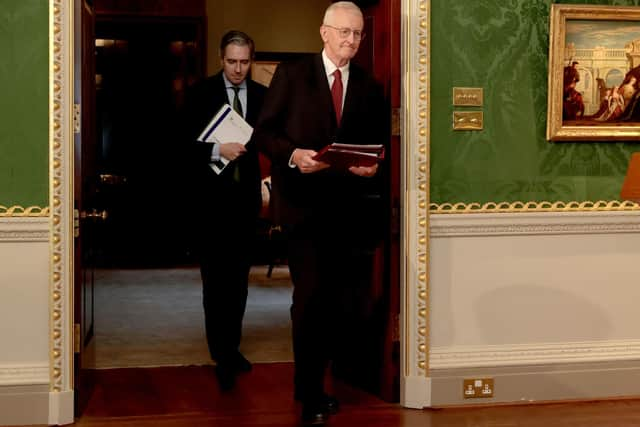
With their Hillsborough Castle ‘framework’ agreement, the two governments risk undermining attempts to restore balance to dealing with the legacy of the ‘Troubles’.

The Independent Commission for Reconciliation and Information Recovery (ICRIR) was created to appraise honestly the chances of delivering justice and / or truth to families affected by unsolved crimes from that period. The new plans appear to reverse that progress.
Our legal system has unfortunately allowed narratives about the past to be established that lack any context. It became focused on a small number of well-documented cases involving soldiers and the police, rather than the vast majority, perpetrated by paramilitaries, who kept no records.

Civil actions were also directed principally at the British state, providing a compensation fund that only those injured by the security forces could access. The majority of victims, who suffered at the hands of the republican movement and loyalists, were edged to one side.
Just recently, the legal system’s ability to protect our society was brought into question, when the Court of Appeal overturned on a technicality, convictions relating to a bomb planted at a football match. The idea that a ‘lack of disclosure’ on behalf of the RUC should offend the court’s sense of justice and propriety as determined by two of the judges, but yet another (who dissented) would not feel the same, is something we would surely all appreciate to have explained better with more detail disclosed around the circumstances, despite the restrictions imposed.
After all, if evidence should have been disclosed in respect of the trial, then surely it can be disclosed now to the wider public.
The Dublin government has played a biased role in legacy discussions, effectively operating a de facto amnesty since 1998 and assisting in the distortion of history, rather than examining its own role in providing safe haven to republican paramilitaries and undermining the often good work of the Garda and Irish army but who wished they could have done more to counter the terrorism that risked a civil war on this island with all its consequences.
The outcome of these trends is that 70% of nationalists now believe the IRA had no option but to murder its neighbours, according to a survey. We now also see some loyalists trying to make similar arguments, excusing their violence.
Northern Ireland, which belongs to all of us who live here, is undoubtedly socially and economically better off than it was in 1998. Unfortunately, though, while many of us are committed to building a better future for ourselves and our children, there are others who want to justify their past crimes and excuse the hatreds that inspired them.
The de facto amnesty that they benefited from, in league with an unfair, context free system of dealing with the past, helps them in their aims. To take one particularly dark and high-profile year from our past, in 1974 the RUC had to deal with 303 deaths. Republican terrorists were responsible for 147, loyalists 131, the army 15 and the RUC two. The governments’ proposal threatens to strip away any balance in dealing with that legacy and encourages those who want to use it to continue past battles. They, and others, should know better, and they should remember the statistics that tell a truer story.
A balanced approach is surely the best way to ensure that what happened never happens again!
Trevor Ringland, Bangor BT20