
Battlefield success was key in swinging the 1864 US Presidential election in Abraham Lincoln's favour
After the American Civil War Battle of Gettysburg (July 1-3 1863), taken in conjunction with Grant’s capture of Vicksburg on the Mississippi River in the west on July 4 1863, the strategic initiative passed permanently to the North and the defeat of the South was inevitable, subject only to the proviso that the Union’s will to fight held firm, admittedly by no means a foregone conclusion.
With the benefit of hindsight we know this but contemporaries were not so privileged.

Northerners were war weary because there was little to show for lengthening casualty lists and no end to the war seemed to be in prospect – not least because even when Union generals ostensibly won, notably McClellan at Antietam and Meade at Gettysburg, they failed to press home their advantage by allowing Robert E Lee to retreat unmolested rather than pursuing him and crushing his Army of Northern Virginia.
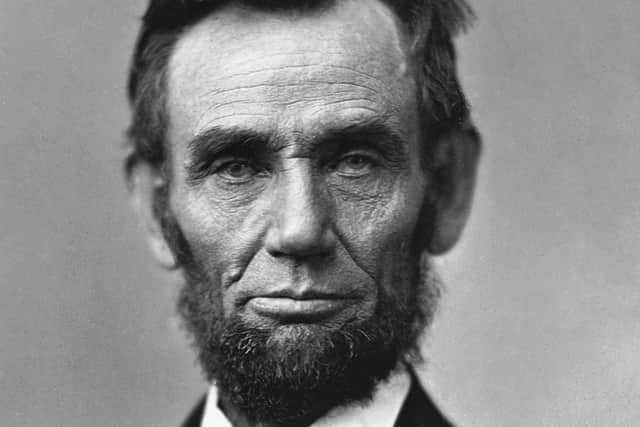
Such was the mood music ahead of the Presidential election of 1864 in which the principal antagonists were Abraham Lincoln, the Republican incumbent, and George Brinton McClellan, the Ulster-Scot who was the Democratic Party’s nominee.
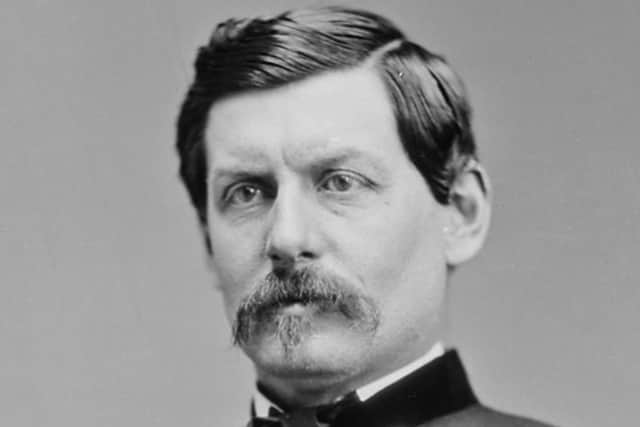
While McClellan excelled militarily as a logistician, he lacked confidence and imagination operationally. He was ‘slow and indecisive’ and was ‘incapable of dynamic action even when all the cards were in his hands’. He refused to accept responsibility and tended to blame everybody except himself for his failures.
In October 1862 Lincoln visited the Army of the Potomac in the hope of prodding McClellan into renewed action against Lee. As the president and a companion surveyed the Army’s camp headquarters one morning, he asked his friend what he saw. He replied: ‘The Army of the Potomac.’ Lincoln said: ‘You are mistaken. That is General McClellan’s bodyguard.’ In November McClellan paid the price for his inactivity: Lincoln sacked him and replaced him with Ambrose Burnside.
Several other considerations account for the failure of the relationship between McClellan and the president. McClellan had a patrician background and had attended the best private schools in Philadelphia, the University of Pennsylvania and West Point.
Lincoln, by contrast, was a backwoodsman, had received very little formal schooling, and lacked polish and social refinement. McClellan privately described the president as a ‘well meaning baboon’ and dismissed him as his ‘social, intellectual, and moral inferior’. As a result, he disregarded Lincoln’s advice which was usually sound.
Lincoln’s voracious reading and the quality of his intellect more than compensated for his lack of formal education – a point more than amply demonstrated by the genius evident in the Gettysburg address.
As to Lincoln’s appearance, the Houston Telegraph described him as ‘the leanest, lankest, most ungainly mass of legs and arms and hatchet face ever strung on a single frame’. While he didn’t look like a baboon he did bear more than a passing resemblance to a scarecrow. Even the New York Times conceded that Lincoln was ‘not a handsome man’ but insisted that he was not as ugly as he has been represented.
Lincoln’s electoral platform was firm in restoring the Union without slavery. He was unwilling to consider peace on any other terms.
McClellan, on the other hand, called for an immediate armistice and criticised the Republicans for making emancipation and the abolition of slavery one of the goals of the war. McClellan unrealistically imagined that he could restore the Union but Jefferson Davis, the president of the Confederate States of America, was adamant that the South would not give up on an independent Confederacy.
The stark contrast between Lincoln and McClellan’s platforms made for a campaign of unprecedented bitterness. Lincoln was personally hurt by the hatred showered on him because he was not a vindictive man.
Republicans accused the Democrats of cowardice, defeatism, lack of patriotism, disloyalty and even treason. They ridiculed McClellan’s military record.
The Democrats lambasted what they alleged to be ‘the ignorance, incompetence and corruption’ of Lincoln’s administration.
A New York newspaper denounced Lincoln and Andrew Johnson, his Ulster-Scots running mate, in vitriolic terms.
‘The age of statesmen is gone … In a crisis of the most appalling magnitude requiring statesmanship of the highest order, the country is asked to consider the claims of two ignorant, boorish, third-rate backwoods lawyers for the highest stations in the Government. Such nominations, in such a conjuncture, are an insult to the common sense of the people. God save the Republic!’
Throughout most of 1864 Lincoln’s prospects of securing a second term were bleak, as already noted, because the North was weary of the war and no end of the conflict was in sight. In August 1864 Lincoln wrote to a friend: ‘You think I don’t know I am going to be beaten, but I do and unless some great change takes place badly beaten.’
Yet on election day, November 8 1864, McClellan lost. Although McClellan was personally very popular with the Army, he failed to secure their votes. Lincoln won almost 75% of the military vote and 70% of the votes of the Army of the Potomac. Overall, McClellan won 45% of the popular vote and won only three states: Kentucky, Delaware, and his home state of New Jersey.
Lincoln won 55% of the popular vote and 22 states. In the Electoral College Lincoln secured 212 votes, McClellan only 21.
Two Union victories in the summer of 1864 had radically transformed Lincoln’s electoral prospects and enabled him to secure re-election: Rear Admiral David Farragut’s naval victory in the Battle of Mobile Bay on August 5 and William Tecumseh Sherman’s victory over J B Hood at Atlanta and capture of that important railway hub and industrial centre on September 2.
Many years later Alexander McClure, the Pennsylvania journalist, politician and historian, accurately remarked that ‘there was no period from January 1864 until the 3rd of September of the same year when McClellan would not have defeated Lincoln’.
Had Lincoln lost the most crucial presidential election of the 19th century, not only would the map of North America have been radically different but so too would have been the entire course of American history.