
Emotive subject of assisted dying back on agenda in House of Lords
The issue of assisted dying will be back on the agenda at Westminster on Friday with the first reading of a bill introduced in the House of Lords by Lord Falconer.
Its introduction comes as similar legislation is being progressed in Scotland, the Republic of Ireland and the Isle of Man.
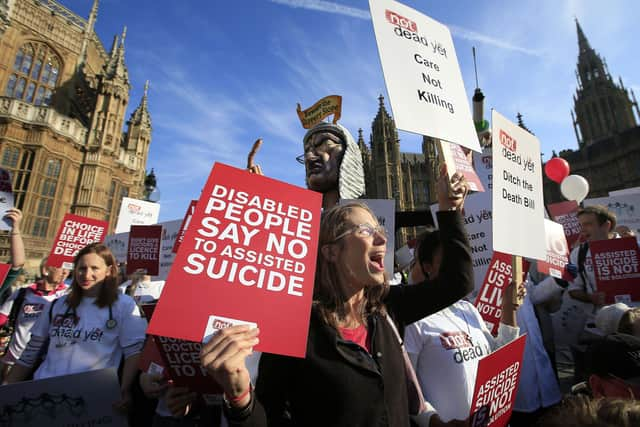

The Assisted Dying for Terminally Ill Adults Bill proposes to legalise assisted dying for adults, of sound mind, who have six or fewer months left to live”.
Humanists UK believes the Bill has a “strong chance of becoming law” as Prime Minister Sir Keir Starmer has “repeatedly committed to making time for a Bill to pass”.
In December, the Labour leader said there are "grounds for changing the law" on assisted dying, and that MPs should be given a chance to vote with their conscience on the matter.
A previous Bill to legalise assisted dying in the UK, which was supported by Sir Keir, was defeated in 2015.
In a statement ahead of the new Bill’s introduction in the Lords, Humanists UK said it welcomes the move, but is “disappointed that it is limited to just the terminally ill, meaning many… who are suffering from non-terminal conditions like multiple sclerosis or locked-in syndrome, will not be able to have a compassionate death”.
However, previous attempts to legalise assisted dying have been vehemently opposed by many church leaders and other organisations.
Campaigners opposed to a change in the law have voiced concerns that it could lead to pressure being put on vulnerable people to end their lives, arguing that the disabled, elderly, sick, as well as people suffering from depression, could be put at risk.
Earlier this week, new legislation on assisted dying passed its third reading in the Isle of Man’s Legislative Council, however, the provision will only apply to adults who have been resident on the island for five years, have a terminal illness with a life expectancy of no more than 12 months.
In March this year, an Irish parliament committee recommended “that legislation be introduced to allow for assisted dying in certain restricted circumstances, but that where any person has failed to adhere to relevant statutory requirements… he or she will have committed a criminal offence”.
Although the main churches in Northern Ireland are largely united in their opposition to a change in the law on assisted dying, some political parties are open-minded about the subject.
The established view of the Presbyterian Church in Ireland (PCI) is that “All life has immeasurable value and is a precious gift from God,” and that “the true measure of any society is how it treats its most vulnerable citizens."
The church's pastoral care teams support distressed people towards the end of life… and always affirm "the essential dignity of life,” the PCI has said.
In 2018 the Presbyterian general assembly "voted overwhelmingly" to oppose euthanasia anywhere in the UK or Republic of Ireland.
In the same year, the church strongly urged governments to properly resource quality palliative care.
The position of the Church of Ireland is that "each and every human life is intrinsically valuable".When the issue was last raised, a Church of Ireland spokesperson said: "The Church therefore remains committed to the view that there should not be a right to euthanasia. In this context, it is difficult to see how even the most sensitive legislation can do anything other than devalue human dignity."
Both the DUP and TUV are strongly opposed to any change in the law in NI, while Sinn Fein and the SDLP have said they would consider supporting new legislation – provided it contained safeguards to prevent abuse.
Alliance and the UUP have described assisted dying as a “conscience issue” for party members.