
September 11 after 25 years: Retired News Letter editor says we are no safer today than when the towers fell
A retired editor of the News Letter says he believes the world is no safer now than it was a quarter of a century earlier when New York’s Twin Towers were destroyed by Al Qaeda.
Rankin Armstrong, 75 and now living in Armagh City, said that foremost in his mind on today’s anniversary are the families of those who died that day, and those whose suffering continues now.
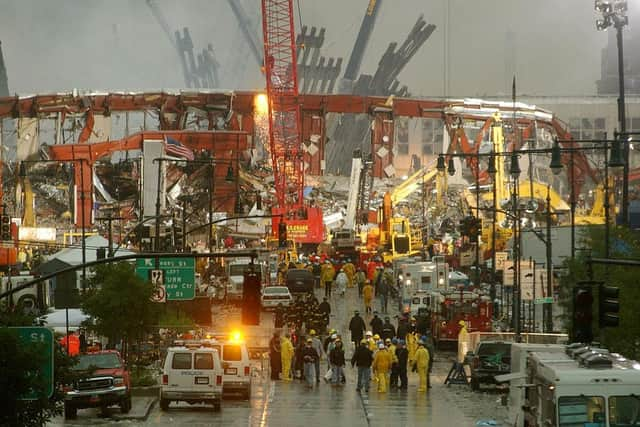

He recalled his first-hand experience of the dust in the air in Manhattan that day, and said that “the materials from the crushed buildings created that fine dust, which included asbestos, mercury, and all types of toxic chemicals”.
Indeed, just in the last week the New York mayor Zohran Mamdani has released historic files showing that the atrocities left “such huge, dangerous toxins around ground zero”, added Mr Armstrong, leaving “long-term effects for probably thousands of people”.
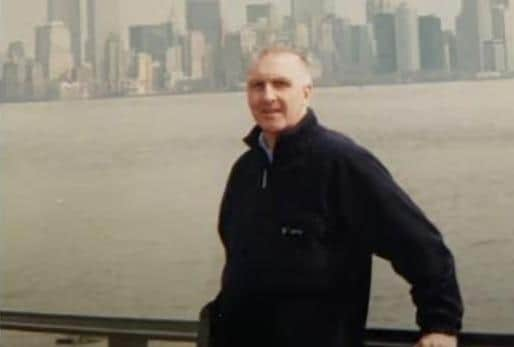
It had been “the darkest day America could have had”.
The quadruple jet hijackings by 19 attackers that day led to the deaths of 2,976 people, according to the FBI.
Over 2,600 of those deaths were at the Twin Towers.
Mr Armstrong had joined the News Letter in 1998 as deputy editor, and in 2001 he was in New York with his family celebrating his 50th birthday on September 9.
On the morning of September 8 (a Saturday) he had taken a trip to the plaza at the base of the roughly 1,370-foot (417m) Twin Towers, dining there with his family with wife Janet and children Peter (14), Katherine (19) and Christopher (22) – but they did not go up.
"The intention was to go back,” he said, perhaps during a weekday when they thought it would be less crowded.
Of course, they never got the chance.
They had been staying in the Hotel Edison in Midtown Manhattan, roughly three-and-a-half miles north of the Twin Towers.
It was there on September 11 that they saw the catastrophe unfold on the television at around 9am.
Soon afterwards mobile phone contact became impossible as the networks were overwhelmed, and long queues formed to use the hotel’s public phones.
Later they took a walk outside.
"When you were out on the streets there was a fine dust, particules of dust, coming down,” he said.
"Although it was some distance away, you could smell a burning smell – perhaps like rubber or something akin to that.”
He managed to contact the News Letter and file a report.
Some people have said the attacks had particular significance for people NI given their own history of terror, but Mr Armstrong said “I don’t see the point” in drawing parallels, adding that the New York attacks were on a “completely different scale” to even the “dreadful” bloodshed that NI was used to.
Twenty-five years later, what are his thoughts on the impact of that day?
"Is the world any safer now than it was then?” he wondered.
"We’ve had the War on Terror and the military campaigns in Afghanistan, Iraq, Libya, and many other places which have been affected since then.
"But in reality, is the world any safer after all that?
"I would say no, definitely not.”