
Bereaved will judge legislation on Northern Ireland Troubles legacy, MPs told

Families bereaved in the Troubles will ultimately be the judge of new legislation aimed at dealing with the legacy of the conflict, Parliament has been told.
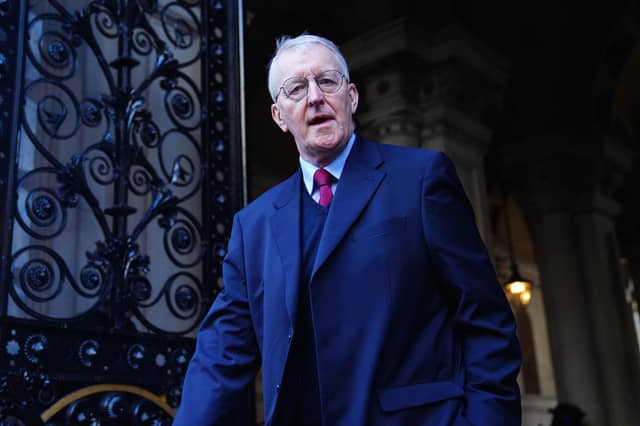
Northern Ireland Secretary Hilary Benn stressed the need to secure the backing of victims as he presented the bill to the House of Commons on Tuesday.
The draft laws come after the government last month unveiled a joint framework agreed with the Irish government designed to address a long impasse on legacy issues.
The framework, and associated legislation published on Tuesday, represent the government’s attempt to fundamentally reform the mechanisms established in the 2023 Legacy Act.
Labour came to power with a pledge to replace and repeal the Legacy Act introduced by the Conservatives, which halted scores of civil cases and inquests into Troubles deaths and also included a contentious conditional offer of immunity for the perpetrators of Troubles crimes in exchange for cooperation with a truth recovery body.
The new Northern Ireland Troubles Bill will axe aspects of the 2023 Act.
Making a statement to the Commons, Mr Benn told MPs: “Given the views held by so many people, often diametrically opposed, it was always going to be impossible to set out a plan that gives everybody everything that they want.
“There will be elements of our approach that some people will welcome and others will not.
“Time waits for no one, least of all for the many families who lost loved ones, and they ultimately will be the judge of whether these new arrangements can give them the answers that they have sought for so long.”
The joint UK-Irish framework included commitments to significantly restructure the Legacy Act’s investigative and truth recovery body, the Independent Commission for Reconciliation and Information. It will be renamed the Legacy Commission.
It will also lift the Legacy Act’s prohibition on Troubles-related civil cases in UK courts and inquests on conflict-linked deaths. Nine inquests that were part heard before the legal guillotine halted them will resume; other inquests will be referred to the Solicitor General to independently consider whether they are most appropriately dealt with by the reformed Legacy Commission or through coroners.
The Bill presented on Tuesday covers the measures in the framework that require legislative action in the UK.
The draft legislation also contains measures designed in response to concerns raised by military veterans about previous legacy processes.
These protections, which are not part of the joint framework, include provisions for witnesses to give evidence remotely without travelling to Northern Ireland.
The bill also includes provisions designed to stop former Sinn Fein president Gerry Adams from seeking compensation for being interned in the early 1970s.
Commenting on the measures, Mr Benn said: “The purpose of all this is to help families who have waited too long to find answers about what happened to their loved ones during the Troubles.
“This is our opportunity to deliver on this final part of the Good Friday Agreement and help Northern Ireland politics and broader society to find those answers and move forward.”
The Legacy Act was opposed by victims’ groups and political parties in Northern Ireland, and it led the Irish government to launch an interstate legal case against the UK, claiming it breached the European Convention on Human Rights.