
Bluetongue Northern Ireland: Two more cases identified - but farmers still turn out in droves for annual Winter Fair
Suspected cases of Bluetongue virus were identified in cows on a third Co Down farm today – but resilient Ulster farmers still turned out in droves for a pre-Christmas day out at the Winter Fair near Lisburn.
The Department of Agriculture, Environment and Rural Affairs (Daera) said surveillance detected the suspected cases in two cows on a farm near Bangor.

Bluetongue was first confirmed in a herd in a separate farm near Bangor last month, and there has been another suspected case on a farm close to Greyabbey. Two 20km temporary control zones (TCZs) were introduced around those sites.
Daera said the emergence of the latest cases does not require an extension to the existing TCZ.
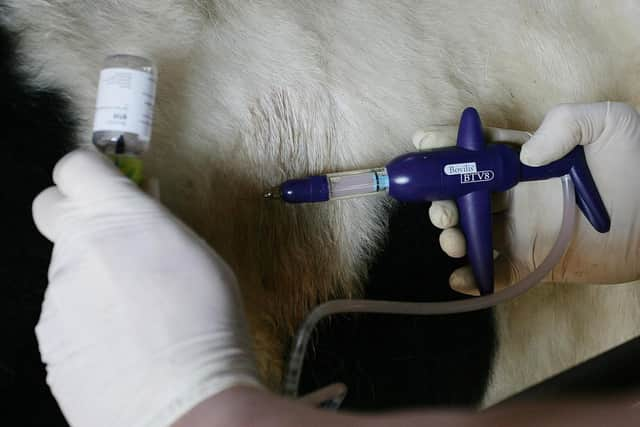
Bluetongue affects cattle and sheep as well as goats, deer and llamas but does not affect humans or food safety. It is primarily transmitted through midges.
Agriculture Minister Andrew Muir said: “The emergence of another suspect case is disappointing but not surprising given the scale of the surveillance testing that has taken place following the outbreak near Bangor.
“Bluetongue is an unpredictable virus that can be spread rapidly by midges through and between flocks and herds.
He added: “It is essential farmers and vets remain vigilant for clinical signs of the disease in the weeks and months ahead, given the impact on animals – particularly sheep.”
Chief veterinary officer Brian Dooher said: “While we remain hopeful that the winter will limit the ability of midges to further spread the disease, keepers who suspect an outbreak should report any symptoms immediately to their vet, local divisional veterinary office or to the Daera helpline on 0300 200 7840.”
Mr Dooher said the proximity of the new cases and the fact that two cows had been identified after the original outbreak meant the two TCZs in Co Down will be treated as one.
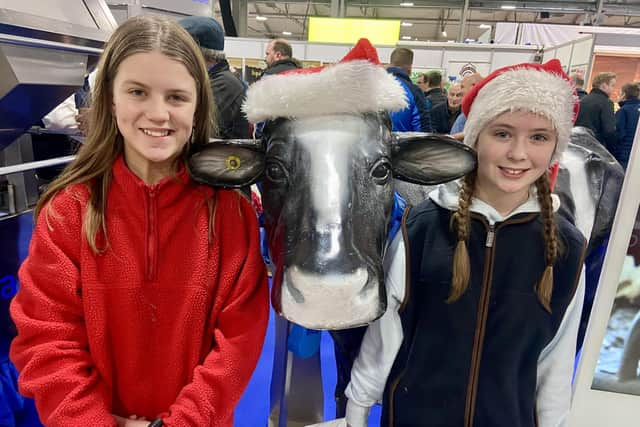
The annual Winter Fair took place yesterday, primarily a popular dairy farming event. However this year the emergence of Bluetongue led to the cancellation of the cattle showing classes, meaning it was a livestock free show.
Nevertheless, it was reported that there was a very strong turnout, with the farming communtiy keen to enjoy a social pre-Christmas day out – and browse the 200 commerical stands selling all things dairy farming.
There has been concern in the agricultural sector since the first bluetongue case was identified in Northern Ireland in November.
Daera said earlier this week that some animal movements are to be permitted to resume.
Farmers outside the TCZ will be able to move livestock to Great Britain with no requirements beyond those normally in place.
The movement of susceptible livestock on or off farms in the TCZ is still prohibited while moves direct to slaughter remain permitted under a general licence.
Some stakeholders had suggested to the News Letter that they felt Bluetongue restrictions were being too harsh, because the virus has, they said, little impact on cattle.
Typically they said, it just puts most cattle "out of sorts" for a day or two like a cold, and symptoms are rarely serious.
It poses no threat to the life of the cattle and they fully recover in a day or two.
Cattle in Co Down that have tested positive so far have shown no obvious symptoms - with the disease being detected by blood tests, this paper was told.
Invited to comment, Daera did not challenge any of the claims.
It responded that while all species of ruminants are susceptible "sheep are most severely affected".
A spokesman added: "Cattle and goats which often appear healthy can carry high levels of the virus and provide a source of further infection."
The virus can cause abortions cause abortion, deformities, stillbirths or neonatal death, they said.
"The potential future impact of Bluetongue on livestock in Northern Ireland is uncertain," they added.
By law any incidence of the disease must be notified to the authorities.
However despite the virus, many farmers enjoyed a social day out yesterday at the Winter Fair at the Eikon Centre near Lisburn.
UFU President William Irvine said that while the core attraction was absent - dairy cattle - still a "a significant volume" of people turned out.
The over 200 commercial stands seemed busy and doing good business, he said.
"People were clearly having a pre-Christmas day out to meet up with friends and neighbours, despite the issues around Bluetongue and the fact that livestock are not here.”
However he said the atmosphere was undermined by a drop of 3.5p in milk prices, due to a glut of milk on world markets.
But Armagh man Chris Mollan of Eringold Milk Replacers enjoyed a very busy day at his stand.
"There was a little bit of hesitancy over what footfall we might see, due to the absence of cattle showing but in fact it was probably the best footfall we've seen in years. There was a very good turnout and it's been a busy day with quite a good atmosphere.
"There's a lot of challenges in farming at the minute, with Blue Tongue and milk prices dropping.
"But it seems everybody just wanted a good day out and a break from everything, and that's what the Winter Fair is - a social occasion.
" You can see people talking to neighbors or friends that they haven't seen in some time.”
"And I suppose in the lead up to Christmas it is quite a positive trade show to do. Everybody's in relatively good spirits.”